May 26, 2026
The Role of Automation in Apartment Deliveries
Discover the critical role of automation in apartment deliveries. Learn how it reduces wait times and eases staff burdens for property managers.
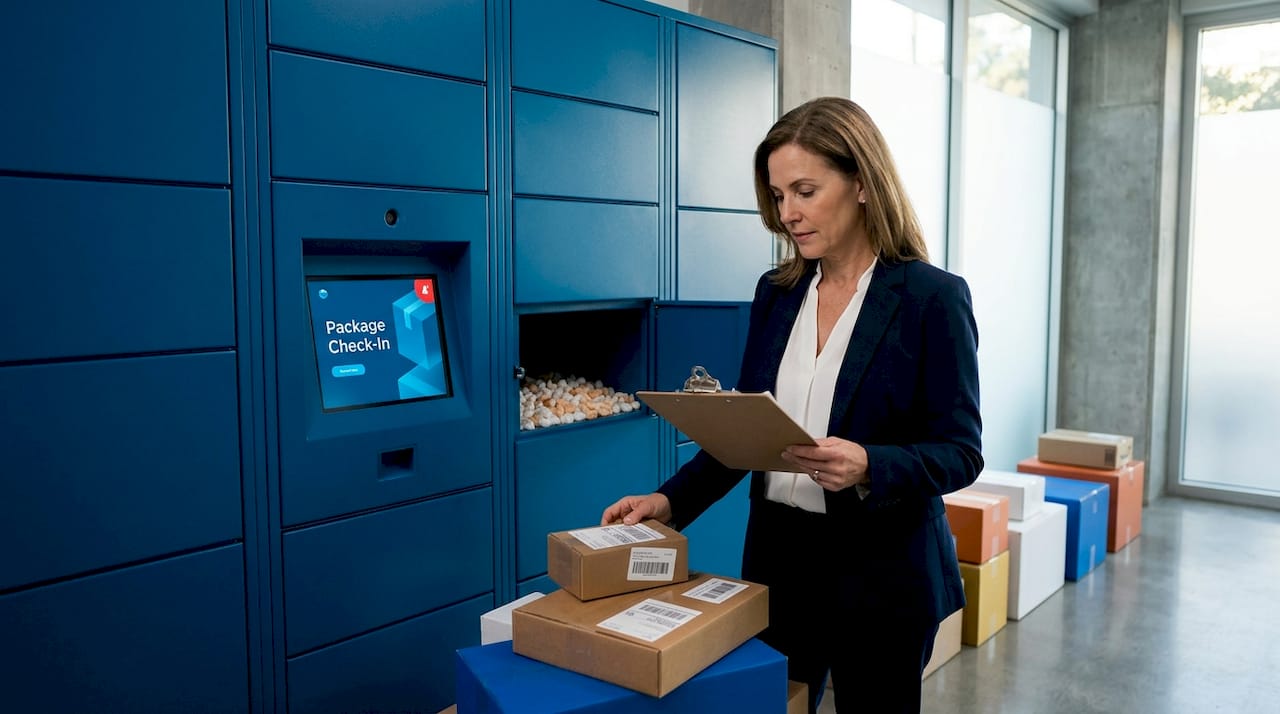
Package volume in multifamily housing has hit a point where manual processes simply cannot keep up. Leasing offices that once handled a dozen parcels a day now manage hundreds, and the strain shows in longer resident wait times, overwhelmed staff, and packages that go missing or sit unprocessed for hours. The role of automation in apartment deliveries has shifted from a nice-to-have amenity to an operational necessity. This article walks property managers through the major automated delivery technologies, their real-world impact on staff and residents, and the implementation factors that determine whether a system actually delivers results.
Table of Contents
- Key Takeaways
- The role of automation in apartment deliveries
- Operational advantages for property management
- How automation transforms the resident experience
- Challenges and critical success factors
- My take on automation after years in multifamily operations
- How Locker-solutions can support your delivery operations
- FAQ
Key Takeaways
| Point | Details |
|---|---|
| Automation cuts staff burden significantly | AI-powered package rooms can reduce package-dedicated staff by up to 83%, freeing your team for higher-value tasks. |
| Resident wait times drop dramatically | Residents who once waited 30 minutes to retrieve a package can now pick up in seconds with automated systems. |
| Carrier compliance is the hidden variable | Poor driver adherence is the top cause of automated system failures; enforcement protocols must be built in from day one. |
| Smart rooms outperform lockers at scale | AI-driven package rooms can triple storage capacity within the same footprint compared to fixed-compartment lockers. |
| Automation links directly to lease retention | Properties with automated package management see a 10% higher rental rate and longer lease terms by roughly one year. |
The role of automation in apartment deliveries
The core problem with apartment deliveries has never been the carriers. It has been what happens after the carrier leaves. Packages pile up at front desks. Staff spend hours logging, sorting, and notifying residents. Residents call to check on parcels. Some packages get misplaced. Others get picked up by the wrong person. The whole system depends on human bandwidth that most properties simply do not have.
Automated delivery systems break that dependency. The four main categories currently in active use across multifamily housing are smart lockers, AI-powered smart package rooms, offsite third-party models, and hybrid staff-supported setups.
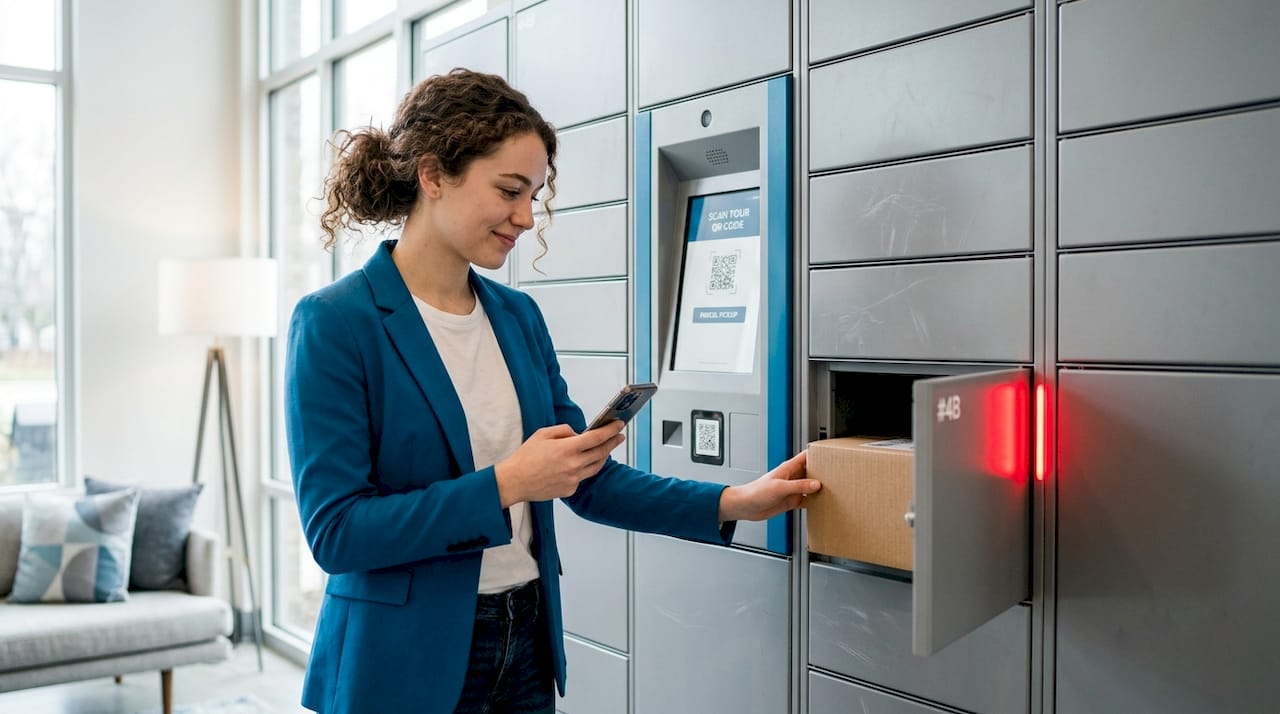
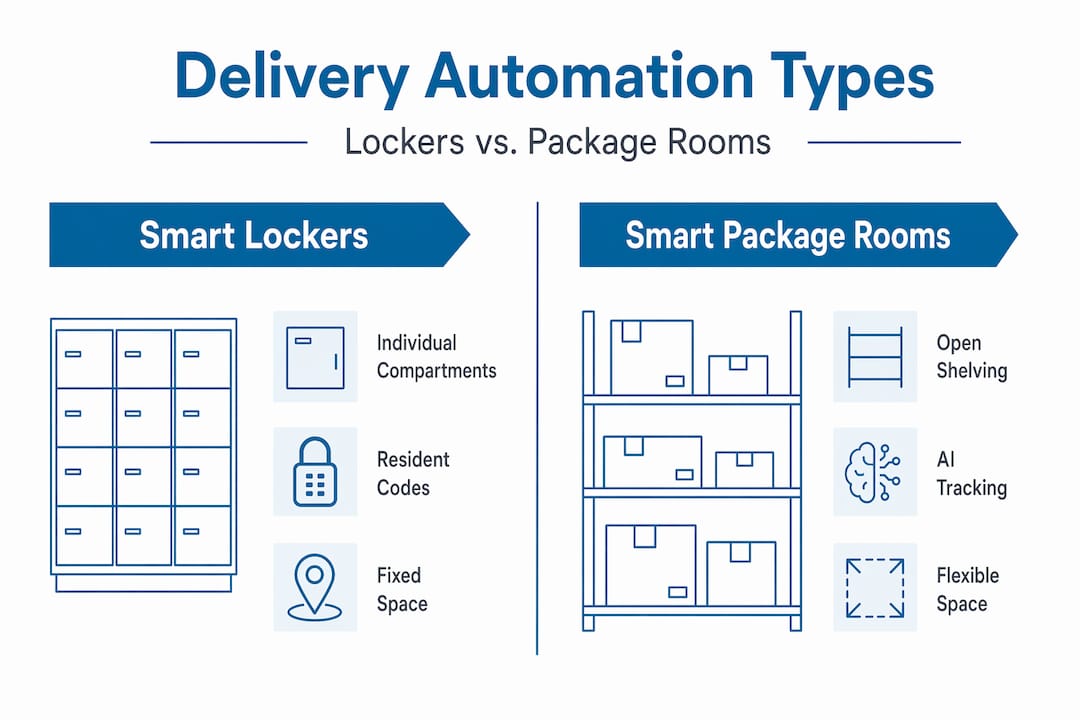
Smart lockers assign a physical compartment to each incoming package. Residents receive a unique code and retrieve their parcel independently, at any hour. The limitation is spatial. Lockers limited by fixed compartments cannot adapt when package sizes vary or volume spikes, and once compartments fill up, the system stalls.
AI-powered smart package rooms take a different approach. They use computer vision, optical character recognition, and precision positioning to track packages on open shelving without fixed compartments. This means a single room can handle packages of any shape and triple storage capacity within the same footprint compared to a locker bank. The tradeoff is a higher upfront investment and more complex carrier training requirements.
Offsite third-party models route packages to a centralized hub off-property, then handle last-mile delivery to residents on a schedule. This removes the property from the equation almost entirely, but it introduces a dependency on a third party’s reliability and adds friction for residents who want immediate access.
Hybrid solutions repurpose existing staff or spaces, often combining a dedicated package room with part-time attendant support. This works well as a transitional model but does not fully capture the efficiency gains of full automation.
| Solution type | Space efficiency | Scalability | Staff dependency | Best for |
|---|---|---|---|---|
| Smart lockers | Moderate | Low | Low | Low-to-mid volume properties |
| AI smart package rooms | High | High | Very low | High-volume, large properties |
| Offsite third-party | N/A | High | Medium | Properties with no dedicated space |
| Hybrid staff model | Moderate | Low | High | Properties in transition |
Pro Tip: Before selecting a solution type, map your current daily package volume by day of week. Most properties see 60% of weekly volume land on Monday through Wednesday. Your system needs to handle peak days, not average ones.
Operational advantages for property management
The operational math on automation is compelling. At Stuyvesant Town in New York, staff reduced from 12 to 2 full-time package handlers after switching to an AI-powered smart package room. That is an 83% reduction in dedicated labor, translating to significant annual savings in wages, benefits, and training.
Beyond headcount, automation reshapes how your remaining team spends their time. When packages are accepted, sorted, and tracked without human intervention, leasing agents can focus on resident relations, lease renewals, and property maintenance. The front desk stops being a package warehouse and becomes what it was always supposed to be.
The impact on logistics runs deeper than labor costs. Key operational benefits include:
- Automated resident notifications sent the moment a package is logged, eliminating inquiry calls to the office
- Tamper-evident secure storage that reduces liability exposure when packages go missing
- 24/7 pickup access that removes the office as a bottleneck entirely
- Digital audit trails that document every package intake and retrieval event
- Integration with property management systems that connects delivery data to resident profiles
The embedding of AI into daily workflows, rather than treating it as a standalone pilot, is where the real competitive gap opens. Properties that have fully integrated automation are not just more efficient. They are operationally harder to compete with on the leasing market.
Workflow redesign matters here. Automation technology is most effective when it is embedded in existing operational processes, not bolted on as a separate system. That means updating your package intake procedure, retraining front desk staff on exception handling, and setting clear escalation paths for packages that fall outside normal parameters.
Pro Tip: Designate one team member as your “package room owner” even after automation is deployed. Not to sort packages, but to monitor system performance, track driver compliance scores, and flag issues before they become resident complaints.
How automation transforms the resident experience
Residents are not just tolerating package delays. They are factoring them into leasing decisions. Properties with automated package management see a 10% higher rental rate and extend average lease terms by roughly one year compared to non-automated properties. The financial case for prioritizing resident experience is no longer theoretical.
The most immediate change residents notice is speed. In a traditional setup, picking up a package means walking to the office during business hours, waiting for a staff member to locate the parcel, and signing for it. From start to finish, that process often takes 30 minutes or more. With automation, the same task takes seconds. A resident scans a code, a compartment or room section unlocks, and they are done.
The features residents consistently value most include:
- Instant pickup notifications via text or app the moment a package arrives
- Contactless retrieval that enhances resident security and reduces shared-surface contact
- Round-the-clock access for residents who work non-standard hours
- Secure, sealed storage that protects against porch pirates even inside the building
The connection between automated package access and lease renewals is direct. When a resident never has to worry about a package, never has to call the office, and never misses a delivery because of office hours, one significant friction point in their daily life disappears. You can explore how package rooms boost retention in multifamily settings to see how that friction reduction translates to measurable leasing outcomes.
Challenges and critical success factors
Deploying automation in a multifamily building is not a purely technical problem. The hardware is the easy part. The hard part is the human behavior that surrounds it.
Carrier non-compliance is the most common cause of package system failures. In one industry survey, 60% of property managers identified poor driver adherence as their top frustration with automated systems. A driver who leaves a package in the lobby instead of scanning it into the system breaks the chain of automated custody, and the resident never gets notified. The package sits. The resident calls. The automation did not fail. The process around it did.
Common challenges to prepare for include:
- Driver non-compliance when carriers skip scanning steps or bypass designated drop areas
- Physical layout conflicts where loading docks, elevator paths, or room locations create friction for drivers
- High-rise last-meter problems where packages reach the building but not the resident’s floor
- Overreliance on hardware expansion when the real problem is workflow gaps, not capacity
The last-100-meter delivery challenge in high-rise buildings deserves specific attention. Indoor delivery robots are being piloted in cities like Dubai and Seoul, but they currently require human handover at some stage of the process. For most U.S. multifamily operators, full floor-to-door robot delivery remains a future capability rather than a deployable solution today.
Aligning automation with building layouts and driver workflows before purchase avoids wasted investment. A smart package room installed in a location carriers consistently avoid will underperform regardless of its technology. Walk the carrier path through your building before you design your solution.
Standardizing carrier communication upfront is the single highest-return operational step you can take. Property managers who issue clear written protocols to all carriers before go-live and conduct brief on-site training with regular drivers report significantly fewer compliance failures in the first 90 days.
Pro Tip: Post QR code guides at every delivery entry point showing drivers the exact deposit steps for your system. Visual, step-by-step instruction at the point of action reduces non-compliance more than any policy document sent to a carrier’s dispatch center.
My take on automation after years in multifamily operations
I have seen properties spend serious money on automated package systems and see almost no operational improvement. I have also seen properties with modest budgets transform their delivery operations entirely. The difference almost never came down to the technology. It came down to how deeply the technology was embedded in daily operations.
The biggest mistake I see property managers make is treating automation as a plug-and-play installation. You set it up, flip the switch, and the problem is solved. In my experience, that approach produces systems that handle 70% of deliveries well and create chaos around the other 30%. The exceptions, the oversized packages, the drivers who skip scanning, the residents who never activate their accounts, are what actually define your resident experience.
What I have found consistently is that carrier compliance delivers the highest return on your automation investment. You can have the most sophisticated AI package room on the market, but if your UPS and FedEx drivers are leaving packages in the lobby, you have an expensive storage room with a broken promise attached to it. The properties I have seen succeed invest as much energy in carrier onboarding as they do in the technology itself.
I am genuinely excited about where indoor robotics is heading for high-rises. The pilots in Dubai and Seoul are early, but the trajectory is clear. In five years, floor-to-door delivery in a 40-story building will be a real operational option. For now, the smart move is to build the infrastructure foundation, the package rooms, the access controls, the carrier protocols, that robotic delivery will eventually plug into.
The properties that win on resident experience are not always the ones with the newest technology. They are the ones that treat multifamily efficiency and resident satisfaction as an operational discipline, not a feature to market on a brochure.
— Craig
How Locker-solutions can support your delivery operations
If any of the operational gaps described above sound familiar, the right next step is not another survey of options. It is finding a proven system built specifically for multifamily properties.
Locker-solutions specializes in package room management for apartment communities, offering Luxer One® smart lockers, automated package rooms, refrigerated lockers, and weatherproof kiosks configured for your specific property layout and volume. Every deployment comes with carrier onboarding support, automated resident notification setup, and ongoing maintenance coverage. You are not buying hardware and hoping for the best. You can also explore the full range of Luxer One lockers and package rooms to find the configuration that fits your property size and climate. For properties prioritizing resident safety and hygiene, contactless delivery options provide a secure, hands-free experience residents notice from day one.
FAQ
What is the role of automation in apartment deliveries?
Automation removes the manual steps between package arrival and resident pickup by using smart lockers, AI-powered package rooms, and automated notifications to manage the entire process without staff involvement. The result is faster pickup times, lower operational costs, and fewer resident complaints.
How much can automation reduce package-related staff workload?
AI-powered smart package rooms can reduce package-dedicated staff by up to 83%, with real-world examples showing properties shift from 12 dedicated handlers down to 2 after full deployment.
Why does carrier compliance matter for automated delivery systems?
Even the best automated system fails when drivers skip the deposit scanning step. Research shows 60% of property managers cite poor carrier compliance as their top frustration, making driver onboarding and enforcement protocols as critical as the technology itself.
Do smart lockers or smart package rooms work better for large properties?
Smart package rooms outperform lockers at scale because they use open shelving with AI tracking rather than fixed compartments, allowing them to triple storage capacity within the same footprint as volume grows.
How does automation affect resident lease renewal rates?
Properties with integrated automated package management see a 10% higher rental rate and extend average lease terms by roughly one year, reflecting how directly package convenience influences resident satisfaction and retention decisions.
Recommended
Ready for a Luxer One® package locker quote?
Tell us your unit count and we'll send right-sized pricing with a fast response time.
Get my free quote