August 13, 2026
Resident Engagement Tactics That Actually Move the Needle
Discover effective community engagement improvement tactics that boost resident satisfaction and retention through personalized communication and...
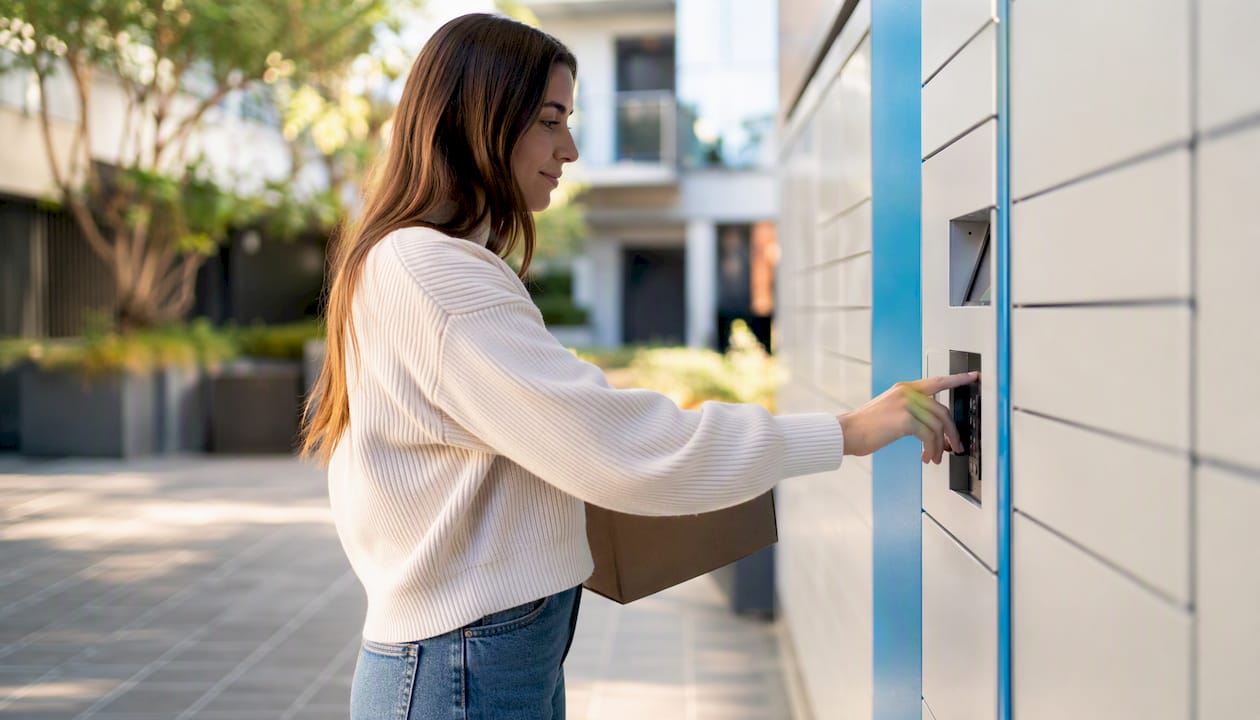
The three tactics that most reliably lift resident satisfaction and renewals are human-first communications, consistent amenity activation, and a package-handling system matched to your property’s real constraints. Start there. Everything else builds on that foundation.
Three pilots to run this month:
- Weekly humanized SMS/email cadence. Drop the automated-broadcast tone. Send one short, conversational message per week from a named team member. Entrata research confirms that tone and responsiveness are the primary trust signals residents use to judge management.
- One weekly amenity activation. Pick one space, pick one recurring format, and repeat it every week for 30 days. Consistency builds habit faster than a single big event.
- Fix your package intake. Up to 85% of renters say package convenience influences their leasing decision. If your current process generates complaints, that is a retention problem, not just an ops problem.
Immediate success markers to watch: email open rates, event RSVPs, and the number of package-related complaints per week. Those three numbers tell you within 30 days whether your pilots are working.
Key Takeaways
The highest-ROI path to stronger resident engagement combines human-first communications, consistent weekly amenity programming, and a package-handling system sized to peak volume, run as a 90-day pilot with defined KPIs before full rollout.
| Point | Details |
|---|---|
| Start with communications | A named-sender SMS cadence with a published response SLA builds trust faster than any new platform. |
| Program amenities weekly | Consistent, low-cost weekly activations drive repeat attendance and habit formation within 30 days. |
| Fix package handling first | With 85% of renters citing package convenience in leasing decisions, intake failures are a direct retention risk. |
| Measure five KPIs | Track open rates, event repeat attendance, pickup time, complaint rate, and Day 30 satisfaction score to make go/no-go decisions at 90 days. |
| Locker Solutions recommendation | Luxer One® smart lockers and automated package rooms from Locker Solutions reduce staff handling time and eliminate after-hours complaints. |
Table of Contents
- What are the best community engagement improvement tactics for resident communications?
- How do you activate amenities to increase resident participation?
- How do you match the right package-handling system to your community?
- What event formats build real community connections among residents?
- How should you onboard new residents to set them up for engagement?
- Which tech tools support resident engagement most effectively?
- What SOPs and staffing models prevent engagement friction from escalating?
- What KPIs should you track to measure resident engagement?
- What does a realistic timeline and budget look like for these tactics?
- How do you run a 30–90 day pilot before full rollout?
- What real-world outcomes have operators seen from these tactics?
- The operator-first case for starting small and measuring fast
- Locker Solutions and Luxer One® for package-driven resident satisfaction
- Sources
What are the best community engagement improvement tactics for resident communications?
Residents can tell the difference between a message written for them and one that was written for a compliance log. The fix is not a new platform. It is a predictable cadence delivered in a human voice, optimized for the phone screen where most residents will read it.
A standardized communication SOP with published response SLAs and clear channel ownership reduces friction at every stage of the lease lifecycle. The channel rules are straightforward: text for time-sensitive items, email for documents and lease-related notices, and the resident portal as the single source of truth for history.
Recommended cadence framework:
- Move-in (Days 1–30): Day 1 welcome text, Day 3 check-in, Day 7 event invite, Day 14 preference survey, Day 30 satisfaction pulse
- Ongoing: Weekly community newsletter (email or portal), monthly event preview, maintenance status updates within 24 hours of request
- Pre-renewal (60–90 days out): Personalized outreach referencing their history, a renewal survey, and a direct line to the leasing team
Template examples:
- SMS (package arrival): “Hi [Name], your package arrived and is ready for pickup at the locker. Need help? Reply here.”
- Email (weekly event): “This Thursday: free yoga on the rooftop at 6 PM. Bring a mat, we’ll bring the music. RSVP takes 10 seconds: [link].”
- Maintenance update: “Your work order is scheduled for Tuesday between 10 AM and noon. We’ll text you when the tech is on the way.”
Segmentation sharpens relevance. Flag move-in date, pet ownership, amenity opt-ins, and preferred contact channel in your CRM. A pet owner does not need a rooftop yoga invite as urgently as they need news about the dog-wash station reopening.
Pro Tip: Assign one person as the message owner for each channel and publish a response SLA (e.g., “We respond to all portal messages within 4 business hours”). Residents who know when to expect a reply stop sending duplicate messages and start trusting the process.
Apartments reinforces that short, mobile-first messages with a clear single action outperform long, multi-topic blasts on every engagement metric.
How do you activate amenities to increase resident participation?
Static amenity spaces are a sunk cost. Hospitality-first operators treat those spaces as programming opportunities, running a weekly cadence that gives residents a reason to show up repeatedly, not just once.
Sample monthly activation calendar:
- Fitness center: Monday morning stretch class, 7 AM, 30 minutes, no sign-up required
- Lounge/co-working: Wednesday “work-from-home happy hour,” 4–6 PM, coffee and snacks provided
- Rooftop/outdoor: Friday evening social, rotating themes (trivia, movie, local food vendor)
- Pet space: Saturday morning dog meetup, 9 AM, bring a treat
Each activation costs roughly 1–2 staff hours to set up and promote. Local vendor partnerships (a coffee roaster, a food truck, a fitness instructor) can cover supplies at low or no cost in exchange for resident exposure.
Measure what matters: repeat attendance (the same resident showing up twice is worth more than ten first-timers), amenity booking rates, and social posts tagging the property. Those three signals tell you which formats to keep and which to retire.
Pro Tip: Send a “welcome to the week” text every Monday morning that lists the week’s three programmed touchpoints. Residents who see the same message format every Monday start expecting it, and expectation is the first step toward habit.
How do you match the right package-handling system to your community?
The wrong system does not just waste capital, it creates a new category of resident complaints. Average residents now receive three to four packages per week, and a process designed for lower volume breaks visibly at peak periods.
Three generic solution categories and their trade-offs:
- Smart lockers: 24/7 pickup, automated alerts, audit trail, no staff required at pickup. Higher upfront cost; requires physical space and carrier adoption.
- Staffed package rooms: High capacity, flexible for oversized items, personal service. Dependent on staff hours; closes at night; scales poorly with volume growth.
- Leasing-office storage: Zero capital cost. Ties up staff time, creates liability, and fails completely during high-volume periods.
For most mid-rise and larger properties, a hybrid approach works best: a primary locker bank for standard parcels, an overflow room for oversized items, and a clear driver intake protocol. This combination reduces staff handling time and eliminates the after-hours complaint entirely.
Practical ops checklist:
- Train delivery drivers on intake procedures before go-live
- Post clear signage at every entry point with locker location and instructions
- Define overflow protocol in writing (what triggers it, who handles it)
- Set resident notification expectations: alert within 15 minutes of delivery
- Publish a single contact for missing-package escalations
Locker Solutions provides Luxer One® smart lockers, refrigerated options for perishables, weatherproof outdoor kiosks, and automated package rooms with package security features including video surveillance and AI-powered label reading. For operators sizing a system, the guidance is to build for peak volume, not average volume.
What event formats build real community connections among residents?
Big quarterly events look good in marketing decks. Small weekly ones actually change behavior. The operators who see the strongest long-term engagement run low-pressure, high-frequency activations where residents can show up without committing to much.
Event framework checklist:
- Clear resident value stated upfront (free food, a skill, a social connection)
- Low-friction RSVP (one tap, no account required)
- An immediate takeaway (a recipe card, a discount code, a photo)
- Staff presence that facilitates conversation rather than pitches renewals
Example event formats by type:
- Weekly fitness class in the gym or courtyard, led by a resident volunteer or local instructor
- Monthly food-truck night with a rotating vendor and a resident vote on the next one
- Quarterly neighborhood swap where residents trade plants, books, or kitchen items
- Resident-hosted hobby meetups (board games, language exchange, cooking demos) organized through the portal
Promote each event across at least three channels: SMS, email, and physical signage at the mailroom or elevator. Use digital RSVP to cap attendance and reduce setup waste. Collect one piece of feedback at the event itself, a single question on a card or a QR code, and use it to iterate the next one.
How should you onboard new residents to set them up for engagement?
The 30-day window after move-in is when residents form their opinion of management. A structured onboarding sequence, per Moved’s communication SOP, reduces churn at both the 30-day and renewal moments.
30–90 day onboarding checklist:
- Day 1: Welcome text from a named team member, portal login instructions, package locker access code
- Day 3: Check-in message asking if everything is working
- Day 7: Invite to the next community event
- Day 14: Short preference survey (channel, amenity interests, pet ownership, preferred event times)
- Day 30: Satisfaction pulse (three questions, two minutes)
- Days 60–90 before lease end: Personalized renewal outreach referencing their preferences and tenure
Sample preference survey questions:
- How do you prefer to receive community updates? (Text / Email / Portal)
- Which amenities do you use most? (Select all that apply)
- Do you have a pet?
- What time works best for community events? (Weekday evening / Weekend morning / Weekend afternoon)
Flag every response in your CRM or property management system. Train leasing staff to reference those preferences in conversations. A resident who mentioned they have a dog should hear about the new dog-wash station before anyone else does.
Which tech tools support resident engagement most effectively?
The core stack is not complicated: a resident-facing portal, two-way SMS, package notifications, and PMS/CRM integration. Everything else is secondary. Centralizing communication into a single platform eliminates repeated explanations and creates an accountability trail.
Vendor selection checklist:
- PMS integration that syncs resident data without manual exports
- Notification reliability (delivery rate, not just send rate)
- Audit trail access for package and maintenance events
- Mobile UX that works on a four-year-old Android, not just a new iPhone
- Reporting that surfaces open rates, pickup times, and response SLAs
The most productive integration chain: portal + two-way SMS + locker system + maintenance workflow. A package arrives, the locker logs it, the resident gets an SMS, the portal records the event, and the maintenance team can see the same history if a complaint comes in. No manual handoffs.
Pro Tip: Before committing to any platform, require a 30-day staging trial with your actual carrier mix and resident cohort. Carrier adoption failures are the most common reason locker rollouts underperform — confirm that your top three carriers will scan into the system before you sign.
What SOPs and staffing models prevent engagement friction from escalating?
A complaint that goes unanswered for 48 hours costs more than the original issue. Formalizing intake, escalation, and closure procedures turns individual incidents into manageable workflows rather than renewal risks.
Sample package SOP flow:
Intake → Log in system → Automated resident notification → Secure storage → Resident pickup confirmation → Case closed
Time-to-acknowledge target: 15 minutes from delivery scan. Escalation path: unresolved after 48 hours goes to the community manager, not the leasing desk.
Staff time estimates per week (approximate):
| Task | Estimated Weekly Hours |
|---|---|
| Weekly community event setup and promotion | 2–3 hours |
| Package intake and overflow management (peak) | 4–6 hours |
| Locker maintenance and driver coordination | 1–2 hours |
| Resident outreach and follow-up messages | 2–3 hours |
For lightly staffed garden-style properties, a hybrid model works well: software handles notifications and logging, and a part-time attendant covers peak intake windows (typically 10 AM–2 PM on weekdays). Mid-rise properties with concierge staff can absorb package management into existing workflows if the locker system handles after-hours pickup. The secure parcel handling workflow from Locker Solutions provides a detailed intake and logging reference for staff training.
What KPIs should you track to measure resident engagement?
Measure what you can act on. The minimum viable KPI set for a 90-day pilot covers five areas: communication engagement, event participation, package performance, maintenance responsiveness, and renewal signals.
| KPI | Definition | Target Range (Pilot) |
|---|---|---|
| Email open rate | Opens ÷ delivered | 30% |
| SMS response rate | Replies ÷ sent | 15% |
| Event repeat attendance | Residents attending 2+ events | Approximately one-fifth of attendees |
| Package pickup time | Hours from delivery alert to pickup | Under 24 hours |
| Package complaint rate | Complaints ÷ total deliveries | Under 2% |
| 30-day satisfaction score | Survey score at Day 30 | Over 4 out of 5 |
| Renewal correlation | NPS score vs. renewal rate by cohort | Track quarterly |
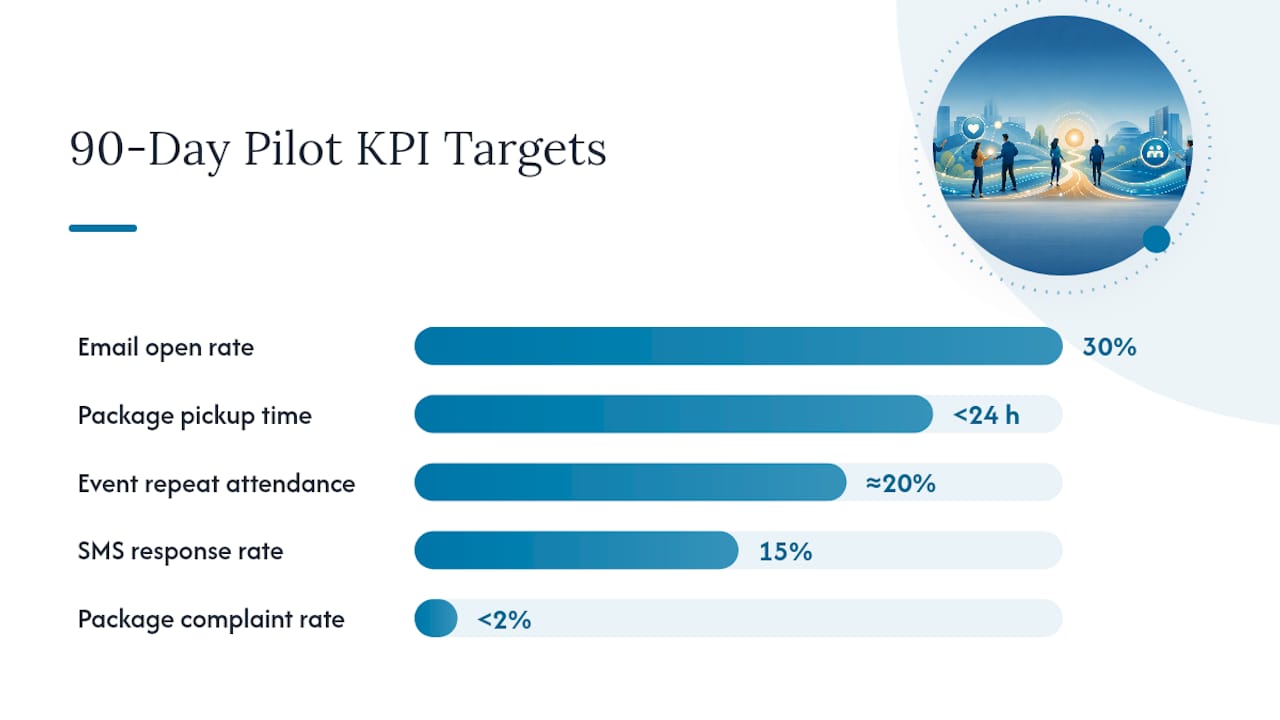
Run a baseline measurement in Week 1 before any changes. Check in at 30 days to confirm the pilot is moving in the right direction. At 60 days, decide whether to scale or adjust. At 90 days, make the go/no-go call on full rollout.
Measurement checklist:
- Assign one data owner per KPI (not “the team”)
- Pull package metrics from the locker system’s reporting dashboard
- Pull communication metrics from your SMS/email platform
- Survey residents at Day 30 and pre-renewal using the same three questions each time for comparability
What does a realistic timeline and budget look like for these tactics?
Three deployment tiers, roughly ordered by capital requirement:
Hardware procurement lead times for locker systems typically run 4–8 weeks from order to installation. Software subscriptions can go live in days. Start the communications and events pilots immediately while procurement is in progress.
Pro Tip: Size your locker system to peak delivery volume, not average. Residents receive three to four packages per week on average, but peak periods (holiday season, back-to-school) can run two to three times that. An undersized system at peak is worse than no system at all because it creates a new category of complaint.
For design and sizing guidance, the package storage guide from Locker Solutions covers how to calculate locker capacity against unit count and delivery frequency.
How do you run a 30–90 day pilot before full rollout?
A focused pilot with a small resident cohort, clear owners, and defined KPIs reduces risk and surfaces problems before they become property-wide issues.
30–90 day pilot checklist:
- Days 1–7: Assign roles, establish baseline KPIs, set up communication templates, confirm locker/room intake protocol
- Days 8–30: Launch weekly SMS cadence, run first two amenity activations, collect Day 14 preference surveys, log all package metrics
- Days 31–60: Review open rates and event attendance, adjust messaging tone or timing based on data, run first monthly event
- Days 61–90: Administer 60-day satisfaction survey, compile KPI report, present go/no-go recommendation
Roles and responsibilities:
| Role | Responsibility |
|---|---|
| Community manager | KPI ownership, resident feedback review, go/no-go decision |
| Leasing team | Onboarding sequence, preference capture, renewal outreach |
| Maintenance | Package intake SOP, work-order response SLAs |
| Third-party vendor (e.g., Locker Solutions) | Hardware installation, driver training, system reporting |
What real-world outcomes have operators seen from these tactics?
Qualitative patterns from operator reporting are consistent across property types:
- Properties that switched from leasing-office storage to smart lockers reported measurable reductions in staff handling time and a drop in after-hours package complaints, particularly on properties where the leasing office closed at 6 PM.
- Communities that ran a consistent weekly amenity activation for 60 days saw amenity booking rates climb and repeat attendance stabilize, compared to properties running only occasional large events.
- Operators who shifted to a humanized SMS cadence with a named sender reported higher response rates than those using generic automated blasts, consistent with Entrata’s finding that tone is a primary trust signal.
Lessons learned when scaling:
- Carrier adoption is the most common failure point in locker rollouts. Confirm your top carriers will scan into the system before go-live.
- Staff retraining takes longer than expected. Budget two full training sessions, not one.
- Peak-period sizing matters more than average-period sizing. A system that works in February may fail in December.
Locker Solutions and Luxer One® implementations have reduced staff handling time and improved resident pickup times across operator deployments. Contact Locker Solutions for current case study data specific to your property type.
The operator-first case for starting small and measuring fast
The hospitality-first approach is not about spending more. It is about choosing the right three levers, running them with discipline, and measuring the result before scaling. Communications, amenity habit-building, and package reliability are those levers because they affect residents every single week, not just at move-in or renewal.
The pilot methodology matters more than most operators realize. A property team that runs a 90-day pilot with clear KPIs and a go/no-go decision point will outperform one that deploys a full locker system and a new portal simultaneously, then cannot tell which change drove the improvement.
One practical caution: do not size a locker install based on your current delivery volume. Volume grows. A system that fits today will be undersized in 18 months, and an undersized locker system generates more complaints than no system at all. Validate volume assumptions with your carrier data before procurement, and build in a buffer for peak periods.
Locker Solutions and Luxer One® for package-driven resident satisfaction
Reliable package handling is one of the fastest ways to reduce resident friction, and the Luxer One® product line from Locker Solutions covers the full range of operator needs: indoor smart lockers, refrigerated units for perishables, weatherproof outdoor kiosks, and fully automated package rooms with monitored management options.
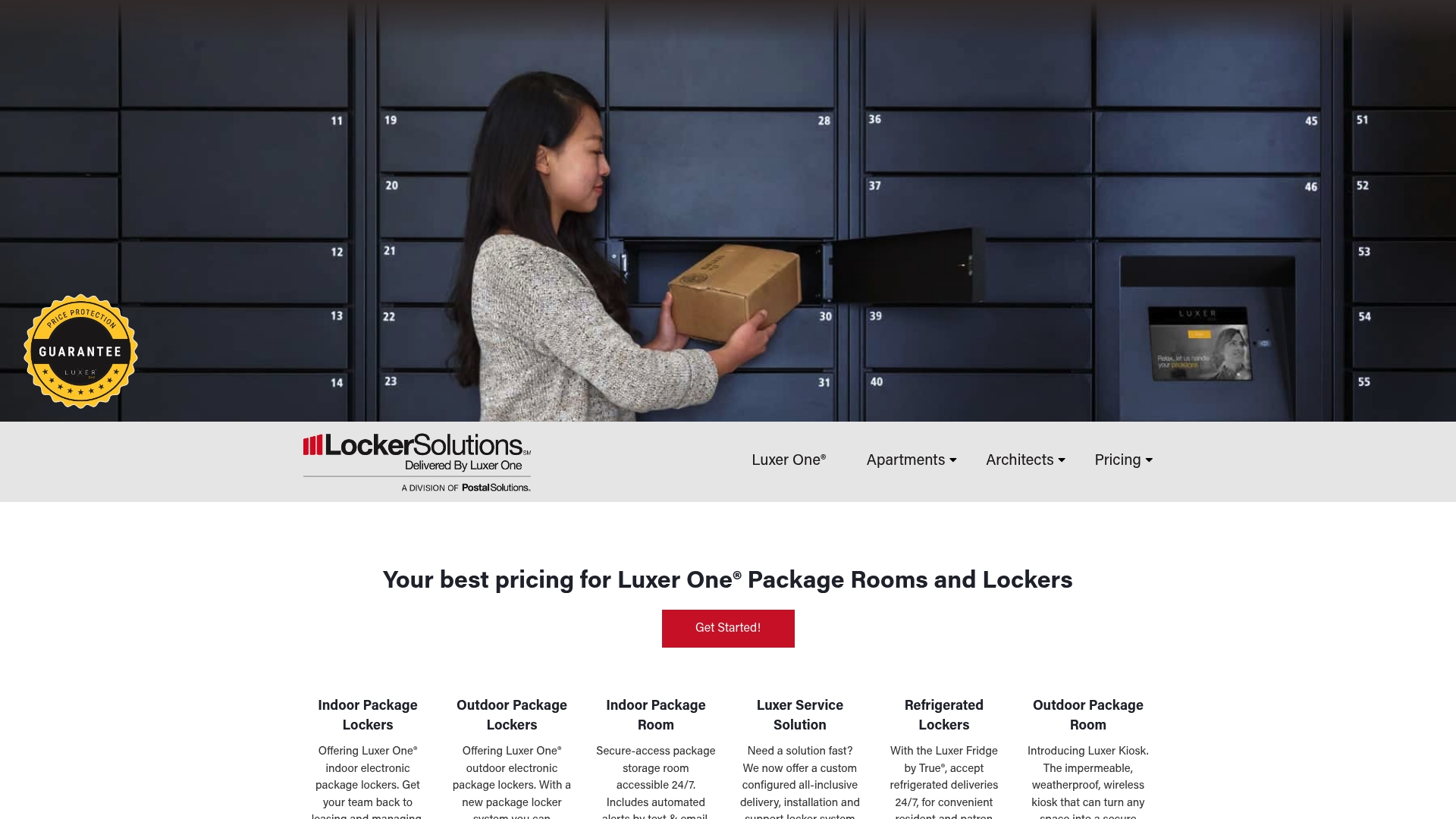
Every system includes 24/7 resident pickup, automated package alerts, video surveillance, AI-powered label reading, and PMS integration. National installation and ongoing maintenance support mean you are not managing the hardware yourself after go-live. For properties that want a fully managed solution, the package room management service handles daily operations so your leasing team stays focused on residents, not parcels.
The right next step is a site assessment to confirm sizing and placement before procurement. Request a pilot quote from Locker Solutions to get a system recommendation matched to your unit count, delivery volume, and property layout.
Sources
- Why building trust should be the primary goal of resident communication
- Apartment resident communication best practices: A complete guide for property managers
- Thinking Outside the Box to Solve Package Delivery Issues - Multifamily & Affordable Housing Business
- Multifamily package management solutions impact resident retention
Recommended
- Resident Deliveries: A Property Manager’s 2026 Guide — Locker Solutions Blog
- How Locker Access Drives Community Satisfaction — Locker Solutions Blog
- Georgia Apartment Upgrade Examples That Actually Move the Needle — Locker Solutions Blog
- Step by Step Resident Package Workflow for Multifamily — Locker Solutions Blog
Ready for a Luxer One® package locker quote?
Tell us your unit count and we'll send right-sized pricing with a fast response time.
Get my free quote