August 8, 2026
Package Management Liability Concerns: A Risk Checklist
Discover how to tackle common ownership liability concerns in package management. Protect your multifamily property from risks today!
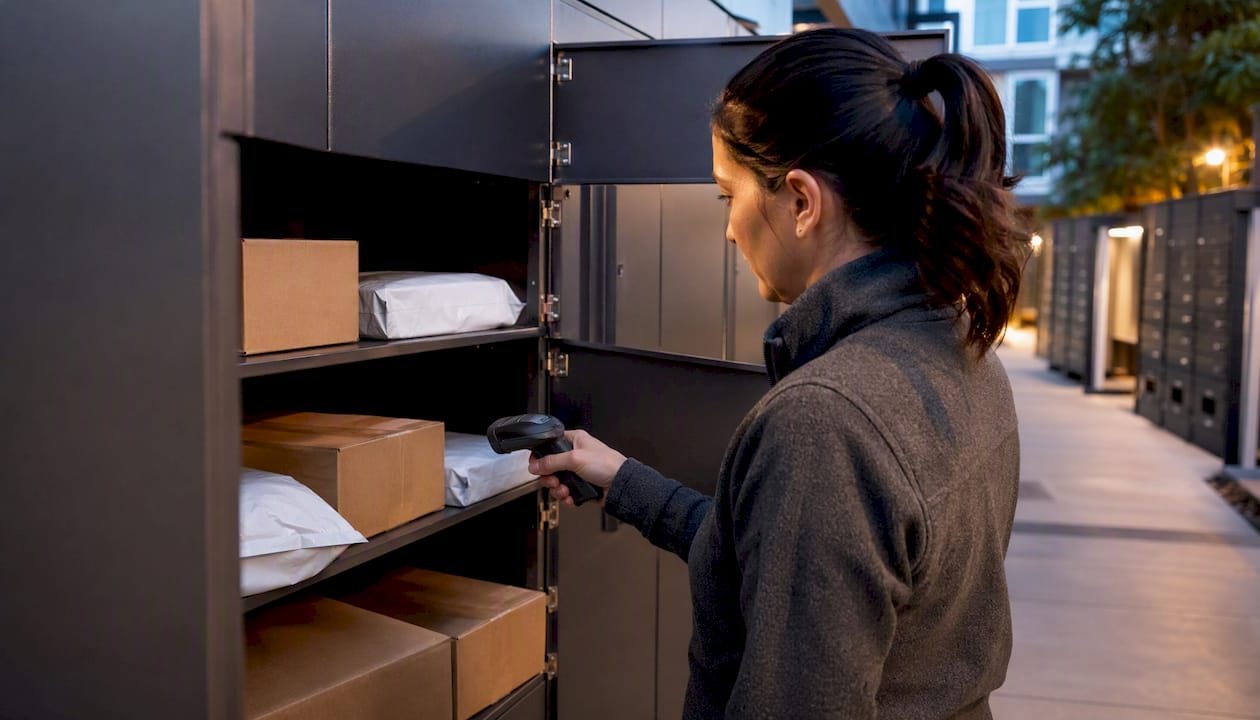
The top liability exposures for on-site package management at multifamily properties are theft from unsecured areas, bailment liability when staff accepts or stores packages, access-control and cybersecurity failures, temperature-sensitive delivery losses, injury in package areas, and overflow/oversized handling failures. Start reducing exposure today by auditing your chain-of-custody workflow, confirming your property insurance covers package-related claims, and scheduling a vendor contract review.
Ranked liability priorities:
- Bailment exposure when staff signs for or stores resident packages
- Theft from lobbies, hallways, or unlocked package rooms
- Access-control failures including fob/code misuse and software breaches
- Temperature-sensitive or perishable delivery losses
- Slip/trip injuries and oversized-item handling incidents
Immediate actions:
- Document your current acceptance policy in writing
- Confirm with your insurer that package-related claims are covered
- Lock down chain-of-custody steps with a signed log or timestamped notification system
- Schedule a vendor and installation risk review before peak season
Table of Contents
- What liability types do package lockers and rooms actually create?
- Who is liable, and how do leases and contracts allocate responsibility?
- Daily operational policies that cut liability in practice
- Technical controls that lower your installation risk
- Sizing, budgeting, and deployment timelines
- Key Takeaways
- A perspective from Locker Solutions
- Locker Solutions reduces your package liability exposure
- Sources and further reading
What liability types do package lockers and rooms actually create?
Theft is the most visible risk, but it rarely starts at the locker. Package theft prevention is primarily a workflow problem: control is lost in lobbies, propped-open hallways, and package rooms that carriers treat as drop zones. Before buying hardware, walk the property and trace exactly where a driver defaults when the locker is full or the room is unlocked.
Bailment liability is the legal concern most managers underestimate. When a staff member signs for a resident’s package, a bailment relationship can form, meaning the property may owe a duty of reasonable care to return that property undamaged. Accepting or storing packages shifts the legal standard from “we provided a space” to “we took possession for a specific purpose.” That distinction matters in court.
Access-control failures add a cybersecurity layer. Fob or code misuse, vendor software vulnerabilities, and notification failures that leave packages unclaimed for days all create exposure. If your locker management platform suffers a data breach, resident personal data and access credentials are at risk.
Temperature-sensitive deliveries are a growing problem. Refrigerated medications, meal kits, and perishables left in a standard locker or unmonitored package room can spoil. When the property has no refrigerated storage and a resident loses a $400 insulin shipment, the question of who bears that loss lands squarely on the operator.
Oversized items that don’t fit lockers get left in hallways or lobbies, creating both theft exposure and slip/trip hazards.
Peak-season risk: November and December account for nearly 20% of annual package volume, with locker delivery rates surging sharply in the week after Black Friday. Properties without surge capacity plans face compounding risk: overflow into common areas, carrier non-compliance, and resident complaints that escalate to claims.
Who is liable, and how do leases and contracts allocate responsibility?
Liability typically distributes across five parties: the property owner, the property manager, the locker/room vendor, the carrier, and the resident. Which party bears the loss depends on the facts.
Owners and managers face the broadest exposure because they control the physical space. Under California law, landlords must maintain reasonable security in common areas, and advertising secure package handling can increase that duty. Most states follow similar common-law principles even without a specific statute.
Lease and house-rule language that reduces owner exposure:
- A clear amenity disclaimer stating the package room or locker is provided as a convenience, not a bailment service
- An acceptance/waiver clause specifying the property does not accept liability for lost, stolen, or damaged packages
- A bailment disclaimer limiting any duty of care when staff incidentally handles a package
- Resident opt-in language for any managed acceptance service, with a signed acknowledgment
Associations and boards that accept packages commonly require signed release forms or adopt a formal refusal policy to limit exposure and set resident expectations. The same logic applies to multifamily operators.
On the vendor side, your contract should include indemnity clauses, minimum commercial general liability (CGL) insurance requirements, and clear ownership terms for the hardware. If you lease rather than own the lockers, confirm who bears liability for a hardware malfunction that causes a package loss.
Pro Tip: Consult a licensed attorney in your state before finalizing lease waiver language. Bailment law and landlord duty-of-care standards vary by jurisdiction, and a clause that works in Texas may be unenforceable in California.
Daily operational policies that cut liability in practice
The gap between technology and liability reduction is almost always a workflow gap. Cameras and lockers don’t protect you if staff still signs for packages at the front desk without a log.
Core operational controls:
- Timestamped package log capturing: date/time received, carrier, tracking number, locker ID or shelf location, and resident notification timestamp
- Automated resident notifications with a defined pickup window (48–72 hours is common)
- Unique access codes or resident signatures for pickup confirmation
- Documented overflow workflow for oversized items that don’t fit lockers
- Incident documentation template for any theft, damage, or injury report
When staff acceptance is unavoidable, use a waiver-of-acceptance template that residents sign at move-in, acknowledging the property’s limited liability. Require a fresh opt-in if you change your acceptance policy.
| Solution type | Best fit | Key advantage | Main trade-off |
|---|---|---|---|
| Dedicated package room | Mid-to-large properties with volume and space | Handles oversized items; lower per-unit hardware cost | Requires access control and monitoring to limit liability |
| Smart lockers | Properties prioritizing 24/7 self-service and chain-of-custody | Automated logs, unique codes, timestamped pickup | Dimensional limits; overflow plan required |
| Offsite third-party delivery | Properties with no space or staff for on-site management | Transfers package liability off-property | Residents expect doorstep delivery; less control over experience |
Carrier non-compliance is the top operational failure mode across the industry. Roughly 70% of multifamily operators cite it as their primary frustration. Evaluate any solution on how it detects and remediates driver non-participation, not just locker capacity.
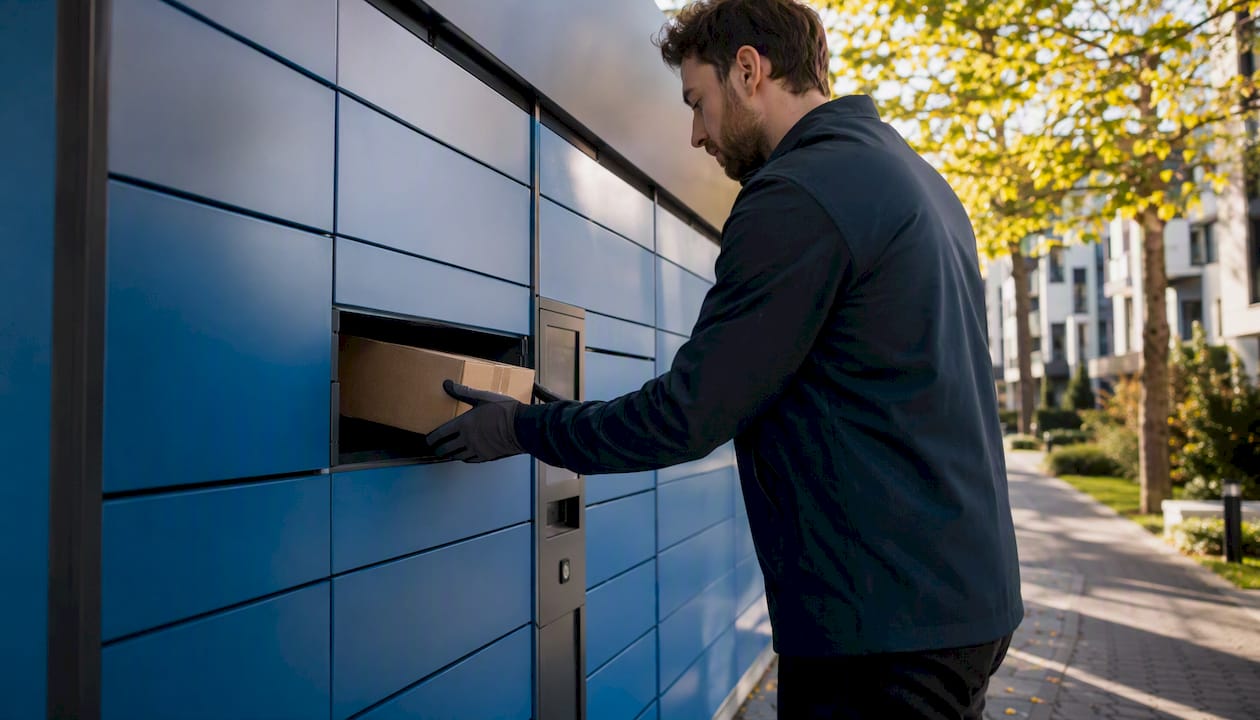
Pro Tip: Run a quarterly “follow-the-package” drill: have a staff member track a test delivery from carrier scan to resident pickup and document every handoff gap. This single exercise surfaces more liability exposure than most annual audits.
Technical controls that lower your installation risk
A well-designed installation removes the conditions that create claims. For new installs and retrofits, require:
- Dedicated power circuit with surge protection; battery backup for access-control panels
- Redundant network connection (wired primary, cellular failover) so notification failures don’t strand packages
- Secure mounting and tamper-evident hardware for outdoor kiosks
- Weatherproofing rated for your climate on any exterior installation
- Refrigeration monitoring with temperature alerts for perishable compartments
- CCTV covering all entry/exit points with adequate lighting; retain footage for a minimum of 30 days to cover incident response windows
- ADA-compliant locker heights and clear floor space; address slip/trip hazards near package areas with slip-resistant surfacing at high-traffic entry points
For software and access logs, require audit trails, role-based access permissions, encryption in transit and at rest, and periodic access audits. A vendor that can’t produce a clean audit log after an incident is a liability, not an asset.
Maintenance matters: Properties using smart lockers and monitored package rooms report reduced staff handling needs during peak periods. Require your vendor SLA to specify mean time to repair (MTTR), remote health monitoring, scheduled firmware updates, and a replacement standard for end-of-life hardware.
Sizing, budgeting, and deployment timelines
Capacity planning anchor: November and December account for nearly 20% of annual package volume, with locker delivery rates surging sharply in the week after Black Friday. Size your system for peak, not average.
| Budget line item | Notes |
|---|---|
| Hardware (lockers/kiosks) | Varies by unit count, locker type, and configuration |
| Software subscription | Annual or monthly; confirm data-security terms |
| Installation and site prep | Electrical, network, concrete pad for outdoor units |
| Refrigerated compartments | Add-on cost; required if perishables are common |
| Ongoing maintenance/management | SLA fees or managed-service contract |
For sizing, plan a capacity buffer of at least 20–30% above your average daily volume to absorb surge periods. Budget for an overflow workflow covering oversized parcels, which can represent a meaningful share of total deliveries at larger properties. See the package storage guide for detailed sizing frameworks.
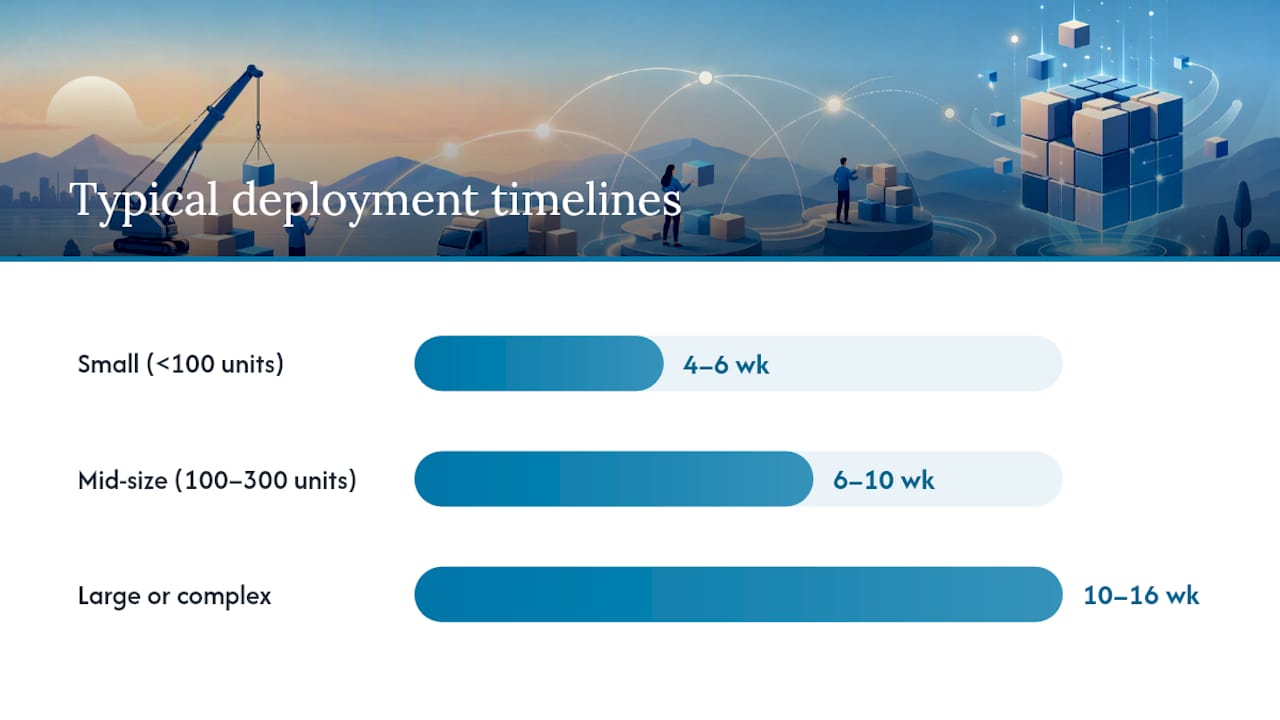
Typical deployment timelines: small properties (under 100 units) can go from signed contract to go-live in 4–6 weeks; mid-size properties (100–300 units) typically run 6–10 weeks; large or complex properties may require 10–16 weeks depending on electrical and network work.
Key Takeaways
Multifamily package management liability is primarily a workflow and contract problem: the properties with the least exposure combine clear chain-of-custody controls, updated lease language, and vendor contracts that assign responsibility explicitly.
| Point | Details |
|---|---|
| Bailment is the hidden risk | Staff signing for packages creates a legal duty of care; use waiver language and automated lockers to avoid it. |
| Peak season amplifies every gap | November–December account for nearly 20% of annual package volume; size and plan for surge, not average daily load. |
| Vendor contracts define your exposure | Require indemnity, CGL insurance minimums, MTTR SLAs, and audit-log access before signing any agreement. |
| Incident response speed matters | Export CCTV and access logs immediately; notify your insurer and the affected resident within 24 hours. |
| Locker Solutions covers the full stack | Luxer One® lockers, refrigerated compartments, monitored package rooms, and access control reduce bailment and operational risk in one agreement. |
A perspective from Locker Solutions
The conversation about package management liability usually starts after something goes wrong. A resident files a claim, a carrier drops a box in the hallway, or a staff member signs for a package that disappears. By then, the property is already in reactive mode.
What the properties with the cleanest liability records have in common isn’t the most expensive hardware. It’s a documented workflow that runs the same way every day, lease language that sets clear expectations, and a vendor relationship with real accountability built into the contract. The technology matters, but it’s the system around the technology that actually reduces exposure.
The other thing worth saying plainly: carrier non-compliance is not a resident complaint, it’s a liability trigger. When a driver bypasses the locker and leaves a package in a hallway, the chain of custody breaks. That’s where most theft claims originate. Any solution you evaluate should have a specific, documented answer to how it handles driver non-participation, not just a brochure about locker capacity.
Locker Solutions reduces your package liability exposure
Properties that replace manual acceptance with a monitored, automated system cut their bailment exposure at the source. Locker Solutions deploys Luxer One® smart lockers, outdoor weatherproof kiosks, refrigerated compartments for perishables, and managed package room service that removes staff from the acceptance equation entirely. Every unit includes automated resident notifications, timestamped access logs, and CCTV-ready integration, giving you the documentation chain your insurer and legal counsel will ask for after an incident.
Nationwide installation and maintenance support means your SLA is backed by a team that can respond when a unit goes down during peak season, not just during business hours. To see how these systems map to your property’s specific liability gaps, request a risk assessment and get a configuration recommendation tailored to your unit count and delivery volume.
Sources and further reading
- A framework for solving multifamily’s package management problem | Insights by Blueprint
- Package Theft Prevention: A Property Manager’s Playbook — Overton Security Services
- Package Theft in Apartments: California Landlord Guide — All East Bay Properties
- Tenant Mail and Package Theft: Landlord Obligations, Federal Law & Your Rights (2026) | ReadYourLease
- Legal Tips — Should the Association Accept Packages on Behalf of Residents? | Bartzen Rosenlund Kasten LLC
This article provides general informational guidance on package management liability. It is not legal advice. Consult a licensed attorney and your insurance carrier for jurisdiction-specific guidance on lease language, duty-of-care obligations, and coverage requirements.
Recommended
- Step by Step Package Management for Multifamily Properties — Locker Solutions Blog
- Leasing Office Package Problem: Fixes That Work — Locker Solutions Blog
- Package Clutter Solutions for Multifamily Properties — Locker Solutions Blog
- Secure package delivery for multifamily properties - Luxer One Locker Solutions
Ready for a Luxer One® package locker quote?
Tell us your unit count and we'll send right-sized pricing with a fast response time.
Get my free quote