June 20, 2026
Leasing Office Package Problem: Fixes That Work
Discover effective solutions for the leasing office package problem. Streamline delivery management and enhance tenant satisfaction today!

The leasing office package problem is defined as the operational breakdown that occurs when incoming delivery volume exceeds a property’s physical space, staffing capacity, and workflow systems. 85% of renters say package convenience directly influences their leasing decisions. That single figure explains why package management has moved from a minor inconvenience to a core amenity concern for multifamily property managers. This article walks you through the root causes, spatial fixes, technology options, and troubleshooting practices that resolve package overflow for good.
What causes the leasing office package problem?
Package management failure in multifamily properties is not a staffing problem. It is a systems problem. Volume growth is the primary driver, and most properties were never designed to handle today’s delivery loads.
The core causes break down into four categories:
- Volume outpacing space. Package volume continues to grow exponentially, leaving packages stacked on floors, tables, and hallways outside secure zones. This is the most visible symptom of a deeper structural gap.
- No dedicated package infrastructure. Properties without secure lockers or a dedicated package room force staff to act as informal couriers. That role was never in the job description.
- Delivery driver noncompliance. Drivers frequently leave packages in unintended locations, bypassing any workflow the property has set up. The result is disorganization, missing packages, and frustrated residents.
- Staff time drain. Leasing and concierge teams spend 4–6 hours per week managing packages. That adds up to more than 300 hours annually per property. Those are hours pulled directly from leasing tours, maintenance coordination, and resident relations.
The downstream effects are predictable. Residents file complaints about lost or delayed packages. Staff morale drops. And 20% of lease renewals are influenced by how well a property handles package amenities. Leasing office package issues are not just operational headaches. They are retention risks.
Pro Tip: Track your team’s weekly package handling time for one month before making any infrastructure changes. That baseline number will justify the investment and help you measure results afterward.
How should you design package space to prevent overflow?
Physical space is the foundation of any package management fix. Technology cannot compensate for a room that is too small or a workflow that has no physical home.
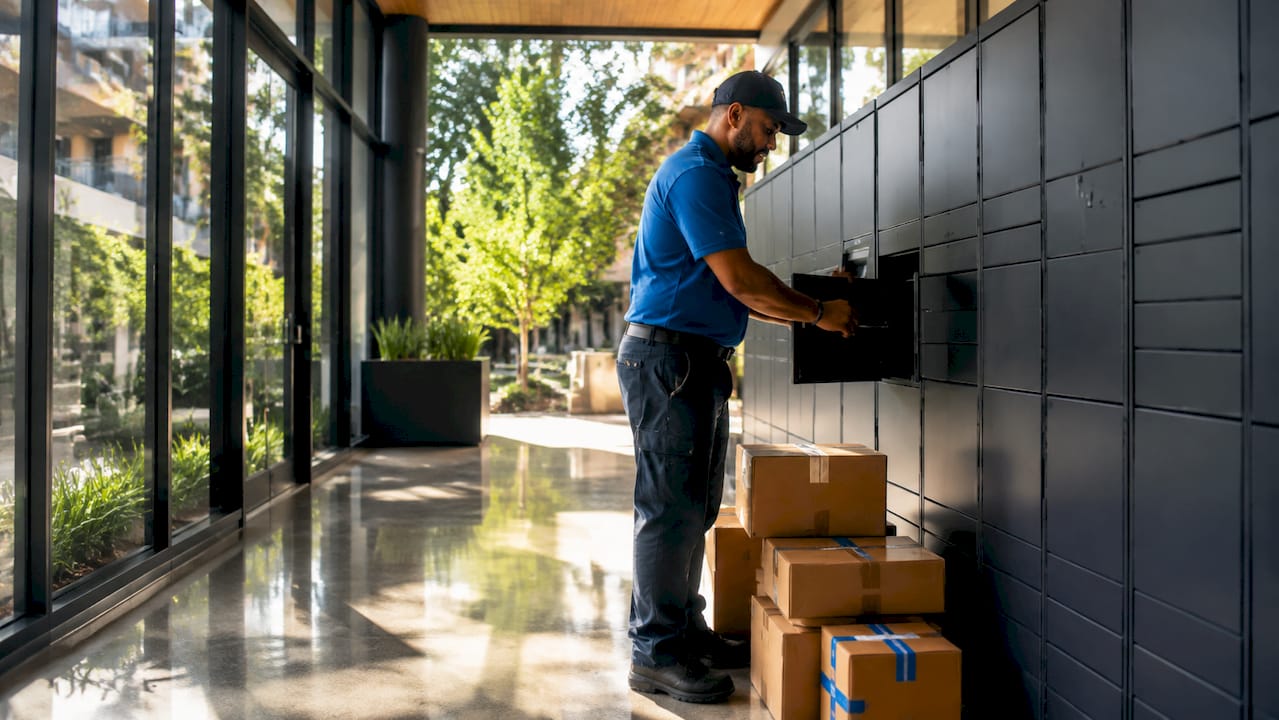
Allocate more space than you think you need
Architects consistently recommend building in more package space than initial estimates suggest. The reason is simple: volume projections almost always underestimate actual growth. Properties that expanded their package rooms found themselves running out of space again within 12–24 months of completing the project. Space expansion alone buys time. It does not solve the problem permanently.
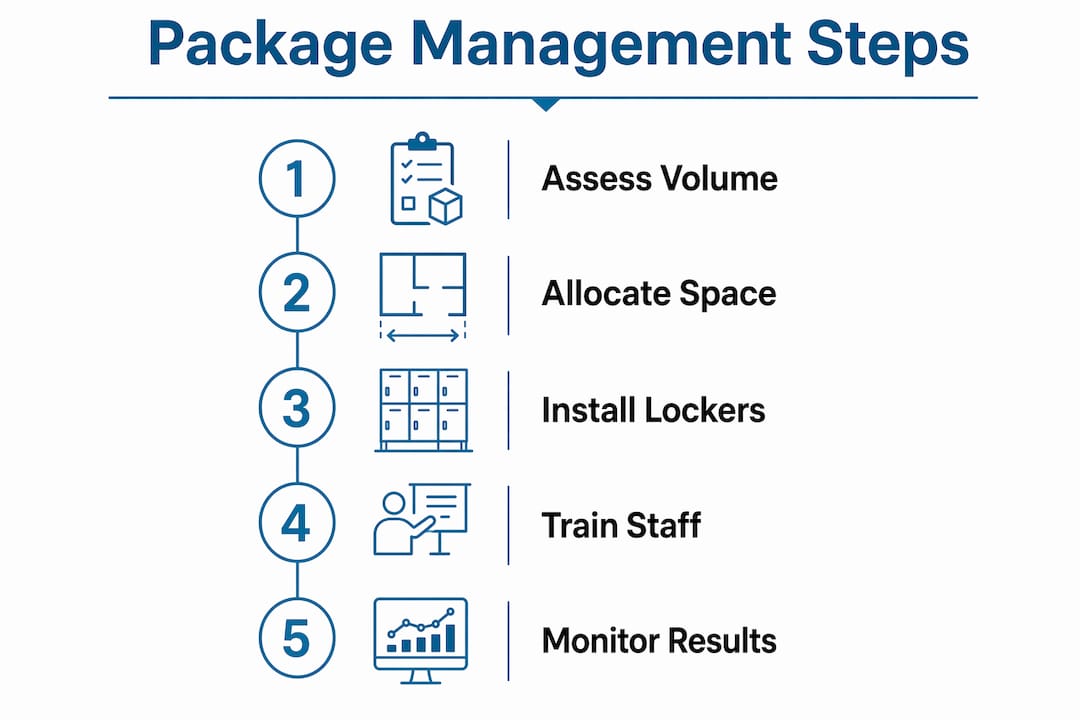
When planning a new build or renovation, factor in not just current unit count but projected resident behavior. Residents in urban multifamily properties receive an average of several packages per week. Multiply that across 200 or 300 units and the math becomes uncomfortable quickly. For renovation guidance that accounts for package delivery zones, resources like apartment renovation planning can help you think through spatial trade-offs before construction begins.
Convert underused spaces into package rooms
Converting underused spaces like old leasing offices, storage closets, or clubhouse corners into dedicated package rooms is one of the most cost-effective moves available to existing properties. No new construction is required. The space already exists. The conversion simply reassigns its purpose.
The table below compares the two primary physical approaches:
| Approach | Best for | Key limitation |
|---|---|---|
| Dedicated package room | Properties with available square footage | Requires ongoing space management |
| Secure locker bank | High-volume properties with limited floor space | Higher upfront hardware cost |
| Converted existing space | Retrofit situations with tight budgets | May require minor construction work |
| Outdoor locker kiosk | Properties with lobby constraints | Exposure to weather without weatherproof units |
Pro Tip: When converting a space, install video surveillance on day one. Monitored access deters theft and gives you documentation if a resident reports a missing package.
For a detailed breakdown of package room design principles specific to multifamily settings, Locker Solutions offers guidance on sizing, traffic flow, and access control that goes well beyond generic square footage recommendations.
How does technology reduce package handling time?
Physical space sets the stage. Technology determines how well the performance runs. The most effective approach to leasing package challenges combines automated hardware with software that manages both delivery personnel and resident notifications.
Here is a practical implementation sequence:
- Deploy AI delivery driver management. AI-driven systems prompt carriers to follow your property’s specific workflow at the point of delivery. These systems reduce staff handling time by up to 80% in communities that have adopted them. The reduction comes from fewer misplaced packages and less staff intervention per delivery.
- Install automated lockers or a monitored package room. Luxer One® lockers from Locker Solutions send residents an automated notification the moment a package is secured. The resident retrieves it independently. Staff never touch the package. This single change eliminates the most time-consuming part of the traditional package workflow.
- Standardize staff training. Technology only works when your team knows how to support it. Train staff on exception handling: what to do when a package is oversized, when a locker is full, or when a resident reports a delivery error. Written procedures reduce improvisation and inconsistency.
- Implement a hybrid strategy. Hybrid approaches combining physical lockers with digital management consistently outperform single-solution strategies. A package room handles oversized items. Lockers handle standard parcels. Software ties both together with notifications, access logs, and reporting.
The operational gains from automated package rooms are measurable within the first month of deployment. Properties report reduced manual deliveries, fewer resident complaints, and staff who are available for higher-value tasks.
Key technology features worth prioritizing:
- Automated resident alerts via text or email upon package arrival
- Video surveillance integrated with locker or room access
- Carrier-facing prompts that enforce drop-off procedures
- Access logs that provide documentation for dispute resolution
How do you troubleshoot recurring leasing office package issues?
Even well-designed systems break down under pressure. Knowing how to identify and fix recurring problems is what separates properties that manage packages well from those that manage them reactively.
- Delivery driver noncompliance. If packages keep appearing in hallways or lobby furniture, the problem is almost always carrier behavior. Address it by posting clear signage at every building entrance, using AI-assisted carrier prompts, and reporting repeat offenders to their dispatch centers. One property manager in a 300-unit community eliminated lobby package dumps entirely within 60 days of installing carrier-facing kiosk prompts.
- Package overflow during peak periods. Holiday seasons and Amazon Prime events create short-term volume spikes that overwhelm even well-sized rooms. Plan for these in advance by arranging temporary labor support, setting resident communication expectations, and designating overflow zones with clear labeling.
- Resident complaints about lost packages. Respond within 24 hours. Pull access logs from your locker or package room system to trace the delivery chain. Most “lost” packages are either misdelivered by carriers or sitting unclaimed in a locker the resident forgot about. Documentation protects you and resolves disputes faster.
- Space cramming. Forcing more packages into an undersized room creates a disorganized environment where errors multiply. Do not add shelving as a long-term fix. Treat a consistently full room as a signal to expand or add locker capacity.
Pro Tip: Send residents a monthly email reminder about package pickup timelines and locker expiration windows. Proactive communication reduces the number of packages that sit unclaimed for days, which is one of the most common causes of overflow.
For broader guidance on managing resident deliveries across all carrier types and building configurations, Locker Solutions publishes updated property manager resources that address 2026 delivery trends directly.
Key takeaways
The most effective resolution to leasing office package overflow combines dedicated physical space, automated locker technology, and carrier compliance systems working together.
| Point | Details |
|---|---|
| Volume is the root cause | Package growth consistently outpaces space, making infrastructure investment unavoidable. |
| Space alone is not enough | Properties that only expand rooms run out of capacity again within 12–24 months. |
| Technology cuts staff time | AI delivery management and automated lockers reduce staff handling time by up to 80%. |
| Hybrid strategies win | Combining lockers, package rooms, and digital management outperforms any single solution. |
| Resident retention is at stake | 85% of renters factor package convenience into leasing decisions and renewal choices. |
What we’ve learned from watching properties get this wrong
Most properties underestimate the package problem until it becomes a crisis. We have seen this pattern repeat across hundreds of multifamily communities. A leasing office starts accepting packages as a convenience. Volume doubles. Staff start spending entire afternoons sorting parcels. Residents complain. Management adds shelving. Volume doubles again.
The uncomfortable truth is that physical expansion without a technology layer is a temporary fix dressed up as a solution. The properties that get ahead of this problem share one characteristic: they treat package management as a permanent operational discipline, not a one-time project.
What actually works is committing to a hybrid model early. Luxer One® lockers handle the daily volume automatically. A monitored package room handles the overflow and oversized items. Carrier-facing prompts reduce the noncompliance that creates chaos at the front door. Staff training locks in the workflow so the system holds even when turnover happens.
The other thing we have observed is that package management is now a leasing conversation, not just an operations conversation. When a prospective resident asks about amenities, package handling comes up. Properties that can point to a Luxer One® locker bank or an automated package room close that conversation with confidence. Properties that cannot are explaining why their leasing office looks like a UPS sorting facility.
Invest in the infrastructure. Train the team. Let the technology do the repetitive work. That is the sequence that eliminates the problem rather than managing it indefinitely.
— Locker Solutions
Solve your package management challenges with Locker Solutions
Leasing office package overflow does not have to be a permanent drain on your team’s time and your residents’ patience.
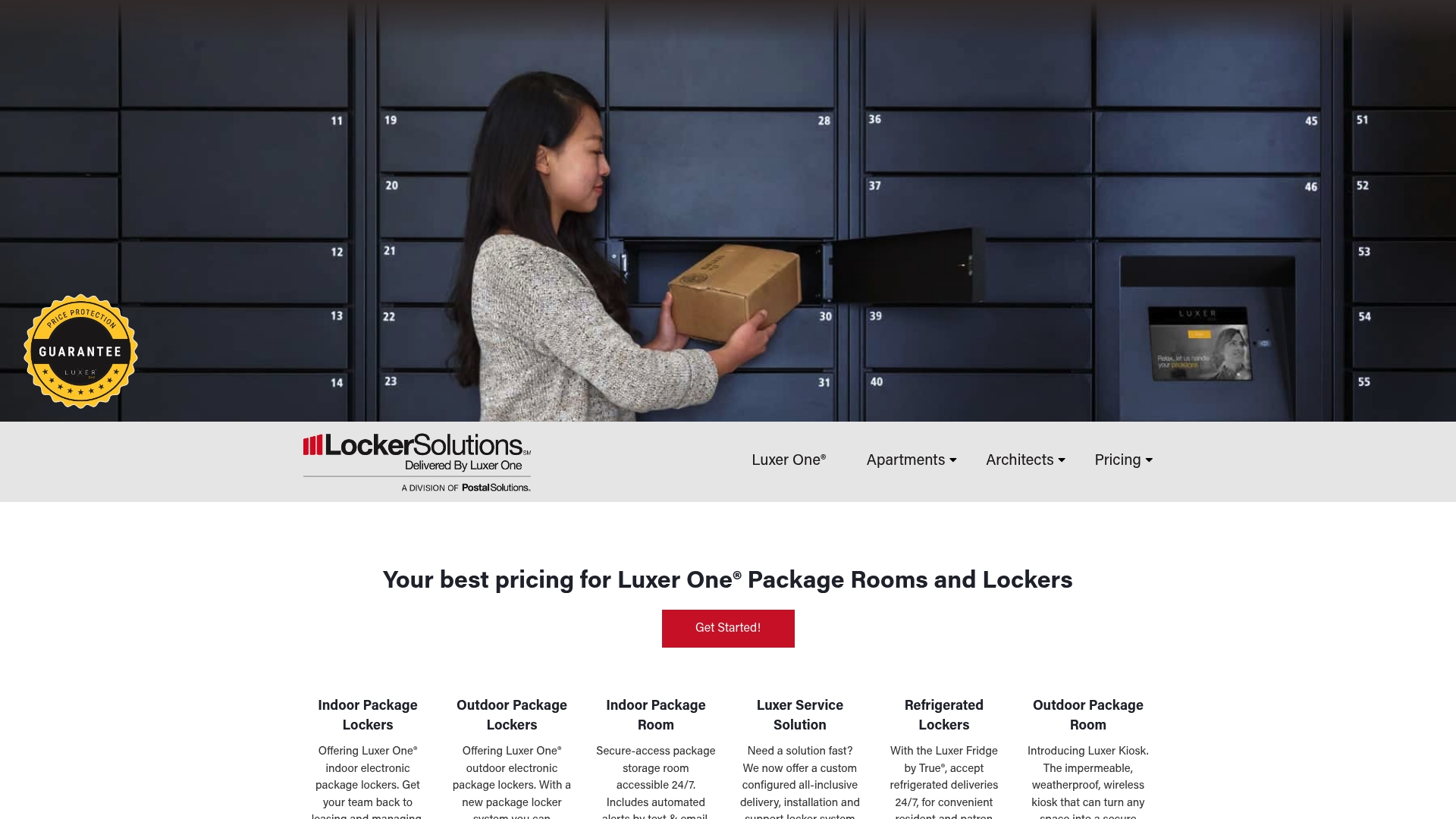
Locker Solutions offers Luxer One® indoor package lockers, outdoor weatherproof units, and fully monitored package rooms built specifically for multifamily properties. Each system includes automated resident notifications, video surveillance, and carrier-facing access controls that reduce staff handling time from day one. Whether you manage a 50-unit building or a 500-unit community, Locker Solutions has a configuration that fits your footprint and your budget. Explore the full range of apartment locker solutions and find the right fit for your property today.
FAQ
What is the leasing office package problem?
The leasing office package problem refers to the operational breakdown caused when incoming delivery volume exceeds a property’s available space, staff capacity, and workflow systems. It results in package overflow, staff time loss, and resident dissatisfaction.
How much time do staff spend managing packages?
Leasing and concierge teams spend 4–6 hours per week on package handling, which equals more than 300 hours annually per property. Automated locker systems eliminate most of that workload by allowing residents to retrieve packages independently.
Do package lockers actually reduce resident complaints?
Automated package rooms and monitored locker systems reduce manual deliveries and package complaints within the first month of implementation. Residents receive instant notifications and retrieve packages on their own schedule, removing the staff from the equation entirely.
How do I stop delivery drivers from leaving packages in the wrong place?
AI-driven delivery management systems prompt carriers to follow your property’s specific drop-off workflow at the point of delivery. Properties using these systems report significant reductions in misplaced packages and unauthorized lobby drops.
Is expanding the package room enough to fix overflow?
Expanding physical space alone is not a permanent fix. Multiple communities ran out of package space again within 12–24 months of completing expansion projects. A hybrid approach combining physical space with automated lockers and digital management delivers lasting results.
Recommended
- Why Package Solutions for Residential Properties Matter — Locker Solutions Blog
- Explaining Package Room Solutions for Property Managers — Locker Solutions Blog
- Multifamily Package Delivery Explained for Property Managers — Locker Solutions Blog
- Efficient package room solutions for multifamily properties - Luxer One Locker Solutions
Ready for a Luxer One® package locker quote?
Tell us your unit count and we'll send right-sized pricing with a fast response time.
Get my free quote