August 4, 2026
Common Utah Property Management Challenges: Owner's Guide
Discover effective solutions for common Utah property management challenges. Learn to improve unit turnover, vendor management, and tenant screening!

Utah landlords face a predictable set of problems: slow unit turns that bleed rent revenue, vendor shortages that cascade into tenant complaints, eviction timelines that punish procedural errors, trust-account mismanagement that triggers Division of Real Estate investigations, and a growing package-delivery burden that steals staff hours. The one-sentence fix for each: document everything, require licensed and insured vendors, follow Utah Code deadlines to the day, keep tenant funds in a separate reconciled account, and centralize parcel handling with a dedicated system.
Here are the top challenges and their immediate mitigating actions:
- Slow unit turns: Track days-to-turn monthly and pre-schedule vendors before a notice-to-vacate is received.
- Vendor availability gaps: Maintain a bench of at least three licensed, insured contractors per trade category with signed service agreements.
- Tenant screening inconsistency: Apply written, uniform criteria to every applicant to limit Fair Housing exposure.
- Rent collection and nonpayment: Serve a written 3-day pay-or-quit notice the moment a tenant is past the grace period, per Utah eviction rules.
- Security-deposit mishandling: Return the deposit or deliver an itemized deduction statement within 24 calendar days of vacancy under Utah law.
- Repair-and-deduct exposure: Respond to written repair notices with documented, time-stamped vendor action under Utah Code §57-22-6 before a tenant exercises the remedy.
- Trust-account violations: Reconcile owner and tenant funds monthly; the Utah Division of Real Estate treats commingling as a serious enforcement category.
- Entry-notice failures: Provide 24 hours’ written notice before every non-emergency entry.
- Package and logistics friction: Replace ad hoc delivery handling with a locker or monitored package room to cut staff time and reduce liability.
- Unlicensed management activity: Verify that any third-party manager holds a current Utah license as new professionalization standards take hold.
Two actions to take in the next 48–72 hours: Pull every active lease and confirm your entry-notice and security-deposit procedures match current Utah Code requirements. Then call your top two vendors and confirm their insurance certificates are current and on file.
Table of Contents
- What are the biggest operational pain points for Utah landlords?
- What Utah-specific legal risks can cost you the most?
- How do you handle tenant screening, rent collection, and disputes in Utah?
- What financial pressures hit Utah landlords hardest?
- How does package management create hidden operational costs?
- When should you hire a property manager or bring in a professional?
- Your 30/60/90-day action plan to fix the highest-risk problems
- Key Takeaways
- The professionalization of Utah property management is accelerating more quickly than most owners realize
- Package lockers solve a real operational problem Utah landlords often overlook
- Authoritative sources and further reading
What are the biggest operational pain points for Utah landlords?
Unit turn time is the metric most owners track too loosely. Every day a unit sits vacant after a tenant moves out costs you rent, and the costs compound fast when vendors are unavailable, parts are backordered, or the previous tenant left deferred maintenance behind. In Utah’s Wasatch Front markets, HVAC demand spikes in July and August can push HVAC contractor lead times out two to three weeks, turning a routine turn into a month-long vacancy.
Metrics every owner must track
Three numbers tell you whether your operations are healthy or quietly bleeding money:
- Days-to-turn: The calendar days from a tenant’s move-out to a new lease start. Track this per unit and per property.
- Cost-per-turn: Total spend on cleaning, repairs, paint, and carpet for each vacancy. Compare it against your average monthly rent to understand the real cost of turnover.
- Average time-to-repair: How long from a maintenance request submission to verified completion. Anything over 72 hours for a non-emergency item signals a vendor or workflow problem.
Vendor onboarding and SLA standards
Owners who scramble to find a plumber after a pipe bursts pay emergency rates and wait longer. The fix is a pre-qualified vendor bench built before you need it. For every trade category (HVAC, plumbing, electrical, general maintenance), you should hold on file: a current certificate of general liability insurance, a signed W-9, two verifiable references from other landlords, and a written service-level agreement that specifies response time for emergency vs. non-emergency calls.
When vetting vendors, ask for proof of a Utah contractor license. For vendor payment and lien risk on larger repair jobs, Utah lien waiver requirements are worth reviewing before you cut a check.
A simple monthly audit catches problems before they escalate. Once a month, pull your open maintenance tickets, check which ones are past their SLA target, and call the vendor directly. If a vendor misses SLA twice in a quarter, replace them on your bench.
Package and logistics friction
Package volume at multifamily properties has grown to the point where front-desk handling and lobby overflow are now legitimate operational cost centers. Staff time spent logging deliveries, fielding “where’s my package” calls, and managing overflow storage adds up. That friction also creates maintenance headaches: packages left in hallways or common areas create trip hazards and damage claims. The tech section below covers the long-term fix, but the immediate step is to count how many staff hours per week your property spends on parcel handling and put a dollar figure on it.
| Operational Metric | Target Benchmark | Warning Sign |
|---|---|---|
| Days-to-turn | Under 10 days | Over 21 days |
| Cost-per-turn | Under 1 month’s rent | Over 2 months’ rent |
| Time-to-repair (non-emergency) | Under 72 hours | Over 5 business days |
| Vendor insurance on file | 100% of active vendors | Any gap |
What Utah-specific legal risks can cost you the most?
Utah’s landlord-tenant law is specific, and the penalties for missing a deadline or skipping a procedural step are not proportional to the mistake. A one-day miss on a security-deposit return can expose you to liability for the full deposit amount. A self-help eviction attempt, such as changing locks without a court order, can result in damages and attorney fees. These are not edge cases; they are the most common ways Utah owners turn a manageable dispute into an expensive one.
Core statutes you must know
Utah Code §57-22-6 (Fit Premises Act) governs tenant repair remedies. A tenant who is current on rent and has given proper written notice may choose between two remedies if you fail to make a required repair: repair-and-deduct (capped at two months’ rent) or rent abatement, which terminates the lease and requires the tenant to vacate within 10 calendar days. Unilateral rent withholding and rent escrow are not permitted under Utah law; tenants must follow the statutory procedure or they lose the remedy.
Entry notice: Utah law requires 24 hours’ written notice before entering an occupied unit for any non-emergency inspection or repair. Skipping this step, even once, gives a tenant grounds for a quiet-enjoyment claim.
Eviction for nonpayment: You must serve a written 3-day notice to pay or vacate before filing in a Utah justice court. Eviction timelines typically run 3–6 weeks from notice to judgment when everything goes right. Filing in the wrong court adds weeks and increases vacancy losses.
Security deposit return: Utah law gives you 24 calendar days after a tenant vacates to return the deposit or deliver an itemized written statement of deductions. Missing that deadline creates liability for the full deposit amount under Utah Code §57-17-5.
Key notice and cure timelines
| Event | Required Action | Deadline |
|---|---|---|
| Tenant repair request (written) | Respond with documented vendor action | Reasonable time; act promptly to avoid §57-22-6 remedy |
| Non-emergency unit entry | Deliver written 24-hour notice | Before every entry |
| Nonpayment of rent | Serve 3-day pay-or-quit notice | Before filing eviction |
| Tenant vacates | Return deposit or itemized deductions | Within 24 calendar days |
| Eviction (notice to judgment) | File in correct justice court | Typically 3–6 weeks total |
The most common legal errors and their consequences
- Improper notice service: Verbal notice or a text message does not satisfy Utah’s written-notice requirement. Consequence: eviction dismissed, restart the clock.
- Commingling tenant funds: Mixing security deposits with operating funds is a trust-account violation. The Utah Division of Real Estate treats this as a serious enforcement category, and the OPLR report on property management licensure identifies trust-account mismanagement as a primary source of owner and tenant harm.
- Self-help eviction: Changing locks, removing belongings, or shutting off utilities without a court order exposes you to damages and attorney fees.
- Missing the deposit deadline: Even one day past the 24-day window can convert a legitimate deduction dispute into full-deposit liability.
Recordkeeping checklist
Courts and enforcement agencies resolve disputes based on documentation. What you need for every tenancy:
- Move-in and move-out photos with timestamps
- Signed move-in condition report
- Copies of all written notices with proof of delivery (certified mail or process server)
- Dated vendor invoices and receipts for all repairs
- Itemized deposit deduction statement with supporting receipts
Pro Tip: For repair-and-deduct defense, the most effective evidence is a time-stamped vendor visit note combined with photos taken the same day. Keep a relationship with at least one on-call licensed contractor who can provide verifiable timestamps on short notice.
How do you handle tenant screening, rent collection, and disputes in Utah?
Tenant management problems in Utah usually trace back to one of two things: inconsistent screening that creates Fair Housing exposure, or a rent-collection process that has no written escalation ladder. Both are fixable with documented policies applied uniformly.

Building a defensible screening process
A defensible screening process starts with written criteria posted before you accept any application. Those criteria should cover minimum income thresholds (typically 2.5–3x monthly rent), credit score floors, rental history requirements, and criminal background standards. Apply the same criteria to every applicant in the same order. Document every decision, including denials, with the specific criterion that was not met.
Consistency is the Fair Housing defense. Ad hoc exceptions, even well-intentioned ones, create the appearance of disparate treatment. If you waive a criterion once, you need a documented, non-discriminatory reason.
Rent collection and the escalation ladder
A written escalation policy removes the emotional friction from rent collection and protects you legally. Here is a practical framework:
- Day 1 past due: Automated reminder (text or email) referencing the lease grace period.
- Day 3: Written notice delivered to the unit door confirming the balance owed and the grace period end date.
- Day 5 (or end of grace period): Serve the 3-day written pay-or-quit notice. This starts the eviction clock.
- Day 8: If unpaid, consult your attorney before filing. Confirm you are filing in the correct Utah justice court for the property’s location.
Never accept partial payment after serving a pay-or-quit notice without a written agreement, because accepting partial payment can waive the notice and require you to start over.
Lease clauses worth auditing
Three clauses that owners frequently overlook:
- Notice address: The lease should specify the exact address where legal notices must be delivered. If this is wrong or missing, a tenant can argue improper service.
- Late fee structure: Utah does not cap late fees by statute, but the fee must be stated clearly in the lease and applied consistently.
- Entry procedures: The lease should restate the 24-hour written notice requirement and specify how notice will be delivered (email, posted notice, or both).
Retention tactics that actually reduce vacancy
Responsive maintenance is the single strongest retention driver. Tenants who receive a repair confirmation within 24 hours and a completed repair within 72 hours renew at higher rates than those who wait a week and hear nothing. A simple text or email confirming receipt of a maintenance request costs nothing and signals professionalism.
Lease renewal incentives do not need to be expensive. A small rent credit for a 12-month renewal, or a carpet cleaning at renewal, often costs less than one week of vacancy. Anti-retaliation rules apply here too: never raise rent, reduce services, or initiate eviction in response to a tenant’s repair request or complaint. Courts treat timing as evidence.
What financial pressures hit Utah landlords hardest?
The financial risks in Utah property management are not abstract. They show up as specific dollar losses tied to specific mistakes or delays.
The real cost of vacancy
A single-family rental at $1,800/month sitting vacant for 30 days costs $1,800 in lost rent plus turn costs. Add a $1,200 turn (cleaning, paint, minor repairs) and you are at $3,000 before you count your mortgage payment. For a small multifamily property with four units at the same rent, a 30-day average vacancy across two units costs $3,600 in lost rent plus turn costs. Evictions extend that vacancy window by several weeks, pushing the total loss significantly higher.
The math makes a strong case for spending money on tenant retention and fast turns rather than tolerating a slow process.
Reserve ratios for small portfolios
Most property management professionals recommend holding operating reserves equal to two to three months of gross rent per property, plus a capital reserve for major systems (roof, HVAC, water heater). For a single-family rental, that means keeping two to three months’ gross rent in a dedicated account before you need it. Owners who skip reserves end up funding emergency repairs from personal accounts or deferring them, which accelerates the repair-and-deduct risk under §57-22-6.
Utah security-deposit rules
Utah law caps security deposits at the equivalent of one month’s rent for unfurnished units (check current statute for furnished units). The 24-calendar-day return deadline is firm. Miss it and you face liability for the full deposit, regardless of legitimate deductions. The practical fix: set a calendar reminder the day a tenant gives notice, counting 24 days from the expected move-out date, not the notice date.
Trust-account and accounting hazards
The most common money-handling mistakes that trigger enforcement actions:
- Depositing security deposits into an operating account instead of a separate trust account
- Delaying owner disbursements while using tenant funds to cover shortfalls
- Failing to reconcile trust accounts monthly, which masks errors until they become large
- Missing owner reimbursement timelines, which erodes trust and can trigger complaints to the Division of Real Estate
A monthly reconciliation routine takes about 30 minutes for a small portfolio and is the single most effective audit tool you have.
Insurance checklist for Utah-specific risks
Utah’s climate creates specific exposures that standard landlord policies sometimes underweight:
- Freeze and burst pipe coverage: Relevant for properties in northern Utah and mountain communities where winter temperatures drop sharply.
- Wind and hail coverage: Common in the Salt Lake Valley and along the Wasatch Front during spring storms.
- Older-stock plumbing and HVAC: Properties built before 1990 often have galvanized pipe or aging HVAC systems; confirm your policy covers sudden failure, not just gradual deterioration.
- Liability coverage: At least $1 million per occurrence is a reasonable floor for a single-family rental; higher for multifamily.
- Loss of rent coverage: Covers income during a covered repair period, which is especially relevant after a weather event.
Review your policy annually and confirm it reflects the current replacement cost of the property, not the purchase price.
How does package management create hidden operational costs?
Package volume at multifamily properties has become a genuine operational problem, not a minor inconvenience. Staff time spent accepting deliveries, logging them, notifying residents, and managing overflow is time not spent on maintenance coordination, leasing, or compliance tasks. When packages pile up in a lobby or leasing office, the liability exposure grows: damaged packages, theft, and trip hazards all create incidents that take time to resolve.

Where the friction actually lives
The most common tech friction points in Utah multifamily properties:
- Siloed property management software (PMS): Maintenance, leasing, and package handling run on separate systems with no shared data, so staff manually bridge the gaps.
- Manual delivery alerts: Staff text or email residents individually when packages arrive, which is slow and inconsistent.
- No pickup confirmation: Without a logged pickup, staff cannot confirm a package was retrieved, creating disputes when residents claim non-delivery.
- Overflow handling: When locker capacity or desk space fills up, packages go to a back room with no tracking, and retrieval becomes a staff-time drain.
Short-term fixes vs. long-term solutions
| Approach | Staff Time | Resident Experience | Integration | Upfront Cost |
|---|---|---|---|---|
| Manual desk handling | High (daily) | Inconsistent | None | Low |
| Temporary overflow storage | Medium | Poor (delays) | None | Very low |
| Dedicated locker system | Low (automated) | Consistent, 24/7 | PMS/API | Moderate |
| Monitored package room | Very low (managed) | High | Full | Moderate–high |
Manual handling and overflow storage solve nothing structurally. They shift the labor burden without reducing it. A dedicated locker system or monitored package room removes the recurring labor cost, provides residents with 24/7 pickup access, and generates a logged record of every delivery and retrieval.
What to look for when evaluating parcel solutions
When comparing options, these criteria separate a system that works from one that creates new problems:
- PMS integration: Does the system connect to your existing property management software via API or webhook, or does it require manual data entry?
- Automated resident alerts: Does it send pickup notifications automatically, without staff involvement?
- Video surveillance and access logs: Can you pull a timestamped record of every delivery and pickup for dispute resolution?
- Climate control: For Utah’s temperature extremes, outdoor lockers should be weatherproof and heat-resistant. Locker Solutions covers this in detail in their heat-resistant locker technology guide.
- Service and support: What is the vendor’s SLA for hardware failures? Who handles maintenance?
For a practical walkthrough of package-room workflows and overflow handling, Locker Solutions’ step-by-step package management guide covers the operational side in detail.
When should you hire a property manager or bring in a professional?
Self-management makes financial sense at small portfolio sizes and close geographic proximity. It stops making sense when compliance complexity, time drain, or legal risk outpaces your capacity to manage them.
Decision rules that push toward hiring
- You own more than four units or properties in multiple Utah counties.
- You spend more than 10 hours per week on management tasks and that time has a real opportunity cost.
- You have had an eviction, a trust-account dispute, or a Fair Housing complaint in the past two years.
- You live more than 60 miles from the property.
- You are not confident your current notice and deposit procedures comply with current Utah Code.
Utah’s new licensing requirements for property managers raise the professional bar. Recent legislative changes require targeted education hours and specialized testing aimed at reducing trust-account mismanagement and unlicensed activity. That means the managers you hire are increasingly held to a higher standard, and the ones who are not licensed are a liability.
Questions to ask when vetting a property manager
- How do you handle trust accounts, and how often do you reconcile them?
- What is your staffing ratio (units per manager)?
- Which property management software do you use, and does it integrate with owner reporting?
- How do you document and serve legal notices?
- What compliance training does your team receive, and how often?
- Can you provide references from owners with portfolios similar to mine?
Red flags that should trigger an immediate audit
- Unexplained delays in owner disbursements
- Missing or expired insurance certificates from vendors
- Inconsistent application of screening criteria across applicants
- No written documentation of notice service
- Resistance to providing trust-account reconciliation reports
Attorney vs. accountant: knowing which call to make
Call an attorney when you are facing an eviction, a Fair Housing complaint, a repair-and-deduct dispute, or any situation where a tenant has retained counsel. Call an accountant when you are structuring a 1031 exchange, evaluating depreciation strategy, or planning an entity restructure. The two roles do not overlap, and using the wrong one costs time and money.
Your 30/60/90-day action plan to fix the highest-risk problems
This plan addresses the exposures with the highest probability of costing you money in the next 12 months.
30-day priorities
- Pull every active lease and confirm the notice address, late fee clause, and entry-notice language are current and correct.
- Audit your security-deposit process: confirm deposits are in a separate account, and set calendar reminders for the 24-day return deadline tied to each current tenancy’s expected end date.
- Verify that every active vendor has a current insurance certificate and a signed W-9 on file.
- Confirm your entry-notice practice delivers written notice at least 24 hours before every non-emergency entry.
60-day priorities
- Implement a written maintenance SLA: define response time targets for emergency (same day) and non-emergency (72 hours) requests, and communicate them to tenants in writing.
- Tighten your tenant-screening criteria into a single written document applied to every applicant.
- Create a written rent-collection escalation ladder (see the tenant management section above) and share it with anyone who handles collections for your properties.
- Begin a monthly trust-account reconciliation routine if you are not already doing one.
90-day priorities
- Formalize vendor contracts with written SLAs, insurance requirements, and payment terms for every active vendor.
- Run a mock eviction timeline exercise for each property: walk through the notice, filing, and court steps to confirm you know the correct justice court and the exact procedural sequence.
- Evaluate your current package-handling process and get quotes for a locker or monitored package room if staff time or resident complaints are a recurring issue.
- Review your PMS setup and identify any manual handoffs that could be automated (maintenance requests, lease renewals, package alerts).
For broader operational best practices, the Locker Solutions apartment building manager guide covers many of these workflows in detail.
| Phase | Priority Action | Deadline Signal |
|---|---|---|
| 30 days | Audit leases, deposits, and vendor insurance | Before next tenant move-out |
| 60 days | Written maintenance SLA and screening criteria | Before next application |
| 90 days | Vendor contracts and mock eviction exercise | Before next renewal cycle |
| Ongoing | Monthly trust-account reconciliation | First week of every month |
Key Takeaways
Utah landlords who document every notice, meet every statutory deadline, and centralize package handling eliminate the majority of their legal and operational exposure before a dispute ever starts.
| Point | Details |
|---|---|
| Meet deposit deadlines | Return the deposit or itemized deductions within 24 calendar days of vacancy to avoid full-deposit liability. |
| Serve proper written notices | Every entry, repair response, and eviction step requires written documentation; verbal or text notice does not satisfy Utah law. |
| Reconcile trust accounts monthly | Commingling funds is a top enforcement trigger; a 30-minute monthly reconciliation catches errors before they compound. |
| Pre-qualify vendors before you need them | Hold current insurance certificates, W-9s, and signed SLAs for every active vendor to avoid emergency rates and liability gaps. |
| Centralize package handling | Locker Solutions’ Luxer One® locker systems and monitored package rooms remove recurring staff labor and reduce delivery-related incidents. |
The professionalization of Utah property management is accelerating more quickly than most owners realize
Utah’s regulatory direction is clear: higher licensing standards, more scrutiny on trust accounts, and less tolerance for procedural shortcuts. The OPLR report on property management licensure identified trust-account mismanagement as a primary source of harm to both owners and tenants, and the legislative response has been to raise the bar for everyone in the industry.
What most owners underestimate is that these standards apply to self-managing owners too, not just licensed managers. The expectation that you maintain clean trust accounts, serve proper written notices, and document repair responses is not new, but enforcement attention is increasing. The owners who get caught are not usually the ones who knew the rules and ignored them. They are the ones who assumed their informal process was close enough.
Three practical positions worth holding:
- Compliance is cheaper than litigation. A $200 attorney review of your lease and notice templates costs less than one dismissed eviction.
- Outsource selectively, not wholesale. You do not need a full-service property manager to reduce risk. A part-time bookkeeper for trust-account reconciliation and an on-call attorney for eviction filings covers most of the high-exposure gaps.
- Resident experience and compliance reinforce each other. Responsive maintenance, clear communication, and consistent policy enforcement reduce disputes and improve retention simultaneously.
The owners who will struggle in the next few years are those treating property management as a passive income activity. The ones who will do well are treating it as a small business with documented processes, professional vendor relationships, and a clear understanding of their legal obligations.
Package lockers solve a real operational problem Utah landlords often overlook
Package delivery volume is not going down, and the staff hours spent managing it are a direct drag on your operating margin. Locker Solutions’ Luxer One® systems give residents 24/7 pickup access with automated alerts, video surveillance, and AI-powered label reading, so your team stops being the middleman for every delivery.
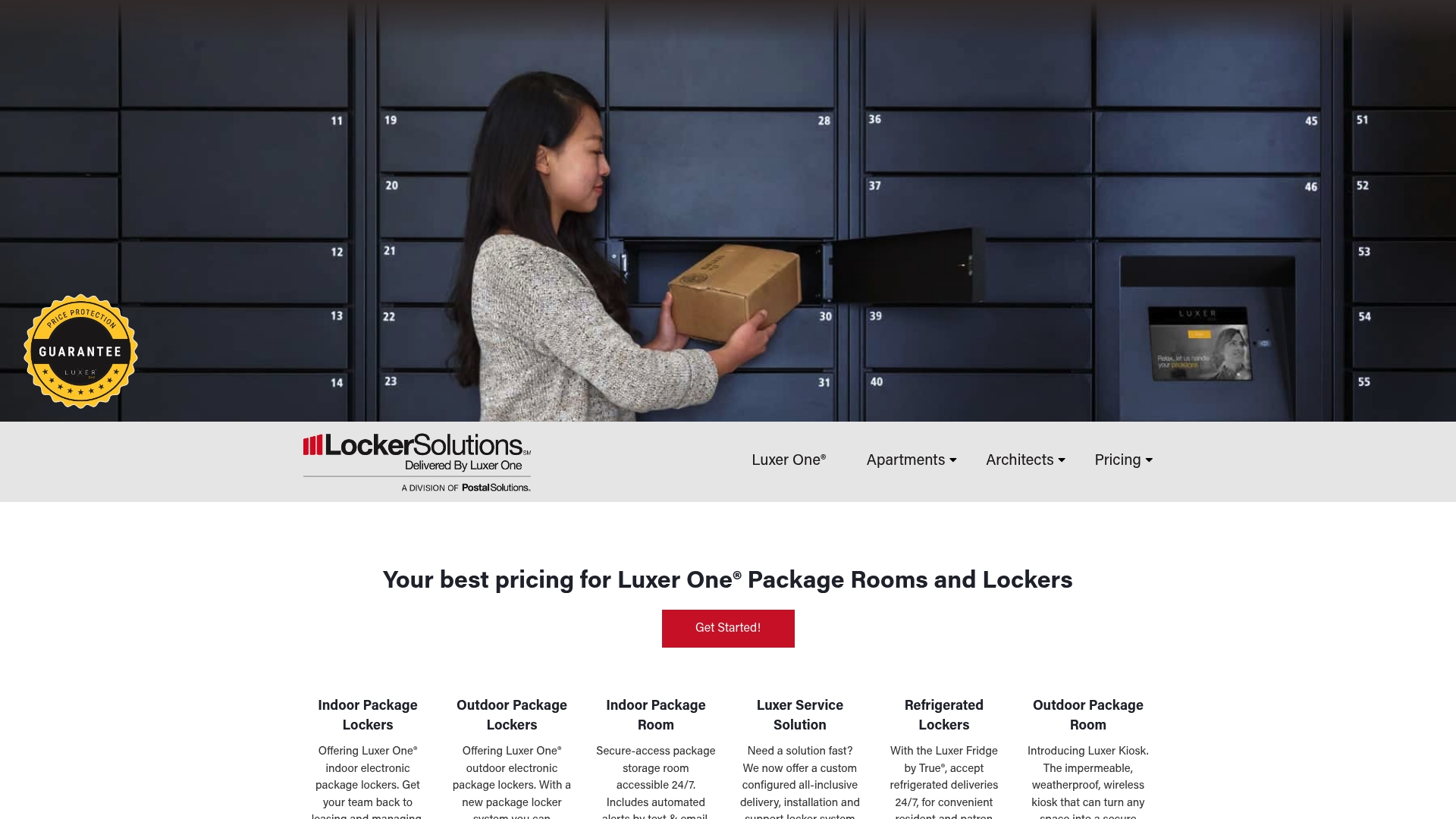
For Utah properties dealing with temperature extremes, Luxer One® outdoor lockers are built weatherproof and heat-resistant, handling the Wasatch Front’s summer heat and winter freeze without hardware failures. Refrigerated locker options cover grocery and meal-kit deliveries. The full system integrates with most property management software via API, eliminating the manual logging that currently eats staff time.
The selection checklist is short: confirm PMS integration, verify the vendor’s hardware SLA, check climate-control specs for your property’s exposure, and ask about financing options. Locker Solutions offers nationwide installation and support, with flexible financing for owners who want to spread the capital cost.
For properties in Salt Lake City and the surrounding area, Luxer One® apartment package lockers are available locally. For a full overview of automated package room options, explore the Locker Solutions package room management service to see which configuration fits your property size and delivery volume.
Authoritative sources and further reading
| Source | Type | What it covers |
|---|---|---|
| Utah Code §57-22-6 (Fit Premises Act) | Primary statute | Tenant repair remedies, repair-and-deduct cap, rent abatement rules |
| Utah Code §57-17-5 (Security deposit rules) | Primary statute | Security deposit deadlines and owner liability for missed return |
| Utah Courts: Eviction (Landlord) | Official court guidance | Eviction filing procedures, correct justice court, notice requirements |
| Utah Division of Real Estate | Regulatory agency | Licensing requirements, trust-account enforcement, complaint process |
| OPLR Report: Property Management Licensure | Legislative research report | Trust-account risk analysis, licensure reform recommendations |
| TenantRightsInfo: Utah Landlord Repairs | Guidance article | Entry notice rules, repair procedures, tenant remedy procedures |
| Rhino Property Management: Landlord-Tenant Law in UT | Guidance article | Deposit deadlines, eviction timelines, documentation standards |
This article provides general information for Utah landlords and is not legal or financial advice. Confirm current rules with the Utah Division of Real Estate, the relevant Utah Code sections, or a licensed Utah attorney before making compliance decisions.
Recommended
- Apartment Building Manager: 2026 Best Practices Guide — Locker Solutions Blog
- Step by Step Package Management for Multifamily Properties — Locker Solutions Blog
- Apartment locker setup guide: maximize efficiency now - Luxer One Locker Solutions
- How automated package alerts boost property efficiency - Luxer One Locker Solutions
Ready for a Luxer One® package locker quote?
Tell us your unit count and we'll send right-sized pricing with a fast response time.
Get my free quote