August 16, 2026
Smart Building Integration Types: A Facility Team's Guide
Explore various smart building integration types and discover which suits your facility's needs best for enhanced efficiency and management.
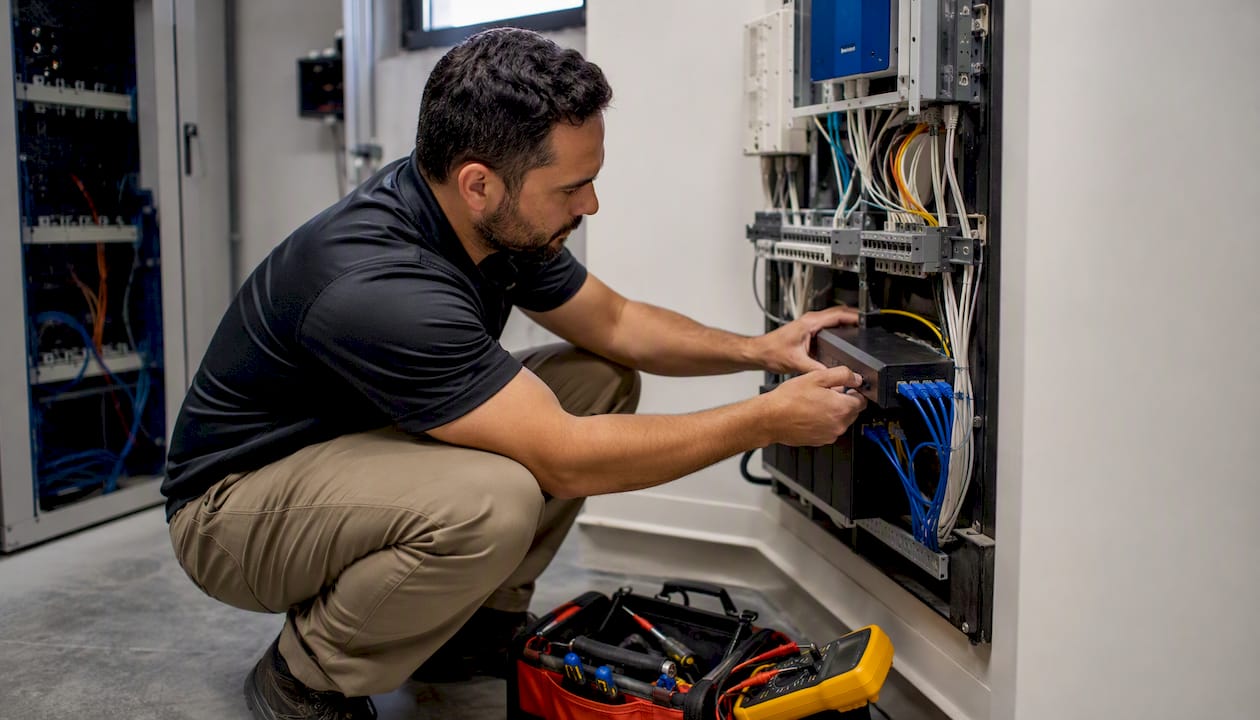
Smart building integration types fall into three primary categories: proprietary vendor stacks, open-protocol building automation systems (BAS), and cloud/middleware orchestration platforms. Proprietary stacks suit mission-critical facilities where single-vendor support and uptime guarantees matter most. Open-protocol BAS fits retrofit and mixed-equipment environments where long-term flexibility outweighs convenience. Cloud and middleware orchestration works best for multi-site portfolios where central management and cross-property analytics justify the added complexity.
At a glance:
- Proprietary vendor stacks: best for new construction, mission-critical uptime, single-campus deployments
- Open-protocol BAS (BACnet, Modbus, KNX): best for retrofits, mixed-vendor equipment, long-term flexibility
- Cloud/middleware orchestration: best for multi-site portfolios, analytics-heavy operations, phased integration
The central trade-off is vendor lock-in versus flexibility versus central management. Every procurement decision in building technology eventually comes back to that triangle.
Key Takeaways
Smart building integration types divide into three architectures, and choosing the wrong one for your facility’s lifecycle stage is the most expensive mistake you can make in building technology procurement.
| Point | Details |
|---|---|
| Three primary architectures | Proprietary stacks for mission-critical uptime; open-protocol BAS for retrofits; cloud/middleware for multi-site portfolios. |
| Semantic tagging is non-negotiable | Require Project Haystack or Brick Schema tagging in the contract before work begins to avoid long-term mapping debt. |
| Security must be designed in | Segment OT networks, require BACnet/SC or TLS for northbound connections, and mandate a patching SLA from integrators. |
| Commission explicitly | Budget commissioning at 20–40% of integration labor; it is consistently the most underestimated cost driver. |
| Pilot before portfolio rollout | Test two or three systems on one building first to validate tagging, segmentation, and staff workflows at low risk. |
Table of Contents
- What “integration” actually means in a smart building
- The three smart building integration types you will actually encounter
- The three technical layers every integration project touches
- Which protocols will you encounter, and where do they fit?
- How systems are actually integrated in practice
- Why integrate, and what are the real challenges?
- Security considerations you cannot defer
- How to choose an integration approach: lifecycle, cost, and procurement
- Cross-system automation in practice: what it looks like on the ground
- Synthesis: how to make the right call for your facility
- The integration decision most facility teams get wrong
- Integrated package management for multifamily properties
- Sources
What “integration” actually means in a smart building
A smart building does more than collect data from isolated systems. It shares that data across HVAC, lighting, access control, metering, and sensors so the building can take coordinated, automated actions. That distinction separates a smart building from a merely connected one, which only collects and displays data without acting on it.
No manual override required. The access control system, the BAS, and the lighting controller are sharing a common data stream and acting on it together.
Standards bodies like ASHRAE (which governs BACnet), the Project Haystack Foundation, and the Brick Schema consortium have built the vocabulary and protocol frameworks that make this kind of cross-system logic possible at scale. Without those shared standards, every integration becomes a custom one-off.
The three smart building integration types you will actually encounter
Understanding which architecture class you are dealing with changes every conversation you have with a vendor or integrator. These three types cover the vast majority of real-world deployments.
Proprietary vendor stacks
A proprietary stack is built around one manufacturer’s controllers, software, and communication protocols. Johnson Controls Metasys, Siemens Desigo CC, and Honeywell EBI are well-known examples. The vendor supplies the field devices, the network layer, and the supervisory software as a single engineered system.
Who typically supplies it: The OEM directly, or a certified dealer/integrator authorized by that manufacturer.
Typical deployment pattern: New construction or major renovation where the owner specifies a single-vendor BAS from the start.
Open-protocol BAS
An open-protocol BAS uses published, vendor-neutral standards, primarily BACnet/IP for HVAC and building controls, Modbus for meters and industrial equipment, and KNX or LonWorks for distributed field devices. Any certified controller from any manufacturer can participate. Multi-protocol integration strategies in this category include native multi-protocol controllers, hardened protocol gateways, and software-based middleware, each with distinct trade-offs for latency, maintenance, and scalability.
Who typically supplies it: Independent systems integrators (ISIs) working with best-of-breed equipment from multiple manufacturers.
Typical deployment pattern: Retrofit of an existing building with legacy equipment from multiple eras, or a new project where the owner wants to avoid lock-in.
Cloud/middleware orchestration
This architecture sits above the field layer. An on-premises or cloud-hosted middleware platform ingests data from multiple BAS, IoT sensors, and third-party APIs, normalizes it into a common data model, and exposes it through a unified dashboard and API layer. Middleware platforms handle protocol normalization, message brokering, semantic modeling, and northbound API interfaces, and they come in four deployment flavors: on-premises servers, cloud iPaaS, edge gateways, and hybrid platforms.
Who typically supplies it: Technology vendors specializing in building IoT platforms, often alongside an ISI for the field layer.
Typical deployment pattern: Portfolio owners managing 10 or more buildings who need cross-property energy benchmarking, fault detection, and centralized reporting.
Comparing the three architectures
| Dimension | Proprietary stack | Open-protocol BAS | Cloud/middleware |
|---|---|---|---|
| Vendor lock-in | High | Low | Medium |
| Vendor support | Strong, single throat to choke | Shared across integrators | Platform vendor + ISI |
| Cybersecurity posture | Managed by OEM | Depends on integrator | Shared responsibility model |
| Upgrade path | OEM roadmap dependent | Swap components freely | Platform updates independently |
| Total cost of ownership | Higher upfront, lower integration cost | Lower hardware cost, higher integration labor | Ongoing SaaS fees, lower per-site labor |
Decision guidelines:
- Mission-critical facilities (hospitals, data centers, labs): a proprietary stack’s single-vendor accountability and tested uptime record often justifies the lock-in.
- Multi-site portfolios: cloud/middleware orchestration pays off when you need cross-property analytics, centralized fault detection, and one reporting layer for ownership.
- Retrofit/legacy environments: open-protocol BAS with gateway bridging gives you the most flexibility when you cannot replace existing equipment.
The three technical layers every integration project touches
Regardless of which architecture you choose, every smart building integration operates across three distinct technical layers. Getting clarity on these layers helps you scope projects, assign responsibilities, and avoid the common mistake of treating integration as a single deliverable.
BMS integration consistently involves three layers: the system/device layer, the integration/data layer, and the application/supervisory layer. Modern deployments increasingly use Power over Ethernet (PoE) to power and connect distributed IoT devices at the device layer, reducing dedicated wiring runs.
Layer 1: System/device layer
- Physical sensors, actuators, field controllers, and meters
- Typical hardware: VAV controllers, thermostats, occupancy sensors, smart meters, card readers, IP cameras
- Communication happens via native protocols: BACnet MS/TP, Modbus RTU, DALI, KNX, Zigbee
- This is where data originates; errors here propagate upward
Layer 2: Integration/data layer
- Protocol translation, data normalization, and message routing
- Typical hardware and software: protocol gateways, edge gateways, MQTT brokers, middleware servers
- This layer converts device-native data into a common format the application layer can consume
- Semantic tagging (Project Haystack, Brick Schema) happens here; without it, every point requires manual mapping
Layer 3: Application/supervisory layer
- Dashboards, analytics engines, fault detection and diagnostics (FDD), automated control logic
- Typical software: BMS supervisory platforms, energy management systems, portfolio analytics dashboards
- This is where operators see the building and where cross-system automation logic runs
Edge vs. cloud processing: Local edge processing keeps control loops fast (sub-second response for HVAC) and keeps the building operational during internet outages. Cloud processing makes sense for analytics, benchmarking, and portfolio-level reporting where a few seconds of latency is acceptable. Most mature deployments run both: edge for control, cloud for intelligence.
Which protocols will you encounter, and where do they fit?
Knowing the protocol landscape prevents you from being surprised mid-project. BACnet remains the dominant open protocol for commercial BAS, but real buildings run a mix of protocols across different systems and equipment generations.
| Protocol | Typical use case | Wired or wireless | Key pros | Key cons |
|---|---|---|---|---|
| BACnet/IP | Central HVAC, chillers, AHUs, BAS supervisory | Wired (Ethernet) | Open standard, ASHRAE-governed, wide vendor support | Verbose, requires careful network design |
| BACnet MS/TP | Field-level HVAC controllers | Wired | Low cost, widely deployed | Slow, daisy-chain topology limits scale |
| BACnet/SC | Secure BACnet over WebSockets | Wired/wireless | TLS encryption, certificate auth, firewall-friendly | Newer, not all devices support it yet |
| Modbus RTU/TCP | Meters, drives, industrial equipment | Wired (Ethernet) | Simple, ubiquitous in legacy equipment | No built-in security, polling-only |
| LonWorks | Distributed field devices, older BAS | Wired | Peer-to-peer, no central controller needed | Declining adoption, niche integrators |
| KNX | Lighting, shading, HVAC in commercial/residential | Wired (TP) / wireless (RF) | European standard, broad device ecosystem | Complex commissioning |
| DALI / DALI-2 | Dimmable lighting control | Wired | Precise dimming, individual fixture addressing | Lighting-only, short cable runs |
| Zigbee | Low-power sensors, occupancy, temperature | Wireless (mesh) | Low power, mesh self-healing | Range limits, interference in dense RF environments |
| LoRa / LoRaWAN | Long-range low-power sensors, meters | Wireless | Excellent range, battery-friendly | Low data rate, not for real-time control |
| Bluetooth LE (BLE) | Proximity, mobile credentials, asset tracking | Wireless | Smartphone-native, low power | Short range, not suitable for large-scale control |
| MQTT | IoT messaging, cloud ingestion, edge brokers | Wired/wireless (transport-agnostic) | Lightweight, pub/sub, cloud-friendly | Not a building protocol; needs semantic layer |
| OPC-UA | Industrial equipment, cross-vendor data exchange | Wired | Secure, rich data modeling, IEC standard | Complex to implement, overkill for simple sensors |
Typical pairings to know:
- BACnet/IP for central plant equipment (chillers, AHUs, boilers) talking to the BMS supervisory layer
- DALI-2 for dimmable lighting where individual fixture control and energy reporting matter
- Zigbee or LoRa for battery-powered occupancy and environmental sensors where running wire is impractical
- MQTT as the message transport between edge gateways and cloud platforms, carrying normalized data upward
BACnet/SC deserves a specific call-out: it wraps BACnet in TLS over WebSockets, making it firewall-friendly and certificate-authenticated. If you are specifying a new BAS today, requiring BACnet/SC support from vendors is a reasonable security baseline.
How systems are actually integrated in practice
Knowing the architecture types and protocols is necessary but not sufficient. The methods and tooling patterns used to connect them determine whether an integration is maintainable five years later or a liability.
Modern BAS integration uses four fundamental architectural patterns, each with distinct trade-offs:
- Native multi-protocol controllers: A single field controller speaks BACnet, Modbus, and DALI natively. No gateway required. Lowest latency, fewest failure points, but you are dependent on that controller’s firmware roadmap.
- Protocol gateways: A dedicated hardware device translates between protocols (Modbus-to-BACnet, KNX-to-BACnet). Flexible and field-proven, but each gateway is a maintenance point and a potential security boundary.
- On-premises middleware: A server running integration software (message broker, protocol adapters, semantic engine, API layer) sits between the field layer and the application layer. High flexibility, full control, but requires local IT resources to maintain.
- Cloud IoT platforms: Field data is pushed to a cloud platform via MQTT or REST APIs. Central management, easy scaling across sites, but introduces latency and internet dependency for control functions.
Semantic modeling is where most integrations quietly fail. Without a common data dictionary, BACnet points from different vendors arrive with names like Zone1_Temp, Z1T, and AHU-3_SAT for the same type of measurement. Every analytics application has to manually map those names. Project Haystack and Brick Schema solve this by defining standardized tags and relationships for building data. Middleware platforms that support automated semantic tagging reduce that manual mapping effort significantly and make it far easier to onboard new analytics applications or switch vendors later.
Pro Tip: Require semantic tagging (Project Haystack 4 or Brick Schema 1.3+) in your integration contract before work begins. Ask the integrator to demonstrate automated tag inference from a sample point list, not just manual tagging. Manual tagging on a 10,000-point building takes weeks and creates ongoing maintenance debt every time equipment changes.
Why integrate, and what are the real challenges?
The business case for integration is well-established. The execution challenges are where projects stall.
Measurable benefits:
- HVAC energy reduction from integrated occupancy-based controls can be significant, depending on baseline conditions and occupancy patterns
- Fault detection and diagnostics (FDD) enabled by integrated sensor data can reduce reactive maintenance tickets significantly by catching equipment degradation before failure
- Unified access and security event correlation shortens incident response time from hours to minutes
- Portfolio-level energy benchmarking becomes possible only when meter data is normalized and centralized
Common pitfalls:
- Poor naming and semantic models: The single most common cause of long-term maintenance debt; addressed by requiring Haystack/Brick tagging upfront
- Ignoring legacy device limitations: Older Modbus devices may not support the polling frequency or data types your analytics platform expects; audit equipment capabilities before designing the integration
- Underestimating commissioning: Integration commissioning (verifying that every point reads correctly, every control sequence executes as designed, every alarm routes to the right destination) routinely takes 20–40% of total project time
- Treating integration as a one-time project: Building systems change; equipment gets replaced, spaces get reconfigured, tenants change. An integration without a documented O&M plan degrades within 18 months
The gap between a connected building and a smart one comes down to whether the data actually drives decisions. As Cisco frames it, smart buildings automate coordinated actions rather than merely collecting and displaying data. That distinction is the entire ROI argument.
Security considerations you cannot defer
Integrated building systems create a larger attack surface than isolated ones. An HVAC controller that can be reached from the internet because it shares a flat network with the corporate LAN is a real and documented risk vector.
Security checklist for integrated building systems:
- Network segmentation: Separate OT (operational technology) networks from IT networks using VLANs and firewalls. Building controllers should never be directly reachable from the corporate network or the internet.
- TLS and certificate-based authentication: Require TLS 1.2+ for all northbound API connections. For BACnet, specify BACnet/SC to get certificate-based device authentication at the protocol level.
- Zero-trust access: Operators and integrators should authenticate through a jump host or VPN with MFA before reaching any building controller. No direct inbound access to field devices.
- Secure gateways: Edge gateways that bridge OT to IT/cloud should be hardened appliances with signed firmware, not general-purpose Linux boxes with open ports.
- Patching and firmware management: Require a documented patching schedule from your integrator and OEM. Unpatched field controllers are the most common entry point in building system compromises.
- Incident response SLA: Your integration contract should specify a response time for security incidents, not just equipment failures.
A practical segmentation model: OT devices live on isolated VLANs with no direct internet access. An edge gateway on a DMZ segment collects data from the OT network and pushes it northbound to the cloud platform via outbound-only HTTPS/MQTT. Operators access supervisory dashboards through a VPN with MFA. No inbound connections reach field devices.
Pro Tip: When reviewing integration contracts, add three specific clauses: (1) the integrator must provide signed firmware images for all gateways and controllers they supply; (2) firmware updates must be applied within 30 days of a critical security patch release; (3) the integrator must notify you within 24 hours of any known vulnerability affecting installed equipment. Most integrators will accept these terms; the ones who push back are telling you something.
How to choose an integration approach: lifecycle, cost, and procurement
Translating architecture decisions into a procurement process requires understanding the phases, cost drivers, and the right questions to ask vendors.
Typical project phases:
- Assessment: Audit existing equipment, protocols, network topology, and naming conventions. Identify legacy devices that need bridging or replacement.
- Design and point mapping: Define the integration architecture, select protocols and middleware, and produce a point list with semantic tags.
- Gateway and network deployment: Install and configure protocol gateways, edge hardware, and network segmentation.
- Semantic tagging: Apply Haystack or Brick tags to all points; validate against the point list.
- Commissioning: Verify every point, test every control sequence, validate alarms and notifications.
- Training: Train operations staff on the supervisory UI, alarm management, and basic troubleshooting.
- Handover and O&M documentation: Deliver as-built drawings, point lists, tag dictionaries, and a documented maintenance plan.
Primary cost drivers:
- Legacy bridging (gateways, protocol translators, rewiring) for older equipment
- Semantic modeling labor, especially when automated tagging is not supported
- Cybersecurity controls (network segmentation, hardened gateways, VPN infrastructure)
- Commissioning time, which scales with point count and system complexity
- Ongoing cloud platform fees for middleware/iPaaS deployments
On-premises middleware keeps control loops fast and avoids recurring SaaS costs, but requires local IT resources. Edge gateways reduce bandwidth and enable local buffering during outages. Cloud iPaaS simplifies central management for multi-site portfolios but introduces per-site subscription costs that compound at scale.
Vendor RFP checklist: questions to ask every integrator:
- Which protocols do your controllers and gateways support natively, and which require an external gateway?
- Do you support automated semantic tagging (Project Haystack 4 or Brick Schema)? Can you demonstrate it on a sample point list?
- How is the OT network segmented from the IT network in your reference deployments?
- What is your firmware update process, and what is your SLA for critical security patches?
- Who owns the integration layer if we switch BAS vendors in five years?
- What does ongoing O&M look like, and what is included in your support contract?
Cross-system automation in practice: what it looks like on the ground
Abstract architecture discussions are easier to evaluate when you can see what they produce operationally. These patterns represent real use cases that integration teams implement across commercial and multifamily properties.
Occupancy-driven HVAC and lighting: Occupancy sensors (Zigbee or BLE) feed real-time presence data to the BMS. On re-entry, both systems restore to occupied setpoints within 60 seconds. It is most commonly deployed via open-protocol BAS with a middleware layer coordinating the lighting and HVAC controllers.
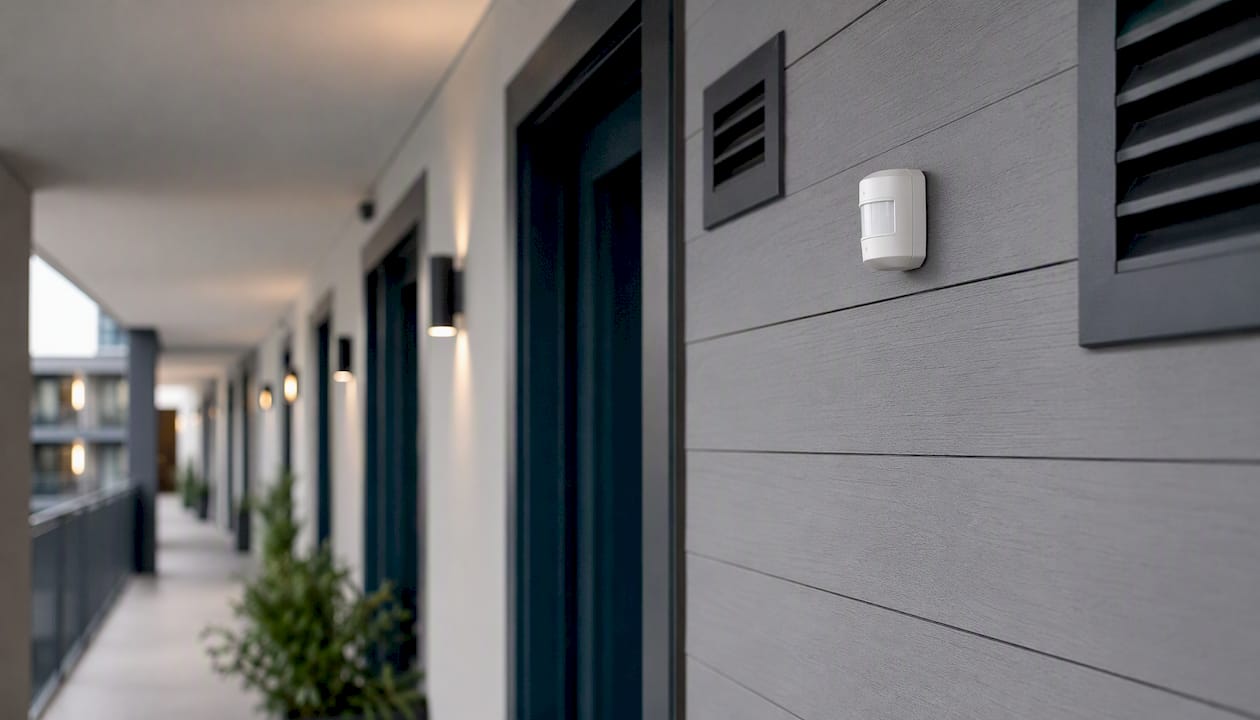
Package-room access event triggering localized building systems: When a resident or delivery carrier opens a package room using an access credential, the access control event triggers the lighting in that room to full brightness, activates the local camera recording, and adjusts the HVAC zone to occupied mode. On exit, all three systems revert automatically. This is a straightforward three-system integration (access control, lighting, HVAC) that can run on a gateway-based retrofit without replacing existing equipment. Locker Solutions’ unified access control systems are designed to participate in exactly this kind of event-driven building automation.

Demand-charge management with meter integration: A cloud/middleware platform ingests interval meter data from the utility feed and submeters. When the platform forecasts a demand peak, it pre-cools the building during off-peak hours, staggers equipment startup sequences, and defers non-critical loads. This use case requires cloud orchestration with real-time meter integration and is not practical with a standalone proprietary BAS.
Fault detection and diagnostics across HVAC and metering: An integrated FDD application compares energy consumption from submeters against expected consumption models derived from occupancy and weather data. Anomalies trigger work orders automatically in the CMMS. This pattern reduces reactive maintenance and extends equipment life, and it requires the integration/data layer to normalize data from multiple sources into a common time-series format.
Synthesis: how to make the right call for your facility
The right integration architecture is not the most technically sophisticated one. It is the one your operations team can maintain, your budget can sustain, and your building’s lifecycle stage supports.
Decision flow:
- If you are in new construction or a full renovation with a single-campus scope and uptime is non-negotiable: start with a proprietary stack, but require open-protocol export (BACnet/IP) at the supervisory layer so you are not completely locked in.
- If you are retrofitting a building with mixed equipment from multiple eras: open-protocol BAS with gateway bridging gives you the most flexibility. Budget for semantic tagging labor upfront.
- If you manage 10 or more buildings and need cross-property analytics, centralized fault detection, or portfolio energy reporting: cloud/middleware orchestration is the right layer to add above your existing BAS infrastructure.
Operationalization checklist:
- Require semantic tagging (Project Haystack or Brick) in the contract before work begins
- Demand a single supervisory UI that surfaces operational actions, not just raw telemetry
- Segment OT networks from IT networks before any device goes online
- Budget commissioning at 20–40% of total integration labor
- Train operations staff before handover, not after
- Document the O&M plan, point list, and tag dictionary as contract deliverables
Industry guidance consistently supports designing integrations around operational use cases rather than protocol checklists. The question is not “which protocols does this system support?” but “what decisions will this integration enable, and who will act on them?”
The integration decision most facility teams get wrong
The most common mistake is treating integration as a technology project rather than an operations project. Teams spend months selecting protocols and middleware platforms, then hand over a technically correct system to staff who have no idea how to use it and no documentation to reference. Within 18 months, the integration is running in manual mode and the energy savings have evaporated.
The second mistake is deferring semantic modeling. It feels like overhead during procurement, but every week you operate without consistent tagging is a week of maintenance debt accumulating. When you eventually want to add an analytics application or switch middleware vendors, you will pay for that deferred work at a much higher rate.
The practical advice: run a pilot integrating two or three systems on one floor or one building before committing to a portfolio-wide rollout. Use that pilot to validate your semantic tagging approach, test your cybersecurity segmentation, and train your operations team on the supervisory UI. The pilot will surface the naming convention problems, the legacy device limitations, and the commissioning gaps that would otherwise appear at full scale with full budget exposure.
Bring your operations team into vendor selection from the start. The integrator who wins the technical evaluation but cannot explain the system to a facilities technician in plain language is not the right choice. And budget commissioning explicitly, as a line item, not as a percentage of hardware cost. It is the most underestimated cost driver in every integration project.
Integrated package management for multifamily properties

For multifamily property managers and architects, package-room integration is one of the highest-ROI entry points into building automation. A package locker system that shares access events with your building’s lighting, HVAC, and security camera network turns a single amenity into a coordinated building system.
Locker Solutions offers Luxer One® package lockers and automated package rooms with AI-powered label reading, automated resident alerts, video surveillance, and PMS software integration, all designed to connect with your existing building management infrastructure. For properties ready to extend that integration to access control, the Luxer Access unified access control system provides the credential and event layer that feeds cross-system automation.
Sources
ASHRAE and BACnet International: ASHRAE Standard 135 governs BACnet, the dominant open protocol for commercial building automation. BACnet International’s testing and certification program is the primary reference for verifying device compliance before procurement.
Project Haystack Foundation (project-haystack.org): The open-source tagging dictionary for building equipment and sensor data. Version 4 introduced Haystack Zinc and improved HVAC modeling; essential reading before writing integration contracts.
Brick Schema (brickschema.org): A semantic data model for building metadata built on RDF/OWL. Brick and Haystack are increasingly used together; the Brick+Haystack alignment work is the practical starting point for semantic modeling requirements.
ControlsHub multi-protocol integration guidance: Covers the four BAS architectural patterns (native multi-protocol, gateways, middleware, cloud IoT) with trade-off analysis relevant to procurement decisions.
Smart Building Authority middleware services reference: Explains middleware roles (southbound adapters, MQTT broker, semantic engine, northbound API) and deployment categories (on-prem, edge, cloud iPaaS, hybrid); useful for scoping middleware RFPs.
Sensgreen BMS integration overview: Practical explanation of the three technical layers and the role of semantic modeling in reducing integration maintenance debt; good background reading for facility managers new to BAS integration.
OASIS MQTT specification (mqtt.org): The normative reference for MQTT 5.0, the most widely used transport protocol for IoT-to-cloud data pipelines in building systems.
OPC Foundation (opcfoundation.org): Governs OPC-UA, the industrial interoperability standard increasingly used for cross-vendor data exchange between building systems and enterprise platforms.
- Middleware and Integration Layer Services for Smart Buildings | Smart Building Authority
- Multi-Protocol Integration Strategies for Building Automation Systems | ControlsHub
- What is a smart building? | Cisco
Recommended
- Automated package rooms: A guide for multifamily properties - Luxer One Locker Solutions
- Smart Lockers for Property Managers: 2026 Guide — Locker Solutions Blog
- Heat-Resistant Locker Technology: A Property Manager’s Guide — Locker Solutions Blog
- Delivery Facility Options for Multifamily Properties — Locker Solutions Blog
Ready for a Luxer One® package locker quote?
Tell us your unit count and we'll send right-sized pricing with a fast response time.
Get my free quote