August 23, 2026
Extreme Weather Storage Considerations Texas Properties Need
Ensure your Texas property is ready for extreme weather with smart storage solutions—discover essential considerations for safety and durability.
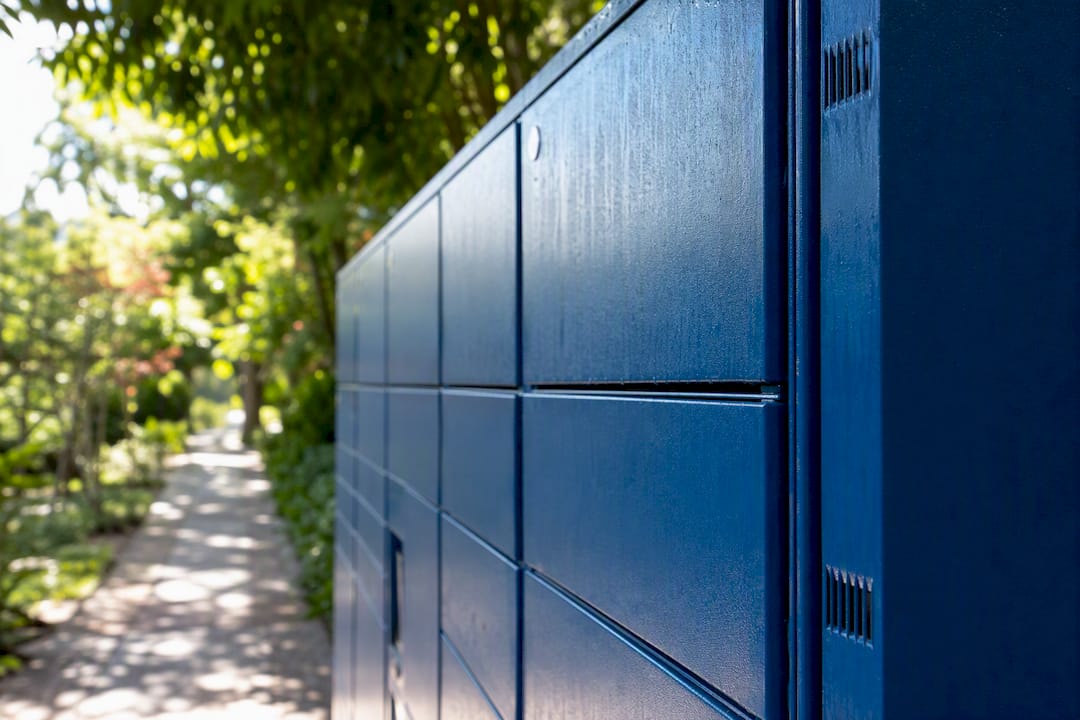
If your parcel lockers sit anywhere in Texas, the priority order is simple: pick a sheltered, elevated site first, require IP65-rated weatherproof enclosures second, add refrigerated compartments for perishables third, and back it all with real ventilation or HVAC and a maintenance schedule that never lapses. Standard lockers can hold packages fine in mild weather, but they were never built to hold a grocery delivery at 140°F. That gap is why refrigerated units now belong in the spec, not the wish list.
Here’s the priority checklist to act on this quarter:
- Site the enclosure away from full southern exposure and reflective pavement.
- Specify a minimum IP65 rating with corrosion-resistant hardware.
- Add refrigerated compartments wherever grocery or pharmacy deliveries are expected.
- Confirm HVAC or destratification coverage for indoor package rooms.
- Lock in a quarterly seal, drain, and electronics inspection.
Locker Solutions supplies weatherproof and refrigerated systems built around these exact conditions.
Key Takeaways
Extreme weather storage in Texas succeeds when sheltered siting, IP65-rated enclosures, refrigerated compartments for perishables, and a quarterly maintenance cadence all work together.
| Point | Details |
|---|---|
| Site before spec | Choose shaded, elevated sites with proper drainage before selecting any hardware. |
| Require IP65 minimum | Standard ingress protection prevents the water and dust intrusion that causes most field failures. |
| Refrigerate for perishables | Grocery and pharmacy deliveries need refrigerated compartments, not standard locker heat exposure. |
| Address heat load with HVAC | Use ASHRAE-based calculations and destratification fans for indoor package rooms with heavy traffic. |
| Maintain on a fixed schedule | Quarterly seal checks and seasonal drain inspections catch problems before they become claims. |
| Locker Solutions covers the full spec | Weatherproof outdoor kiosks, refrigerated lockers, and nationwide maintenance support match every risk in this checklist. |
Table of Contents
- What extreme weather storage considerations texas properties should plan for
- Site assessment checklist: where to place lockers before you build
- What hardware specs should you require in the RFP?
- How should HVAC and envelope design protect indoor package rooms?
- What does a locker maintenance and commissioning schedule look like?
- What Texas property teams get wrong about weatherproofing lockers
- How Locker Solutions builds for Texas-scale heat and storms
- Frequently Asked Questions
- Sources
What extreme weather storage considerations texas properties should plan for
Texas heat doesn’t just make a locker warm. It cooks it. Roof and enclosure surfaces in direct sun can climb to 140°F to 170°F during summer, and metal locker banks absorb and hold that heat long after the sun moves. Interior compartment temperatures can run far past the outside air reading, which is the opposite of what a resident expects when they’re picking up a package at 6 p.m. after the hottest part of the day.
Humidity compounds the problem. Gulf Coast moisture pushes into enclosed compartments and condenses on cooler surfaces overnight, and that moisture is exactly what corrodes hinges, fogs touchscreens, and creates microbial risk inside sealed packaging. Storms add a third failure path: wind-driven rain finds gaps around door seals, and low-lying pads flood before anyone notices standing water.
The items most exposed to loss:
- Perishable groceries and meal-kit deliveries
- Pharmaceuticals and temperature-sensitive medical shipments
- Consumer electronics with heat-sensitive batteries
- Packaging adhesives that soften and fail in sustained heat
Failure modes property teams actually see: stuck electronic locks after humidity swells the door frame, unreadable touchscreens from condensation behind the glass, and rusted hinges on units installed without corrosion-resistant hardware.
Site assessment checklist: where to place lockers before you build
Where a locker sits determines half its lifespan. Get the site wrong and no enclosure spec fixes it.
- Check the flood elevation and confirm the ground slopes toward a drain, not toward the unit.
- Require a raised concrete pad with anchor bolts rated for wind uplift, following installation clearance standards for outdoor systems.
- Evaluate solar exposure across the full day and favor covered walkways or east-facing shade over open blacktop.
- Confirm a standard duplex outlet and a data port are within reach, or plan for a cellular fallback.
- Preserve carrier delivery paths, ADA clearance widths, and clear sightlines for security cameras.
Pro Tip: Walk the proposed site at 3 p.m. in July before you sign off. If the pavement is too hot to stand on comfortably, the locker facing it will run hotter than any spec sheet accounts for.
Reflective walls and dark blacktop radiate heat back into the enclosure long after direct sun leaves, so a shaded courtyard almost always outperforms a “visible from the leasing office” spot baked in open sun.
What hardware specs should you require in the RFP?
Procurement language decides more than most property teams realize. Vague specs get vague results, so put numbers in the purchase order, not adjectives.
Require a minimum IP65 rating for any outdoor enclosure, since ingress protection below that threshold tends to let rain and dust past the seals within a season or two. Corrosion-resistant coatings and stainless fasteners matter more near the Gulf Coast, where salt air accelerates rust on standard hardware.
Thermal design deserves its own line item: insulated compartment walls, reflective exterior finishes, and a defined operating range for the electronics and touchscreen. Electrical protection should include sealed cable glands, a listed disconnect, surge arrestors, and a cellular modem as backup when a hardwired data port isn’t practical.
| Spec Category | Minimum Requirement |
|---|---|
| Ingress protection | IP65 rated enclosure |
| Hardware finish | Corrosion-resistant, stainless fasteners |
| Electrical protection | Surge arrestor, sealed cable glands |
| Refrigerated hold temperature | Manufacturer-specified cold range with alarm monitoring |
| Backup connectivity | Cellular modem fallback |
Refrigerated compartments need their own line too: a guaranteed temperature hold, monitoring with alarm alerts, expected backup power runtime, and a servicing interval written into the contract. Cold-storage construction guidance for Houston makes clear that refrigeration and envelope design have to be coordinated from day one, not bolted on after the enclosure is built.
How should HVAC and envelope design protect indoor package rooms?
Indoor package rooms fail differently than outdoor kiosks, but the root cause is the same: too much heat load and nowhere for it to go. A room with frequent door openings and dozens of packages moving through daily needs ASHRAE-based heat-load calculations, not a generic split system sized for square footage alone. Skipping that math is how a package room ends up 15 degrees hotter than the hallway outside it.
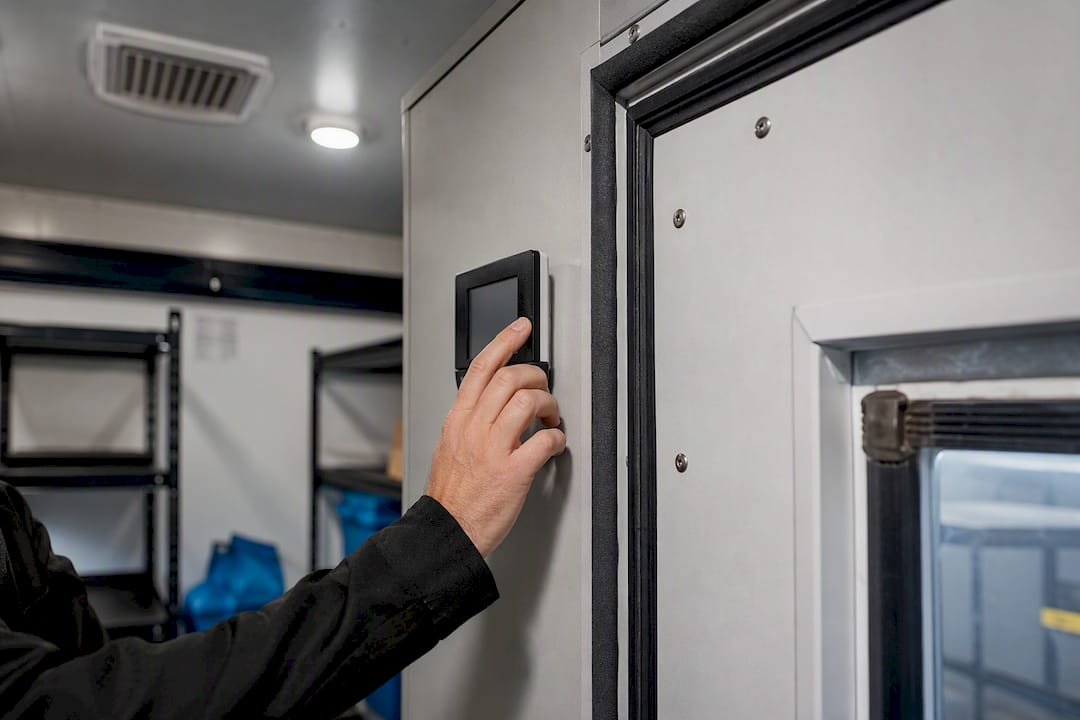
Thermal stratification is the quiet problem most teams miss. Hot air pools near the ceiling while the working zone near the lockers stays warm and stagnant. Destratification fans, sometimes called HVLS fans, mix that air and can meaningfully cut the load on mechanical cooling, though evaporative approaches lose effectiveness above roughly 60% to 65% relative humidity, which rules them out for a lot of Texas summers.
Envelope work pays off before any mechanical upgrade does:
- Add roof insulation and reflective coatings, which can cut roof surface temperatures by 50°F to 60°F and interior temps by 10 to 15 degrees.
- Seal dock doors and loading areas with vestibules or air curtains to stop conditioned air from bleeding out every time a cart rolls through.
- Log temperature and humidity continuously, with an alert threshold that triggers a move to refrigerated lockers or a resident notification.
Pro Tip: Passive fixes, shade, insulation, reflective roofing, cost less up front and keep paying off every summer after. Save active refrigeration for the loads passive design can’t handle.
What does a locker maintenance and commissioning schedule look like?
A locker system is only as reliable as its last inspection. Skipping maintenance is how a well-specified enclosure turns into a support ticket.
- Before installation: complete a site survey, pull permits, confirm the concrete pad spec, and route power and data with clearances verified against manufacturer requirements.
- At commissioning: validate temperature and humidity readings against target range, test connectivity and touchscreen response, and document baseline performance for warranty records.
- Ongoing: inspect seals and gaskets quarterly, check drains and weep holes every season, and service refrigerated units on the manufacturer’s schedule.
- Monthly or per contract: verify firmware updates and cellular connectivity.
- Keep dated maintenance logs. They support warranty claims and give you a paper trail if a habitability or general-duty question ever comes up.
What Texas property teams get wrong about weatherproofing lockers
Most guidance on this topic treats heat and rain as separate problems, one for the enclosure spec sheet and one for the roof contractor. That split thinking is where budgets get wasted. A locker bank with a great IP rating but no shade still cooks packages by 4 p.m., and a beautifully insulated package room with unsealed dock doors bleeds cold air out every time a delivery cart rolls through.
The conventional advice also underrates refrigeration as a fallback rather than a core requirement. If your resident mix includes any meaningful grocery or pharmacy delivery volume, a refrigerated locker isn’t a premium add. It’s the difference between a package that’s usable and one that gets thrown out.
Prioritize site and shade first. They’re the cheapest lever and the one most RFPs skip entirely. Enclosure specs and HVAC upgrades matter, but they’re compensating for a bad site choice if you get the placement wrong from the start. Fix the site, then spec the hardware, then set the maintenance calendar. In that order.
How Locker Solutions builds for Texas-scale heat and storms
Every risk covered above, solar heat gain, humidity corrosion, wind-driven rain, and perishable spoilage, maps directly to a product decision. Locker Solutions builds weatherproof outdoor kiosks and refrigerated lockers around exactly these failure points, not around a generic climate assumption.
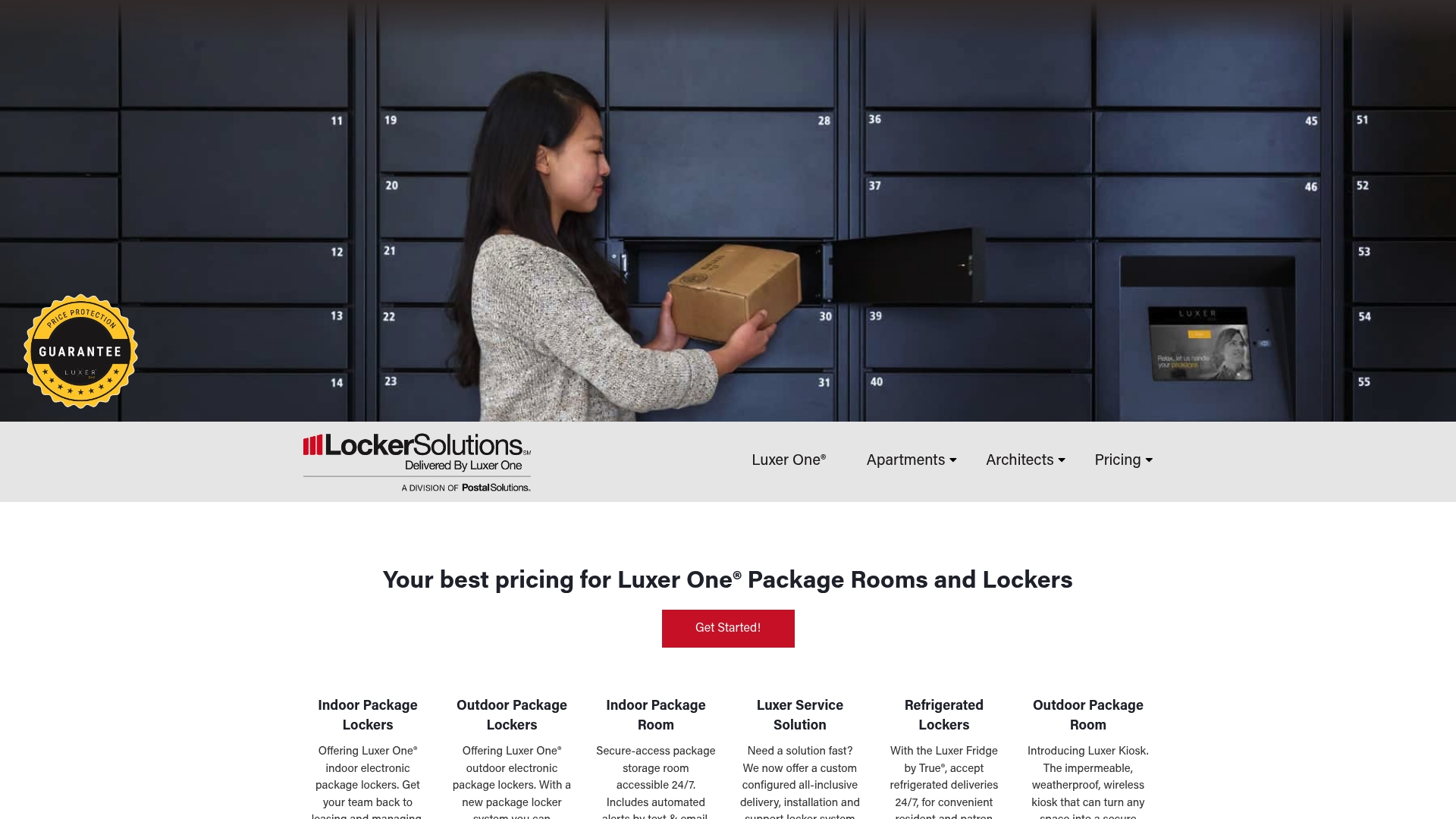
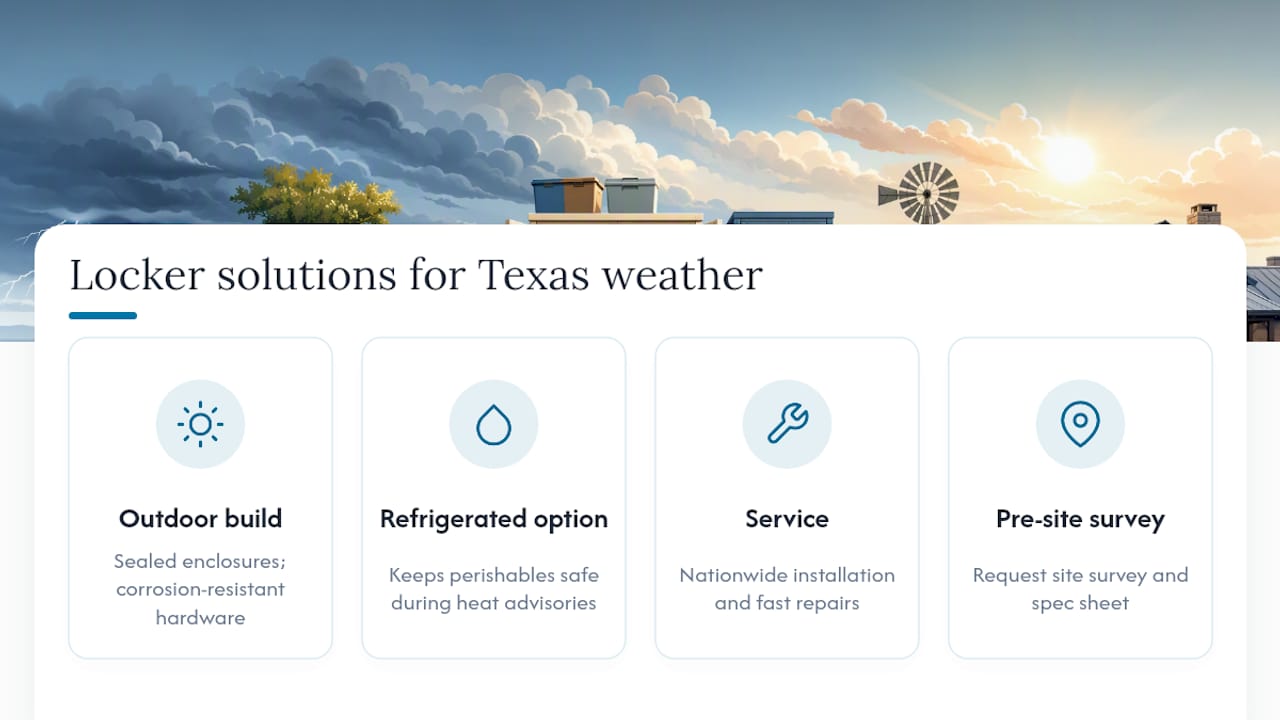
The outdoor parcel locker line is designed with sealed enclosures and corrosion-resistant hardware for properties facing full sun exposure or coastal humidity, and the refrigerated locker option solves the grocery-and-pharmacy problem directly instead of leaving perishables in a standard compartment during a heat advisory. Nationwide installation and ongoing maintenance support mean a storm-damaged seal or a failed touchscreen gets serviced fast, not left as an open ticket through peak delivery season. Also worth a look before your next door replacement: door seal and weatherproofing guidance applies just as well to package room vestibules as it does to residential entries.
If you’re evaluating package infrastructure for a Texas property this year, request a site survey and specification sheet before you finalize the RFP. It’s the fastest way to catch a siting or enclosure gap before it becomes a summer failure.
Frequently Asked Questions
What temperature can a parcel locker reach in direct Texas sun? Enclosure surfaces can approach 140°F to 170°F in summer sun, and interior compartment temperatures often run well above the outside air reading as a result.
Do standard lockers work for grocery or pharmacy deliveries? Standard compartments are not built to hold perishables safely once interior heat rises past ambient. Refrigerated lockers are the correct spec for grocery, meal-kit, or pharmacy delivery volume.
What IP rating should outdoor lockers carry in Texas? A minimum of IP65 is the baseline for rain and dust protection. Coastal or industrial sites should also require corrosion-resistant hardware and stainless fasteners.
How often should locker seals and drains be inspected? Quarterly seal and gasket checks, paired with seasonal drain and weep-hole inspections, catch the early signs of water ingress before they become lock or electronics failures.
Can passive design reduce cooling costs for package rooms? Yes. Reflective roof coatings and added insulation can cut roof surface temperatures by 50°F to 60°F and lower interior temperatures by 10 to 15 degrees, often at a lower cost than adding mechanical cooling capacity.
Sources
Recommended
- Outdoor Locker Installation Considerations: A Pro Guide — Locker Solutions Blog
- Weatherproof lockers for smarter multifamily package management - Luxer One Locker Solutions
- Cold-Weather Locker Technology: A Property Manager’s Guide — Locker Solutions Blog
- Snow-Resistant Locker Design: A Guide for Developers — Locker Solutions Blog
Ready for a Luxer One® package locker quote?
Tell us your unit count and we'll send right-sized pricing with a fast response time.
Get my free quote