August 9, 2026 · Connor Sabula, Luxer One Locker Specialist
Top Resident Service Improvements for Property Managers
Discover key resident service improvements that boost tenant satisfaction and financial performance for property managers. Learn how to prioritize...
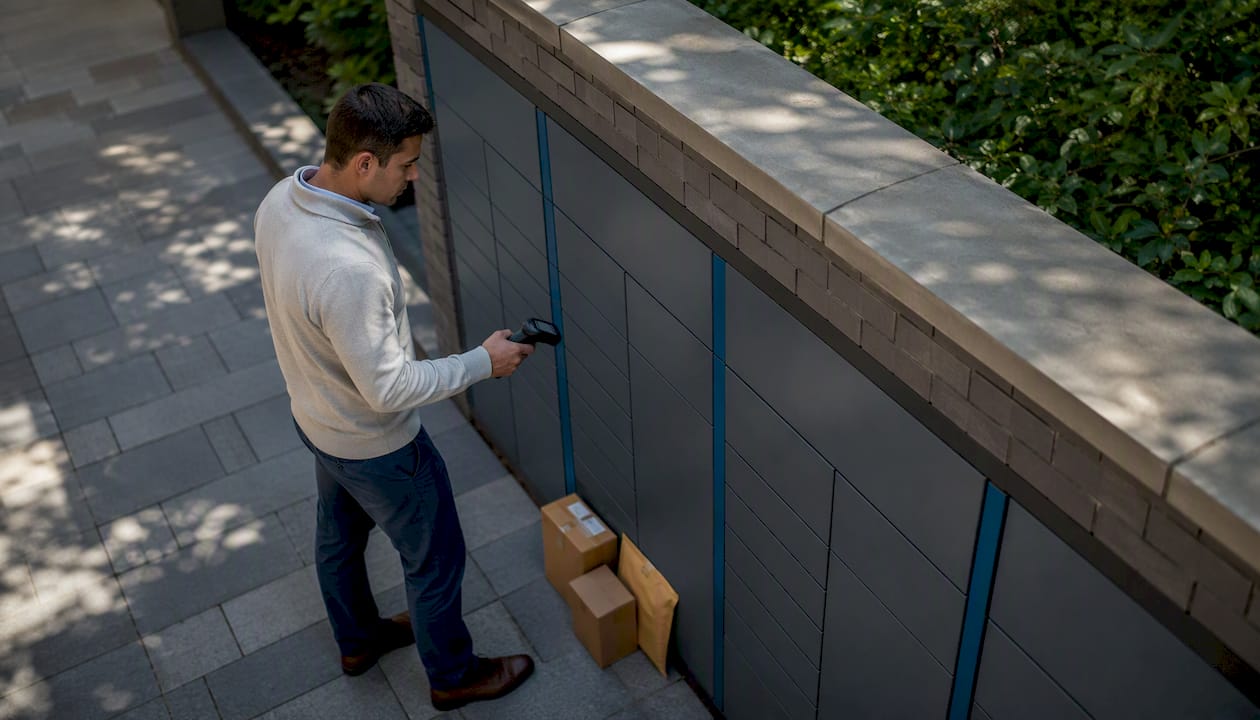
The highest-impact types of resident service improvements to prioritize are eviction prevention and housing stability supports, responsive maintenance and communication, financial stability programs, health navigation, internet connectivity, and secure package management. That ordering is not arbitrary. It follows a simple heuristic: first reduce eviction risk (the costliest outcome for any property), then remove the daily friction points that erode satisfaction, then automate routine transactions to free your staff for relationship work.
The evidence behind that sequence is concrete. Abt Global’s analysis found service-enriched affordable housing properties generated 26% higher Net Operating Income than comparable properties without resident services, roughly $1,200 additional NOI per unit annually. SAHF member data show properties with resident services had approximately 24% lower arrears rates at common thresholds. Package management, while often treated as a facilities issue, directly affects daily resident experience and staff workload at scale.
Key priorities at a glance:
- Eviction prevention and housing stability — highest financial and human impact
- Maintenance responsiveness and communication — the most common daily friction point
- Financial stability programs — reduces arrears and improves lease compliance
- Health and wellness navigation — supports retention, especially for seniors
- Internet connectivity and device access — increasingly a basic utility expectation
- Secure package management — removes a high-frequency staff burden and resident frustration
Key Takeaways
Resident service improvements deliver measurable financial returns, with service-enriched properties showing 26% higher Net Operating Income (NOI)—representing roughly $1,200 additional NOI per unit annually in the study’s sample—but only when programs are staffed, measured, and integrated with property operations from day one.
| Point | Details |
|---|---|
| Prioritize by impact and frequency | Start with eviction prevention, maintenance responsiveness, and package management — they affect the most residents daily. |
| Build an RSP before launching programs | A needs assessment, partner MOUs, and defined KPIs prevent underfunded pilots from quietly failing. |
| Track both revenue and expenses | Abt’s analyses show positive NOI effects but also note some expense categories can rise; measure both sides. |
| Tailor programs to your resident mix | Seniors need health navigation; families need financial coaching and tutoring; workforce residents need scheduling flexibility. |
| Locker Solutions removes a daily friction point | Automated package lockers and managed package rooms free staff time for relationship work that drives retention. |
Table of Contents
- What are the main types of resident service improvements?
- How do you design a Resident Services Plan?
- Operational tips for partnerships, funding, and piloting
- How do you measure the impact of resident services?
- What technology actually scales resident services?
- How do you tailor services for different resident populations?
- How do you prioritize improvements and set a realistic budget?
- The case for balancing technology and human connection
- Package management as a resident service improvement
- Sources
What are the main types of resident service improvements?
The SAHF Program Classification Framework recommends seven core program areas as a starting structure: Financial Stability, Health & Wellness, Housing Stability, Agency/Voice & Community, Youth Development & Education, Internet Connectivity, and Individual Support. Practitioners typically add three more operational categories: Move-In/Onboarding, Maintenance & Amenities, and Communication & Service Responsiveness. Here is what each looks like in practice.
Financial stability
Program examples include one-on-one financial coaching, enrollment in Family Self-Sufficiency (FSS) programs, and on-site credit-building workshops. FSS is a HUD-funded program that lets residents build escrow savings as their income grows, making it a high-value, low-direct-cost option for affordable housing operators. Financial coaching partnerships with local credit unions or CDFIs are typically low-cost to set up and can show measurable arrears reductions within three to six months.
Cost level: Low to moderate. Time to impact: 3–9 months for arrears metrics.
Health and wellness
On-site health clinics, community health worker (CHW) partnerships, and health navigation services all fall here. CHW programs, where a trained community member connects residents to primary care, behavioral health, or benefits enrollment, are particularly effective in affordable housing settings. Public health research documents strong links between housing-based support programs and improved health outcomes, reinforcing the case for including health services in your portfolio.
Cost level: Moderate (CHW partnerships) to high (on-site clinics). Time to impact: 6–18 months for measurable health-access gains.
Housing stability and eviction prevention
Eviction diversion workshops, emergency rental assistance coordination, and lease-compliance coaching are the core tools here. These programs directly protect NOI by reducing eviction filings, vacancy losses, and turnover costs. SAHF’s data on housing stability outcomes make this the strongest evidence-backed category for financial return.
Cost level: Low to moderate. Time to impact: Weeks to 3 months for eviction-filing reductions.
Community and resident engagement
Resident advisory councils, community events, and volunteer coordination programs build social cohesion and give residents a voice in property decisions. These are often the lowest-cost programs to launch and can meaningfully improve satisfaction survey scores within 30 days.
Cost level: Low. Time to impact: Weeks to 3 months.
Youth development and education
After-school tutoring, summer learning programs, and college-access workshops serve families with children and can be delivered through partnerships with local nonprofits, school districts, or AmeriCorps programs at minimal direct cost.
Cost level: Low (partnership-based) to moderate (staffed programs). Time to impact: 3–9 months for participation metrics.
Internet connectivity and technology access
Broadband subsidy coordination, device loan programs, and digital literacy workshops address what has become a basic utility expectation for most residents. Federal broadband investments, including USDA-supported connectivity programs, have expanded funding options for affordable housing operators pursuing connectivity upgrades.
Cost level: Low (subsidy coordination) to high (infrastructure upgrades). Time to impact: Weeks to 6 months.
Individual support and case navigation
Case managers or resident services coordinators who help residents navigate benefits, housing crises, or employment barriers provide the connective tissue across all other program areas. This is the staffing investment that makes every other program more effective.
Cost level: Moderate to high (staffing). Time to impact: Ongoing; retention impact visible within 6–12 months.
Move-in and onboarding experience
A structured welcome concierge process, move-in kits with local resource guides, and a 30-day check-in call set the tone for the entire tenancy. Properties that invest in onboarding see lower early-lease turnover and faster community integration.
Cost level: Low. Time to impact: Immediate.
Maintenance and amenity improvements
Proactive maintenance scheduling, transparent status updates, and amenity upgrades (fitness equipment, laundry, outdoor spaces) address the most frequently cited resident complaints. Small operational fixes that remove daily friction, like a text update when a work order is completed, often deliver higher satisfaction gains than large, unfocused programs.

Cost level: Low (communication fixes) to high (capital amenity upgrades). Time to impact: Weeks.
Communication, service responsiveness, and package management
Automated maintenance ticketing, resident portals, and secure package management systems all belong here. Package delivery volume at multifamily properties has grown to the point where staff time spent sorting and notifying residents is a measurable operational cost. Secure locker systems and monitored package rooms eliminate that friction for both staff and residents.
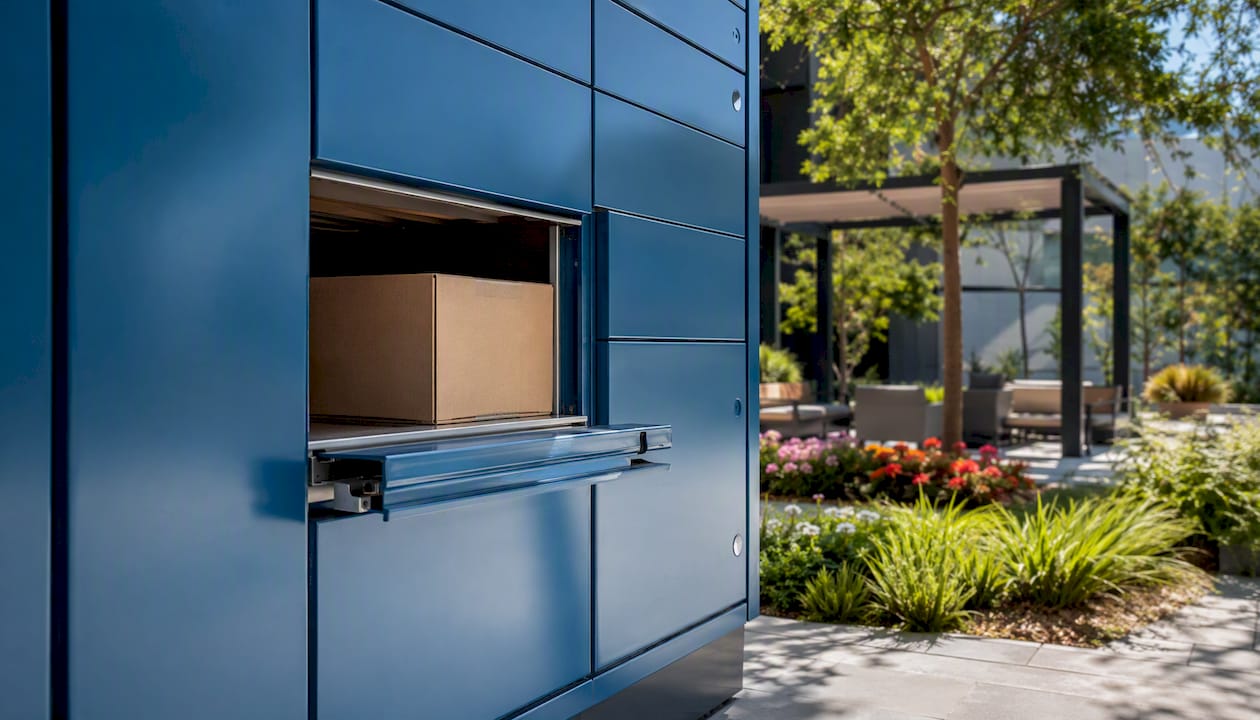
Cost level: Moderate (portals, lockers) to high (full package room buildout). Time to impact: Weeks after installation.
Outcome data by category:
| Service Category | Key Outcome Evidence | Source |
|---|---|---|
| Housing stability / eviction prevention | ~24% lower arrears rates at common thresholds | SAHF member data |
| Financial stability | Reduced arrears; improved lease compliance | SAHF / Abt analyses |
| All service-enriched properties (combined) | 26% higher NOI; ~$1,200 additional NOI per unit annually in the study’s sample | Abt Global analysis |
| Health & wellness | Improved healthcare access and employment outcomes | SAHF member data |
| Revenue and expense balance | Positive revenue effects; some expense categories may rise | Abt secondary analyses |
Pro Tip: Before adding any new program, pull 12 months of arrears data, eviction filings, and maintenance ticket volume. Those three numbers will tell you which category to prioritize first, faster than any survey.
How do you design a Resident Services Plan?
A Resident Services Plan (RSP) is the operational document that translates your program goals into a staffed, funded, and measurable initiative. Oregon OHCS provides one of the most practical RSP frameworks available, covering needs assessment, partner coordination, staffing, implementation, and evaluation in a format U.S. property managers can adapt regardless of state.
The core steps, in order:
- Define goals and desired outcomes. Start with the financial and resident outcomes you need: lower eviction rates, improved lease compliance, higher satisfaction scores, or reduced turnover. Outcomes drive program selection; program selection should never drive outcomes.
- Assess resident needs and existing data. Survey residents, review arrears and eviction data, and map existing community resources. A needs assessment does not need to be elaborate; a 10-question survey and a review of your last 12 months of operational data is enough to identify the top two or three gaps.
- Prioritize program areas. Match your top two or three gaps to the service categories above. Resist the urge to launch five programs at once. Two well-staffed programs outperform six underfunded ones.
- Map partners and funding sources. Identify local nonprofits, health systems, CDFIs, and government programs that can deliver services at low or no cost to the property. Document each partner relationship in a Memorandum of Understanding (MOU) that defines scope, data sharing, and exit terms.
- Create operations workflows. Define how residents learn about and enroll in programs, how staff coordinate with partners, and how data flows back to property management. Integration with your property management system (PMS) is worth the setup time.
- Set KPIs and an evaluation cadence. Monthly operational metrics, quarterly outcome reviews, and a 12-month financial impact assessment give you enough data to adjust programs before they drift.
Timeline: from discovery to scale
A realistic RSP rollout runs in three phases. Months 0–3 are discovery: conduct the needs assessment, finalize partner MOUs, hire or designate a Resident Services Coordinator, and select one or two pilot programs. Months 3–9 are the pilot phase: launch programs in one or two buildings, track participation and early outcome data, and adjust based on what you learn.
Months 9–18 are scale: expand successful pilots property-wide or across your portfolio, formalize funding, and complete a full financial impact review.
That timeline assumes a single property. A portfolio rollout typically adds six to twelve months to the scale phase.
Staffing models and the Resident Services Coordinator role
SAHF guidance points to the Resident Services Coordinator (RSC) as the central staffing role. An RSC manages partner relationships, conducts resident outreach, coordinates program enrollment, and serves as the first point of contact for residents navigating a crisis. For affordable housing properties, a common starting ratio is one full-time RSC per 100–150 units, though smaller properties often begin with a part-time coordinator or a shared position across two properties.
The RSC role works best when it is integrated with leasing and maintenance operations, not siloed as a social services function. When an RSC has visibility into arrears data and maintenance ticket patterns, they can proactively reach out to residents showing early signs of housing instability, before a crisis becomes an eviction filing.
Integrating the RSP with property operations
Connect your RSP data to your PMS so that arrears flags, repeat maintenance requests, and lease-compliance issues automatically surface to the RSC. Properties that treat resident services as a separate silo from operations miss the early warning signals that make eviction prevention possible. A shared dashboard, even a simple spreadsheet updated weekly, closes that gap at minimal cost.
Operational tips for partnerships, funding, and piloting
Funding resident services does not require a dedicated grant. Many properties start by reallocating a modest portion of operating budget, typically 1–3% of gross rents, toward a part-time coordinator and one or two low-cost programs. From there, several funding layers are available.
Funding options to pursue:
- HUD programs: Section 8 and public housing authorities often allow resident services costs within operating budgets; FSS program coordinators are federally funded.
- LIHTC and affordable housing grants: Many state housing finance agencies allow resident services costs in operating pro formas for tax-credit properties.
- Philanthropic partnerships: Local foundations, United Way affiliates, and health systems frequently fund community health worker programs or financial coaching at no cost to the property.
- Federal broadband programs: USDA and other federal programs have supported connectivity infrastructure in affordable housing; coordinate with your state broadband office.
- Operating budget reallocation: Reducing turnover costs by even one unit per year often covers the cost of a part-time RSC.
Pilot checklist
Before launching any new program, confirm you have:
- A defined success metric (e.g., 20% reduction in eviction filings within six months)
- A small pilot cohort (one building or 30–50 households)
- A clear timeline with a go/no-go decision point
- Staff training completed before launch, not during
- A signed MOU with each partner defining scope and data-sharing terms
- A simple evaluation plan that specifies who collects data and how often
Vetting partners and avoiding scope creep
The most common partnership failure is a scope mismatch: a nonprofit partner agrees to deliver financial coaching but lacks capacity to serve more than 10 residents per month at a 200-unit property. Vet partners by asking for their current caseload, their data-reporting capacity, and at least two references from other housing operators. Build a 90-day check-in into every MOU.
RPM Living’s CX playbook makes the case that operational clarity, defined workflows, clear staff roles, and measurable handoffs, is what separates successful program launches from well-intentioned ones that quietly fade. That applies to partner programs as much as to technology deployments.
A 30-day sprint focused on high-frequency daily touchpoints like maintenance response times, package pickup, and communication is a practical way to identify your highest-leverage pilot before committing to a longer program.
How do you measure the impact of resident services?
Measurement is where most resident services programs lose credibility with asset managers and ownership groups. The fix is straightforward: define your KPIs before launch, not after, and tie them to metrics that already appear in your property financial reports.
| KPI | Why It Matters | Data Source | Reporting Cadence |
|---|---|---|---|
| Resident satisfaction score (NPS or survey) | Leading indicator of renewal intent and referrals | Resident surveys | Quarterly |
| Lease renewal rate / turnover rate | Direct retention measure; turnover cost is — | Leasing system | Monthly |
| Arrears rate at 30/60/90 days | Housing stability proxy; SAHF data show ~24% improvement potential | PMS / accounting | Monthly |
| Eviction filings per 100 units | Clearest measure of housing stability program impact | Court records / PMS | Monthly |
| Program participation rate | Measures reach; low participation signals outreach or access barriers | Program tracking | Monthly |
| Maintenance ticket time-to-resolution | Friction metric; directly affects satisfaction scores | Maintenance system | Weekly |
| NOI per unit (year-over-year) | Financial impact of all resident services combined | Property financials | Quarterly / Annual |
Setting targets and reporting cadence
Monthly operational KPIs (arrears, eviction filings, maintenance resolution times, participation rates) give you the signal to adjust programs in real time. Quarterly outcome reviews cover satisfaction scores, renewal rates, and program reach. A 12-month financial impact assessment, comparing NOI and turnover costs year-over-year, is what you bring to ownership to justify continued or expanded investment.
Abt’s secondary analyses found positive revenue and arrears effects at service-enriched properties but also noted that some expense categories, including maintenance and security, can increase. Track both sides of the ledger. A program that improves NOI by $800/unit while adding $400/unit in maintenance costs is still a net positive, but you need both numbers to make that case.
Building a simple dashboard
A workable dashboard does not require specialized software. A shared spreadsheet with five to seven KPIs, updated monthly by the RSC, is enough to spot trends and flag problems early. The key is connecting it to your PMS data so arrears and maintenance figures populate automatically rather than requiring manual entry.
To build it:
- Export arrears and maintenance data from your PMS monthly.
- Add participation counts from each program partner.
- Run a brief resident satisfaction pulse survey quarterly (five questions is sufficient).
- Calculate eviction filings from court records or your legal team’s reports.
- Review the dashboard in a monthly operations meeting that includes both the RSC and the property manager.
What technology actually scales resident services?
Technology should automate the transactions that consume staff time without adding human value: package notifications, maintenance ticket routing, status updates, scheduling reminders, and access control. Every hour a leasing agent spends sorting packages or manually updating a resident on a work order is an hour not spent on a lease renewal conversation or a resident crisis.
RPM Living’s approach is direct on this point: use technology to remove repetitive tasks and create operational clarity so staff can focus on empathy-driven service recovery and community-building. The failure mode is deploying tech that creates new workflows without eliminating old ones, leaving staff managing both the system and the manual backup.
Technology categories that deliver measurable value:
- Resident portals: Centralize maintenance requests, payment, and communication. Reduce inbound phone volume and give residents 24/7 access to routine transactions.
- Maintenance workflow tools: Automated ticket routing, status notifications, and technician scheduling reduce time-to-resolution and eliminate the “did anyone see my request?” complaint.
- Package lockers and automated package rooms: Eliminate staff time spent receiving, sorting, and notifying residents about deliveries. Residents pick up on their schedule; staff are removed from the loop entirely. Automated delivery systems for multifamily properties consistently show measurable reductions in front-desk workload.
- Unified access control: Integrates building entry, amenity access, and locker access into a single credential, reducing friction for residents and simplifying management for staff.
- Communication automation: Scheduled reminders, lease renewal prompts, and program enrollment notifications can be templated and triggered automatically, keeping residents informed without requiring manual outreach.
Integration notes
The highest-value integration is between your resident portal and your PMS. When a resident’s arrears status, maintenance history, and program participation are visible in a single profile, your RSC can prioritize outreach based on risk signals rather than guesswork. AI-powered label reading in package systems, like those in Luxer One® lockers, reduces mis-delivery errors and eliminates manual logging entirely.
When introducing any new technology, define the staff workflow change before deployment. If the new system does not reduce a specific repetitive task or clarify a specific responsibility, it will not improve resident experience. Test in one building, measure staff time saved over 60 days, and then decide whether to expand.
Pro Tip: Before a portfolio-wide tech rollout, run a 60-day pilot in one building and track two numbers: staff time spent on the targeted task before and after, and resident satisfaction with that specific touchpoint. If neither moves, the technology is solving the wrong problem.
How do you tailor services for different resident populations?
Resident demographics determine which program areas deliver the most impact. A senior-focused affordable housing property and a workforce housing community serving young families need fundamentally different service portfolios, even if the underlying RSP structure is the same.
SAHF emphasizes that senior properties need health navigation and transportation while family properties benefit most from childcare, employment services, and financial coaching. Here is how that plays out across four common cohorts.
Seniors (62+):
- Health navigation and benefits enrollment (Medicare, Medicaid, SNAP)
- Transportation coordination for medical appointments
- Social programming to reduce isolation
- Measure: Healthcare access rates, program participation, satisfaction scores
- Outreach: Home visits and in-person enrollment; digital outreach has lower reach in this cohort
Families with children:
- After-school tutoring and summer learning programs
- Childcare referrals and subsidy navigation
- Financial coaching and FSS enrollment
- Measure: School attendance proxies, FSS enrollment rates, arrears reduction
- Outreach: Evening events and school-year calendar alignment work best; daytime programming has low attendance
Workforce residents (employed, moderate income):
- Employment services, resume workshops, and job placement partnerships
- Scheduling-flexible programming (evenings and weekends)
- Financial stability tools (emergency savings, credit building)
- Measure: Income growth, lease renewal rates, FSS escrow accumulation
- Outreach: Text and app-based communication; in-person events on weekends
Students:
- Study spaces and reliable broadband access
- Digital literacy and device loan programs
- Short-term financial assistance for unexpected costs
- Measure: Broadband utilization, study space usage, satisfaction scores
- Outreach: Social media and peer-to-peer referral; formal events have lower uptake
Mixed-age communities benefit from a tiered approach: anchor with two or three programs that serve the largest cohort, then layer in cohort-specific offerings as capacity allows.
| Cohort | Top 2 Programs | Primary Metric |
|---|---|---|
| Seniors | Health navigation, transportation | Healthcare access rate |
| Families | Financial coaching, after-school tutoring | Arrears rate, FSS enrollment |
| Workforce | Employment services, credit building | Lease renewal rate |
| Students | Broadband access, study spaces | Satisfaction score |
How do you prioritize improvements and set a realistic budget?
Start with the interventions that reduce housing instability or remove the most frequent daily friction for the most residents. Eviction prevention, maintenance responsiveness, and package management consistently meet both criteria across property types.
A simple 2x2 framework helps place programs quickly. Plot each candidate program on two axes: impact (how many residents benefit, and how directly does it affect retention or NOI) and effort (cost, staffing, and time to implement). Programs in the high-impact, low-effort quadrant are your first pilots. Programs in the high-impact, high-effort quadrant are your 12-month investments. Low-impact programs in either quadrant get deprioritized until you have proven the high-impact ones.
Budget and time-to-impact guidance:
- Weeks, under $5,000: Proactive maintenance status updates, move-in welcome kits, resident advisory council launch, communication automation setup. These are operational changes, not programs, and they often deliver the fastest satisfaction gains.
- 3–9 months, $5,000–$50,000: Financial coaching partnership, FSS coordinator (if HUD-funded), CHW partnership, broadband subsidy coordination, package locker pilot (1–3 buildings). A package locker pilot in this range typically covers hardware, installation, and a 90–180 day evaluation window.
- 9–18 months, $50,000–$150,000+: On-site health clinic, full-time RSC hire, after-school program staffing, property-wide package room buildout, PMS-integrated resident portal. These are the programs that move NOI at the scale Abt’s research documents.
For sustainable funding beyond an initial grant or pilot, the most reliable path is embedding resident services costs into your operating pro forma as a line item, not a discretionary add-on. Properties that treat resident services as infrastructure, like maintenance or insurance, fund them consistently. Properties that treat them as a program fund them only when a grant is available.
A $5,000–$15,000 package locker pilot is a useful comparison point. It delivers measurable daily friction reduction within weeks of installation, requires no ongoing staffing, and generates data (pickup rates, staff time saved, resident satisfaction) that directly supports a business case for expansion. A $50,000–$150,000 ongoing program like an on-site clinic delivers deeper impact but requires 12–18 months to show financial results. Both belong in a mature resident services portfolio; the locker pilot is the faster, lower-risk starting point for properties new to resident services investment.
The case for balancing technology and human connection
The evidence from Abt and SAHF is clear: resident services improve NOI and housing stability. What the data does not show is that any single technology or program delivers those results on its own. The properties that achieve the 26% NOI premium documented in Abt’s analysis are the ones where technology handles transactions and staff handle relationships.
The mistake most operators make is treating technology as the resident services strategy rather than as the infrastructure that makes a human-centered strategy possible. A resident portal does not build community. A package locker does not prevent an eviction. But both free up the staff time and mental bandwidth that make those human outcomes achievable.
RPM Living’s playbook puts it plainly: operational clarity, knowing exactly which tasks belong to the system and which belong to a person, is what separates tech deployments that improve resident experience from ones that just add complexity. That clarity is worth designing before you purchase anything.
Package management is a useful test case. It is a high-frequency, low-stakes transaction that consumes disproportionate staff time. Automating it with a locker system or monitored package room does not replace human connection; it creates the conditions for it. The leasing agent who spent 45 minutes a day sorting packages now has 45 minutes for a lease renewal conversation or a resident check-in. That is the mechanism behind the NOI numbers.
Package management as a resident service improvement
Secure package management solves one of the most consistent daily friction points in multifamily housing. Residents expect their deliveries to be safe, accessible on their schedule, and handled without staff involvement. Properties that still rely on front-desk staff to receive, sort, and notify residents about packages are spending staff time on a transaction that technology handles better.
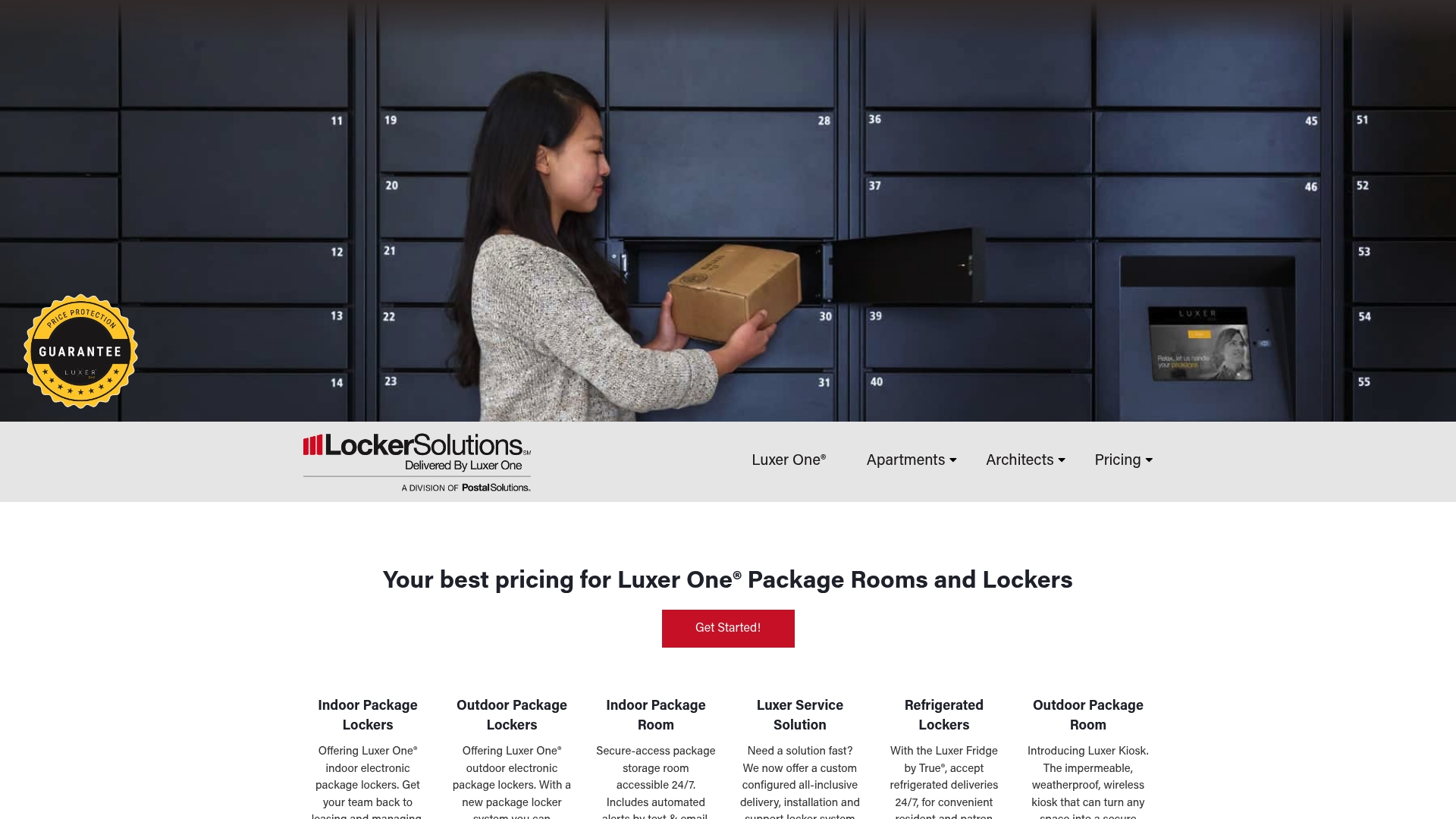
Locker Solutions offers the full range of package management infrastructure for multifamily properties: indoor and outdoor Luxer One® electronic lockers, refrigerated lockers for grocery and meal-kit deliveries, automated package rooms with AI-powered label reading and video surveillance, and daily on-site package room management for properties that want a fully turnkey operation. Every system integrates with your PMS and delivers automated resident alerts, 24/7 pickup access, and nationwide installation support.
For a pilot, start with one to three buildings, set clear KPI targets (pickup rate, resident satisfaction with package delivery, staff time saved), and run a 90–180 day evaluation before expanding. The data from that pilot becomes the business case for a portfolio-wide rollout. Request a demo or pilot proposal at Locker Solutions for Apartments and see how quickly the friction disappears.
Sources
These are the highest-value resources used in this article, each worth bookmarking for templates, outcome data, or operational guidance.
- The impact of resident services on property financial performance — Abt Global
- The Case for Resident Services — SAHF
- Resident Services Plans for Affordable Rental Housing — Oregon OHCS
- Relevant public health literature on social determinants and housing — NCBI/PMC
- 30-Day resident satisfaction improvement sprint: A practical plan — JoyLiving blog
Recommended
- Resident Packages: A 2026 Guide for Property Managers — Locker Solutions Blog
- Resident Deliveries: A Property Manager’s 2026 Guide — Locker Solutions Blog
- Step by Step Resident Package Workflow for Multifamily — Locker Solutions Blog
- How automated package alerts boost property efficiency - Luxer One Locker Solutions
A realistic 12-month sequencing plan
Most resident-service programs stall because everything is scheduled for Q1. Sequencing matters more than ambition: put the improvements that reduce turnover risk first, then the ones that remove daily friction, then the ones that need capital and construction lead time.
| Window | What to launch | Why this order |
|---|---|---|
| Months 1–2 | Eviction-prevention outreach, rent-payment flexibility, and a documented hardship path | Cheapest to start, largest downside avoided, no procurement cycle required |
| Months 2–4 | Maintenance response standards and a single resident communication channel | Fixes the most common satisfaction complaint before you add new amenities |
| Months 3–6 | Secure package management — indoor lockers, outdoor lockers, or a smart package room | Longest lead time of the operational items; removes recurring staff labor permanently |
| Months 5–8 | Financial stability programs: rent reporting, savings match, financial coaching referrals | Needs partner selection and resident education, so it follows the quick wins |
| Months 7–10 | Connectivity upgrades and health navigation partnerships | Capital or contract dependent; benefits compound over renewals |
| Months 9–12 | Amenity access improvements — gate, door, and amenity credentialing via Luxer Access | Best done once the package and communication workflows are already stable |
What to measure for each improvement
Every item above needs one leading metric and one lagging metric, or it becomes an unverifiable line item in next year's budget conversation.
- Eviction prevention — leading: hardship conversations opened; lagging: filings and turnover.
- Maintenance responsiveness — leading: median time to first response; lagging: renewal rate and review sentiment.
- Package management — leading: staff hours per week touching parcels and carrier delivery rejections; lagging: parcel-related complaints and front-desk labor cost. If you are not sure what the operational baseline looks like, how parcel lockers work walks the full deposit-to-pickup sequence, and reducing package labor with smart lockers covers the labor math.
- Financial stability — leading: program enrollment; lagging: on-time payment rate.
- Connectivity — leading: activation rate; lagging: renewal rate in units that activated.
- Access and amenity credentialing — leading: credential issue and revoke turnaround; lagging: lockout and after-hours callout volume.
The staffing question underneath every improvement
Each improvement either consumes on-site hours or returns them. Package handling is the clearest example: handled manually it consumes hours every single day, and it is the one item on this list that can be converted from a recurring labor cost into a fixed asset. Properties that cannot install hardware immediately often bridge the gap with on-site package management, then move to lockers at the next capital window. Properties that already run lockers sometimes add the same service during peak season only.
When you look at the sequencing table as a staffing plan rather than an amenity list, the ordering makes sense: the early items need attention from people, so the item that frees those people up should not be scheduled last.
Where to start this quarter
Pick one improvement from months 1–2, start the procurement conversation for the package item in parallel because of its lead time, and set the two metrics before launch rather than after. If package management is the piece you want scoped, share your unit count and current delivery volume and a specialist will send a right-sized configuration and pricing.
Ready for a Luxer One® package locker quote?
Tell us your unit count and we'll send right-sized pricing with a fast response time.
Get my free quote