September 5, 2026
Rapid Locker Deployment: Live in 2–4 Weeks for Property Managers
Project-ready playbook for property managers to get lockers live in 2–4 weeks. Includes site-audit checklists, carrier SOPs, sizing audits, and PMS launch...
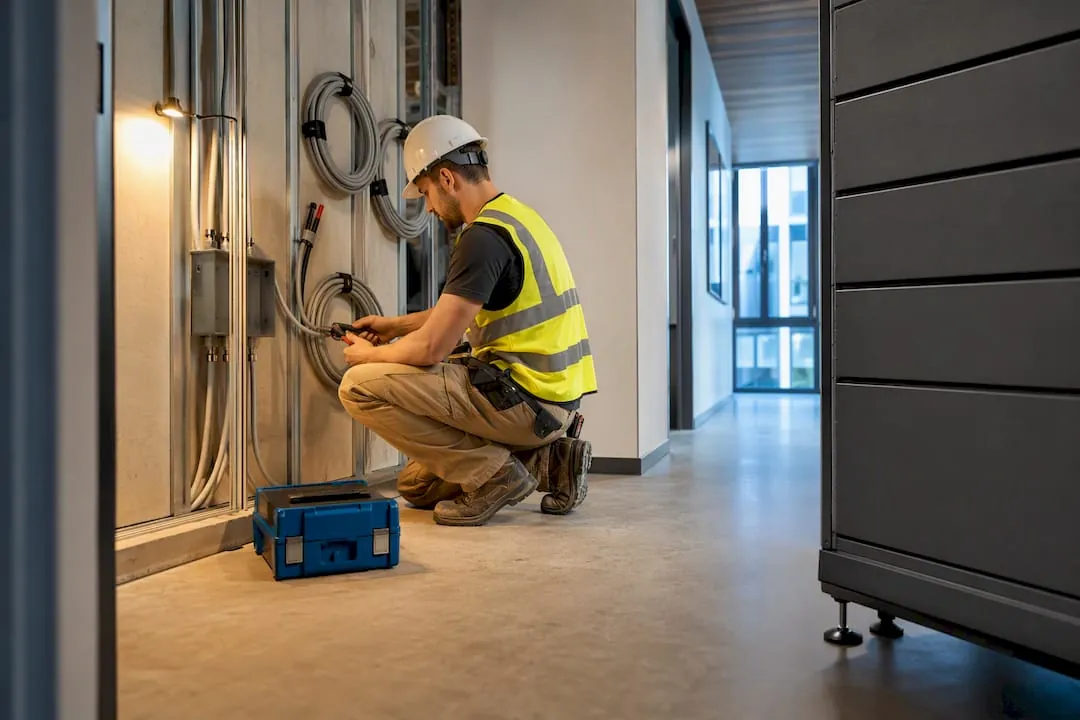
Rapid Locker Deployment: Live in 4-6 Weeks for Property Managers
The fastest reliable path to package chaos relief is a turnkey, site-audited locker system, often paired with a package room for overflow, installed on a pre-cleared electrical and network footprint with carrier coordination locked in before hardware ships. Done right, this cuts weekly package-related staff time dramatically and lifts resident satisfaction fast. The first move: schedule a site audit and request a rapid-deploy assessment from a locker vendor before you order anything.
TL;DR:
- Conduct a site audit and secure electrical, network, and permit approvals before ordering to prevent install delays of up to four weeks or more.
- Use a sampling audit over 7 to 14 days to determine the appropriate locker size and capacity, and include overflow options for high-volume properties.
- Implement a carrier onboarding process, including clear SOPs and frequent compliance checks, to avoid first-month performance issues.
- Ensure technical setups like network and electrical readiness are confirmed, and ask about cellular fallback if delays occur.
- Launch resident communications early via multiple channels and support staff with training to maximize system usage from the start.
Table of Contents
- What Does Rapid Locker Deployment Actually Require Before Installers Show Up?
- How Do You Size a Locker System Without Guessing?
- What Carrier Coordination Keeps a New System From Failing in Week One?
- What Technical Setup Has to Happen Before You Flip the System On?
- How Long Does a Rapid Deployment Actually Take, and What Does It Cost?
- How Do You Get Residents and Staff Using the New System Immediately?
- What We See Go Wrong in Rushed Installs
- Get a Rapid-Deploy Assessment for Your Property
- Sources
What Does Rapid Locker Deployment Actually Require Before Installers Show Up?
Speed comes from prep, not from the truck showing up faster. Installation crews move fast when the site is already ready. A locker system waiting on a permit, a dead outlet, or an unmeasured wall will sit boxed for weeks no matter how quick the vendor’s manufacturing turnaround is.
Run through this sequence before you commit to an install date:
- Site audit. Measure the footprint, confirm ceiling clearance, mark mounting surfaces, and map resident foot traffic so the bank doesn’t choke a hallway or lobby entrance.
- Power and network. Confirm a dedicated circuit and hardwired network drop. If either is delayed, ask about cellular fallback so commissioning doesn’t stall.
- Carrier access path. Decide how drivers reach the unit, where they stage carts, and whether that path stays clear during peak delivery hours.
- Permits and HOA sign-off. Pull these in parallel with hardware ordering, not after. Approval delays are the single most common cause of missed rapid-deploy windows.
- Outdoor-specific checks. Weatherproof rating, lighting for night pickup, and ADA-compliant access all need confirmation before a kiosk goes outside.
Where volume looks borderline, flag it now: a straight locker bank, a package room, or a hybrid of both changes your electrical and footprint needs.
Pro Tip: Prewired sites with an already-approved location can often be commissioned the same week hardware arrives. Sites still waiting on electrical work routinely slip by three to four weeks, according to industry installation data from Technology Install Partners.
How Do You Size a Locker System Without Guessing?
Counting units and picking a number rarely works. A property with 200 units and heavy e-commerce habits needs a very different bank than a 200-unit property full of long-term residents who shop in person. The better method is a short sampling audit: track every incoming package for 7 to 14 days, log carrier, size, and pickup delay, then size against that real data instead of a guess.
USPS guidance suggests at least one parcel locker per ten mailboxes as a floor, not a target. Plan above it if your resident base skews younger or your property sees heavy holiday-season spikes.
The overflow gap is real. Properties that size to average daily volume, rather than peak volume, are the ones calling vendors for emergency capacity six weeks after launch.
Use these steps to finalize your order:
- Run the sampling audit or use a vendor sizing calculator to translate volume into compartment count.
- Split the mix across small, medium, and large compartments based on what carriers actually delivered during your sample window, not a generic ratio.
- Build in overflow capacity: a secondary locker bank, a package room, or both for high-volume properties.
- Confirm your final order against the sample data one more time before signing, since procurement delays are cheaper to absorb now than a mid-lease resize later.
Package rooms deserve serious consideration here. They can triple usable storage capacity compared with a fixed locker bank of the same footprint, which matters most for properties north of 250 units.
What Carrier Coordination Keeps a New System From Failing in Week One?
Carrier noncompliance is the most common reason a freshly installed locker system underperforms in its first month. Drivers default to old habits: leaving packages at the leasing office, skipping the intake scan, or stacking oversized boxes in front of the unit instead of routing them to a package room. Fixing this takes almost no engineering, just a deliberate onboarding sequence.
- Build a carrier onboarding packet. Include a one-page pictorial SOP showing the intake steps, a staging map for where to park and stage carts, and QR or PIN credentials for regular drivers on your route.
- Set an audit cadence. Check intake compliance daily for the first two weeks, then weekly through month three. Log every misroute by carrier so patterns show up fast.
- Escalate noncompliance directly. A short call or email to the carrier’s local station supervisor, citing specific dates and driver numbers, resolves most repeat issues faster than a generic complaint line.
- Handle oversized deliveries deliberately. Route anything that won’t fit a standard compartment to a package room or a marked overflow zone, and communicate that path to carriers before launch, not after the first missed delivery.
Pro Tip: Frequent-driver PINs cut misroutes noticeably because regular carriers stop treating your property as a guessing game. A structured rollout with front-loaded carrier SOPs and weekly audits is consistently cited as the difference between deployments that stabilize fast and ones that limp for months, per Swiftlane’s deployment playbook.
What Technical Setup Has to Happen Before You Flip the System On?
Commissioning speed depends on a short list of technical prerequisites, most of which have workarounds if you’re racing a deadline. A hardwired network connection and a dedicated electrical circuit are the baseline. If either is delayed by building work, ask the vendor about cellular fallback: it gets a unit operational while you wait on a permanent line, and it protects your launch date.
Property management system (PMS) integration matters, but it doesn’t have to be perfect on day one. Many teams launch with manual account creation for current residents and layer automated PMS sync in afterward, once the initial rush of move-ins and unit assignments settles down.
| Integration element | Minimum for launch | Full setup |
|---|---|---|
| Network | Hardwired or cellular fallback | Hardwired with backup |
| PMS sync | Manual resident entry | Automated sync |
| Access credentials | Individual PINs or codes | Unified access control across property |
| Camera linking | Basic recording | Linked to audit trail and alerts |
| Refrigerated compartments | Power confirmed, temp logged | Automated alerts on temp deviation |
A few things worth flagging directly:
- Unified access credentials matter more than they sound. Residents using one code across the locker, the gym, and the gate reduces support calls almost immediately.
- Camera integration isn’t just security theater. It’s what lets you resolve “I never got my package” disputes in minutes instead of days.
- Refrigerated compartments need their power and temperature logging confirmed before launch day, not discovered broken after the first grocery delivery melts.
How Long Does a Rapid Deployment Actually Take, and What Does It Cost?
Timelines split cleanly by property size once site prep is handled; for modular deployments offering rapid installation coordination, see Modular Home Delivery: What to Expect and How to Budget. A small property, under 150 units, with power and network already in place, can go from signed order to live system in two to four weeks. A mid-size property runs four to eight weeks, mostly due to permit timing. Large or multi-building properties, especially ones adding a package room, often need eight to twelve weeks to account for electrical work and staging logistics.
Budget across four buckets: hardware (the locker bank or kiosk itself), installation and electrical work, software subscription and PMS integration, and, if you go that route, a managed package room service.
One documented deployment across 28 properties and 2,400 compartments cut weekly package-related staff time from over 35 hours down to under two hours per property, while resident satisfaction climbed from 3.1 to 4.9 out of 5, according to Accessa’s case study data.
To speed procurement approval internally, walk into budget conversations with a standard spec sheet and a single-point cost estimate rather than a range. Finance teams move faster on a fixed number than a moving target.
How Do You Get Residents and Staff Using the New System Immediately?
A system that goes live without a communications push sits half-used for a month while residents keep asking the front desk where their packages are. Push the message through every channel you have before day one: an email blast, an app push notification, printed signage in the lobby and mail room, and a QR code on the unit itself linking to a 60-second how-to video.
- Brief leasing staff first. They field the “how do I use this” questions during week one, so they need to know the PIN reset process, the override for locked-out residents, and who to call for a stuck compartment.
- Watch three early numbers. Average pickup delay, complaint volume, and compartment turnover rate. A spike in any of the three within the first two weeks means something in your sizing or carrier onboarding needs a fix now, not next quarter.
- Plan for a two-week backlog bump. Residents adjusting to a new pickup routine tend to let packages sit longer during the transition. Temporary front-desk coverage during that window smooths the rough patch.
Pro Tip: Data collected in the first two weeks, pickup times, compartment utilization, and complaint patterns, is the highest-leverage information you’ll get for tuning locker mix and overflow rules for the long haul, per Swiftlane’s rollout research.
What We See Go Wrong in Rushed Installs
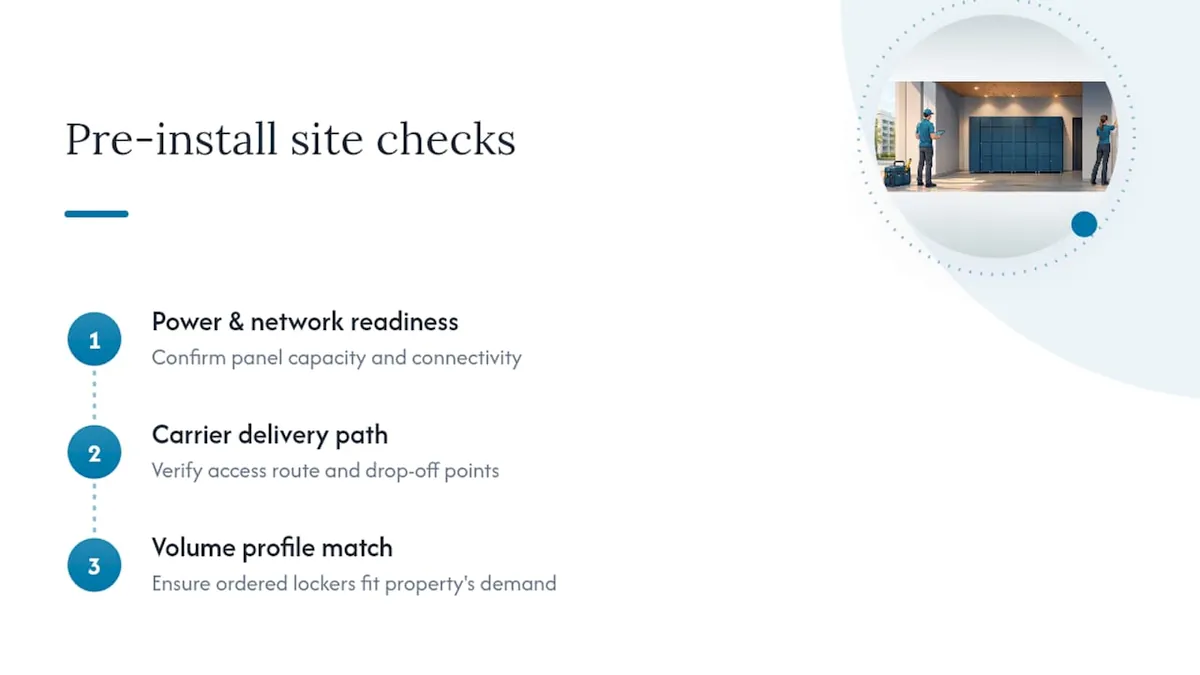
The pitfalls we run into most aren’t hardware failures. They’re planning shortcuts. Or a team schedules installation before confirming the electrical panel has capacity, and the whole timeline slides two weeks waiting on an electrician.
What we check first on any site visit: power and network readiness, the carrier delivery path, and whether the property’s volume profile actually matches what’s being ordered. Skipping that sequence is the fastest way to turn a two-week deployment into a two-month one.
Get a Rapid-Deploy Assessment for Your Property
We build and install turnkey package systems designed for exactly this speed requirement, indoor and outdoor smart lockers, refrigerated compartments for grocery and meal-kit deliveries, and fully automated package rooms for properties that need more than a locker bank can hold. Installation runs nationwide, and every deployment starts with the same site audit process covered above.
Request a rapid-deploy site assessment and you get back a real specification: unit count and mix, electrical requirements, and a realistic installation schedule based on your actual site conditions, not a generic quote. If your volume runs high or your floor plan is tight, ask about a hybrid setup combining outdoor lockers with managed package room service rather than forcing everything into one locker bank. Start that conversation with our team and get a schedule you can actually take to your finance team.
Sources
- Multifamily Package Management | Accessa Case Study
- A Framework for Solving Multifamily’s Package Management Problem | Insights by Blueprint
- Package Lockers for Apartments: A Playbook for Security, Scale, and Resident Experience (2026)
Recommended
Ready for a Luxer One® package locker quote?
Tell us your unit count and we'll send right-sized pricing with a fast response time.
Get my free quote