October 17, 2026
Multi Property Locker Management: Plan for 2.5x Peak Days
Standardize locker service across properties, size for peak package days, and track shared KPIs while reserving local capacity for oversized deliveries.

A centralized-standards, locally executed hybrid is one approach to multi property locker management: standard hardware and workflows from Locker Solutions and Luxer One, plus local overflow capacity and a monitored package room for exceptions. Done well, it can support a consistent resident experience and make pickup activity easier to audit, while local overflow capacity can help address peak demand. Size for peak multipliers, and aim for dwell time under 48 hours.
TL;DR:
- Collect 60–90 days of parcel data per property, model peak volume up to 2.5 times normal, and size compartments using turnover plus an outage margin.
- Use a hybrid model when sites differ or oversized, refrigerated, and grocery deliveries are common; lockers handle routine parcels, while monitored rooms absorb exceptions.
- Set pickup rules targeting under 48 hours during peak periods, and review parcel volume, dwell time, and complaints per 100 packages monthly at every site.
- Require property management and resident directory integrations, role based permissions, audit trails, and shared reporting so regional managers can compare sites without manual reconciliation.
- Pilot one surveyed site for 30–90 days, test policies and staffing, then fix issues before expanding in waves across nearby properties.
Table of Contents
- Which operating model fits your portfolio?
- How do you size lockers across multiple sites?
- What integrations should a multi-property platform have?
- What workflows and staffing keep service consistent?
- How should you roll lockers out across a portfolio?
- What maintenance and service levels should you require?
- Which KPIs should you track and report?
- Our view: pilot first, standardize second
- How we support multi-property locker programs
- FAQ
- Sources
Which operating model fits your portfolio?
Portfolios often use one of several operating models, and the right choice depends on how alike your communities are.
Centralized standards with local execution. Corporate or regional teams set the hardware specification, workflows and reporting. Each site runs the day-to-day. Fully site-managed. Every property chooses its own equipment, policies and vendors. Hybrid. Lockers handle the bulk of parcels, while a monitored package room takes exceptions such as oversized boxes, furniture and anything that does not fit a compartment.
Centralized standards make sense when you have regional operations teams, similar resident profiles across communities, or an asset management group that wants comparable numbers from every site. Package retrieval has become part of how residents judge a community, and property managers increasingly treat retrieval speed and ease as part of asset management decisions, so inconsistency between sites shows up in renewals and reviews.
Hybrid is the better fit when your assets differ: a garden-style community next to a mid-rise, a property with heavy grocery or meal-kit traffic, or buildings with unusual footprints. Frequent oversized or refrigerated deliveries are the clearest signal. Fully site-managed operations rarely hold up past a handful of properties, because every site reinvents the same decisions.
To codify a standard, write down four things:
- Hardware spec sheet: locker sizes, compartment mix, weatherproofing needs and finishes, so every purchase follows one template.
- User-flow scripts: the exact steps for carriers, staff and residents, written once and reused everywhere.
- Training checklist: what a new site champion must be able to do before go-live.
- Reporting schema: the same fields, definitions and monthly cadence at every property, so numbers can be compared without cleanup.
Our smart package locker buyer’s guide covers hardware specification in more depth if you are drafting the first version.
How do you size lockers across multiple sites?
Package volume is a daily operations problem, not a once-a-year purchasing decision. Collect 60–90 days of parcel arrival data for each property, then model peak days on top of it. Industry reports show peak daily volumes can reach up to 2.5 times a normal day, and holiday weeks and oversized deliveries are where undersized banks fail first.
Dwell time drives the math. A locker that sits full for longer serves fewer residents than one emptied sooner. Set pickup policies that target dwell time under 48 hours in peak periods, then use the resulting turnover rate to size each bank rather than guessing from unit count.
Use this sequence for each property:
- Calculate average daily deliveries from your 60–90 days of data.
- Multiply by your peak multiplier, starting from the 2.5× benchmark and adjusting to the site’s own history.
- Estimate average locker turnover: how many times a compartment is used per day at your target dwell time.
- Divide peak daily deliveries by turnover. The result is the number of compartments the bank needs.
- Add a margin for maintenance outages and growth, then round up to whole columns.
As a labeled illustration, say a community averages 40 parcels a day, the multiplier is 2.5, and each compartment turns over twice a day. That is 40 × 2.5 = 100 peak parcels, divided by 2, or 50 compartments. These inputs are made up to show the arithmetic, not market data.
Not every parcel fits a standard compartment, so plan the mix on purpose. Include dedicated oversized compartments, and add refrigerated lockers where grocery and meal-kit volume justifies them. Specify a small, secure overflow area for temporary surges so a bad week does not push parcels back onto the leasing office counter.

Pro Tip: Rerun the sizing math every year, and again after any change to delivery patterns such as a new grocery partner or a large move-in wave.
What integrations should a multi-property platform have?
Hardware is only half of consistency. The software layer is what lets a regional manager see all communities the same way. Require these integrations:
- Property management platform integration. Enterprise systems of the Yardi, Entrata and RealPage class keep a unified database, which reduces the cost of running disconnected tools across a mixed portfolio.
- Resident directory sync. Move-ins and move-outs should flow to the locker system automatically, so notifications reach the right person without staff retyping contacts.
- API hooks. Carrier notifications and third-party services should connect without custom work at every site.
Platforms like OneSite show the pattern to look for: portfolio-level oversight with site-specific control preserved. Standardized workflows are what make portfolio visibility possible, and portfolio-oriented property software is built to consolidate reporting and tools as the number of properties grows.
On the locker side, require a centralized dashboard, audit trails for every drop-off and pickup, role-based access so site staff see their property while regional managers see the whole portfolio, automated resident notifications, and exportable reports for asset and regional managers. Our Luxer Access unified access control ties credentialing for building entry and packages together, which simplifies permissions.
The payoff is less reconciliation. When data lives in one place, a procurement lead can compare dwell time and volume across properties and decide where to add compartments, instead of waiting for site managers to assemble spreadsheets.
What workflows and staffing keep service consistent?
Consistency comes from a short list of rules everyone follows. Start with carrier intake: a staging zone near the entrance, immediate transfer into a locker or the package room, and carrier-friendly access so drivers are never waiting on staff. Our guide to secure package delivery for multifamily buildings covers carrier access in detail.
Run resident pickup on a written policy:
- Notify the resident the moment a parcel is stored.
- Send a reminder at a set interval.
- Set a pickup deadline that supports the under 48 hour dwell target in peak windows.
- Escalate unclaimed items to a named staff member, then to a documented hold process.
- Log each escalation so patterns by resident or carrier become visible.
For staffing, name a site champion at each community who owns the process and the monthly numbers. Back them with a regional float team that can cover absences and launches. For holiday peaks, plan short-term temporary runners who move parcels from staging to lockers and clear overflow. Give carriers and residents a one-page script so the experience matches across sites.
Tie staffing to two operating measures: packages handled per staff-hour, and complaints per 100 packages. When either drifts, that is your signal to add surge help or adjust the process.
Pro Tip: Post the carrier checklist inside the staging area itself. New drivers follow what they can see.
If your sites have heavy exception volume, our on-site package management service can cover daily operations, which keeps leasing staff on tours rather than parcel handling.
How should you roll lockers out across a portfolio?
Start with a site survey at every property. Check:
- Power: outlet locations and capacity near the planned bank.
- Network and cabling: wired or wireless connectivity, run lengths and access to a network closet. Structured cabling for multi-tenant buildings is worth planning early, since poor connectivity is a common cause of delays.
- Dimensions and clearance: wall space, flooring, door widths and ADA clearance.
- Carrier access paths: where drivers park, enter and stage.
- Code checks: fire egress, electrical and local building requirements.
Then roll out in phases. Pick a pilot site, train staff, test your pickup policies, and monitor KPIs during the pilot. Fix what the pilot exposes, then roll the standard to the rest of the portfolio in waves, grouping nearby properties so regional teams and installers work efficiently.
For timelines, current installation details are on our site. Treat that as a planning benchmark when setting stakeholder expectations, then confirm the schedule property by property after each survey. Where lockers sit inside a finished lobby, involve architectural finishing early so surrounds and trim do not hold up completion. A custom commercial millwork partner can help with built-in surrounds.
What maintenance and service levels should you require?
Uptime is part of resident experience. A bank with several dead compartments drives complaints faster than almost any policy problem. Build a routine checklist: compartment doors and latches, touchscreens, lighting, cameras, network connectivity and cleaning. Use remote monitoring to catch faults before residents report them, and stage spare parts regionally so a failed part is days, not weeks, from a fix.
For a multi-site service agreement, specify:
- Response windows for outages versus minor faults.
- Local technician coverage near each community.
- Software updates delivered on a schedule, with notice.
- Scheduled preventive maintenance visits for every site.
Maintenance planning shapes total cost of ownership as much as purchase price does. Reactive repairs cost more in staff time and resident goodwill than preventive visits. We back our systems with locally supported maintenance, so ask any vendor, us included, to put coverage terms in writing for every property.
Which KPIs should you track and report?
Track three numbers at every property and review them monthly. Successful multi-property operators track daily parcel volume, resident dwell time (target under 48 hours in peak), and complaints per 100 packages, and share them with regional or asset managers to justify investments and adjust staffing or capacity.
Plan locker capacity on 60–90 days of parcel data, and model for peak days of up to 2.5 times normal volume. If your peak assumption sits well below that, your overflow plan is probably too thin.
Use the numbers to make decisions, not just to fill a report:
- Daily parcel volume trending up for several months supports adding compartments or a package room.
- Dwell time creeping past 48 hours in peak signals a pickup policy problem or a full bank.
- Complaints per 100 packages rising points to a process or uptime issue at that site.
- Threshold triggers: agree in advance what level activates surge staffing or temporary overflow.
A one-page monthly dashboard with the same layout for every property lets asset managers compare communities quickly, and gives you evidence when requesting capital for more capacity.
Our view: pilot first, standardize second
In our experience the most common pitfall is rolling out before the policies are tested. Operators buy hardware for the whole portfolio, then discover that pickup deadlines, carrier access or notification timing needed adjustment at every site. A single pilot, run with real data for 30–90 days, turns those surprises into a checklist.
Standardization pays off most in resident experience and reporting: the same steps, the same dashboard, the same numbers everywhere. We built our approach around rapid deployment, local support and unified access to reduce rollout risk, so a pilot can move to a portfolio wave without starting over. Start small, measure honestly, and let the data decide how fast you expand.
— Locker Solutions
How we support multi-property locker programs
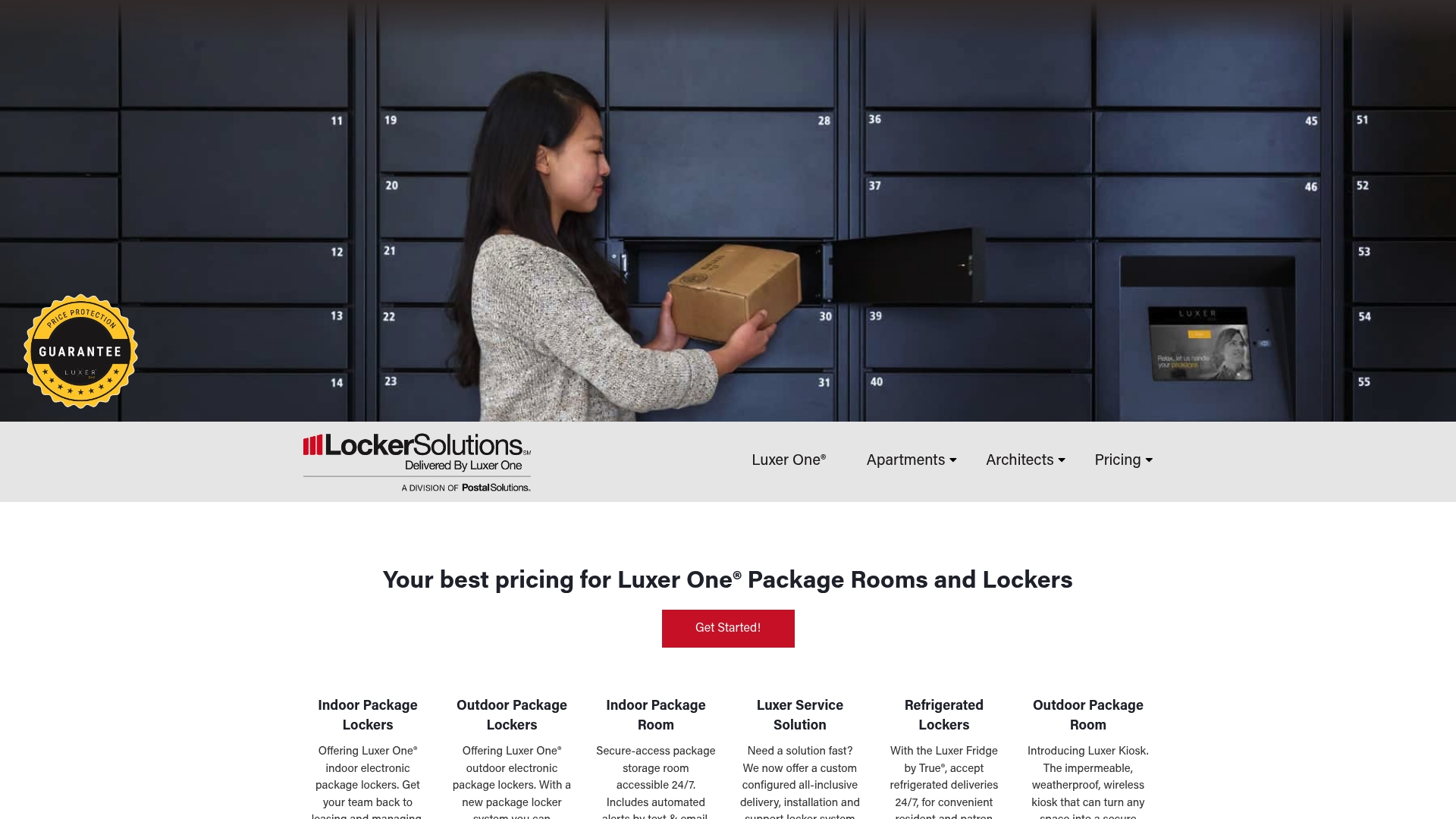
If you want one standard across communities, we handle the hardware, installation and ongoing support so your regional team does not have to coordinate several vendors. Our locker and package room range covers what a portfolio typically needs:
- Indoor parcel lockers and outdoor parcel kiosks for varied footprints.
- Refrigerated lockers for grocery and meal-kit deliveries.
- Smart package rooms for oversized and overflow items.
- Luxer Access for unified access control.
- Installation and locally supported maintenance.
Current installation details are on our site. A good next step is a pilot site survey: contact our team with your property list, and we will help you scope the first wave.
FAQ
What is multi property locker management?
It is running package lockers across several communities under shared standards for hardware, workflows, software and reporting. The goal is the same resident experience and comparable data at every property, with each site handling its own daily operations.
How many lockers does each property need?
Divide peak daily parcels by how many times a compartment turns over per day. Build your peak estimate from 60–90 days of data and a peak multiplier, since peak days can reach up to 2.5 times normal volume.
What is multi-family property management?
It is the day-to-day and strategic management of apartment communities: leasing, maintenance, resident services and financial reporting. Package handling is now part of that work because it affects resident satisfaction and staff time.
How does a smart locker work?
A carrier or staff member loads a parcel into a compartment, and the system notifies the resident automatically. The resident opens the compartment with a code or credential, and the system logs every drop-off and pickup for auditing.
What KPIs should regional managers watch?
Watch daily parcel volume, resident dwell time and complaints per 100 packages. Operators who track these three and review them monthly can justify capacity investments and staffing changes with data.
Sources
- From Boxes to Competitive Edge: Best Practices for Multifamily Package Management
- Package Delivery Volume and Locker Infrastructure Trends — PropertyOps Post
- OneSite Property Management Software | Realpage
- Buildium: Property Management Software
Recommended
Ready for a Luxer One® package locker quote?
Tell us your unit count and we'll send right-sized pricing with a fast response time.
Get my free quote