July 3, 2026
Food Lockers for Multifamily Properties: 2026 Guide
Discover how food lockers enhance multifamily properties in 2026. Boost efficiency, satisfaction, and safety with our comprehensive guide.
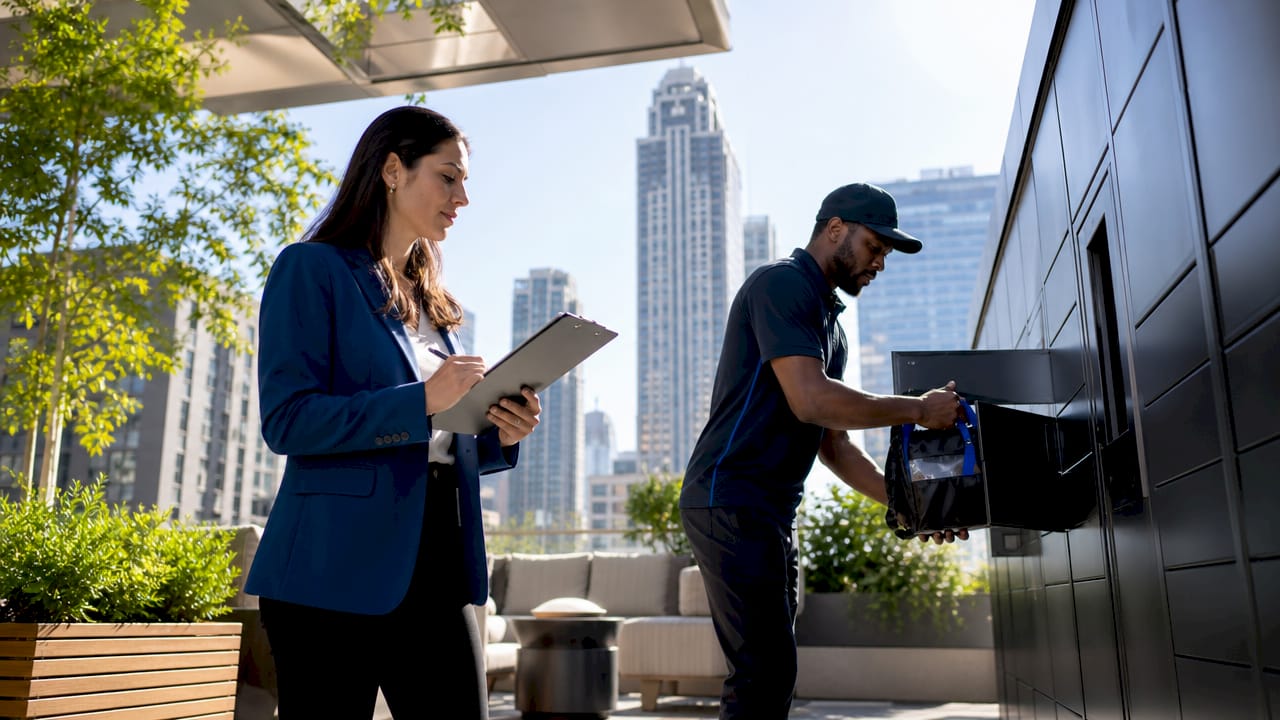
Food lockers are secure, compartmentalized storage systems that preserve and protect food during delivery and pickup in multifamily residential settings. Property managers who deploy them report measurable gains in staff efficiency, resident satisfaction, and food safety compliance. The industry term for these units is “temperature-controlled pickup lockers,” though “food lockers” is the widely used shorthand across property management circles. Locker Solutions, a specialist in Luxer One® secure locker systems, works with multifamily communities to configure refrigerated and ambient units that fit real operational needs. This guide covers the key types, features, installation considerations, and selection criteria you need to make a confident decision.
1. What are food lockers and how do they work?
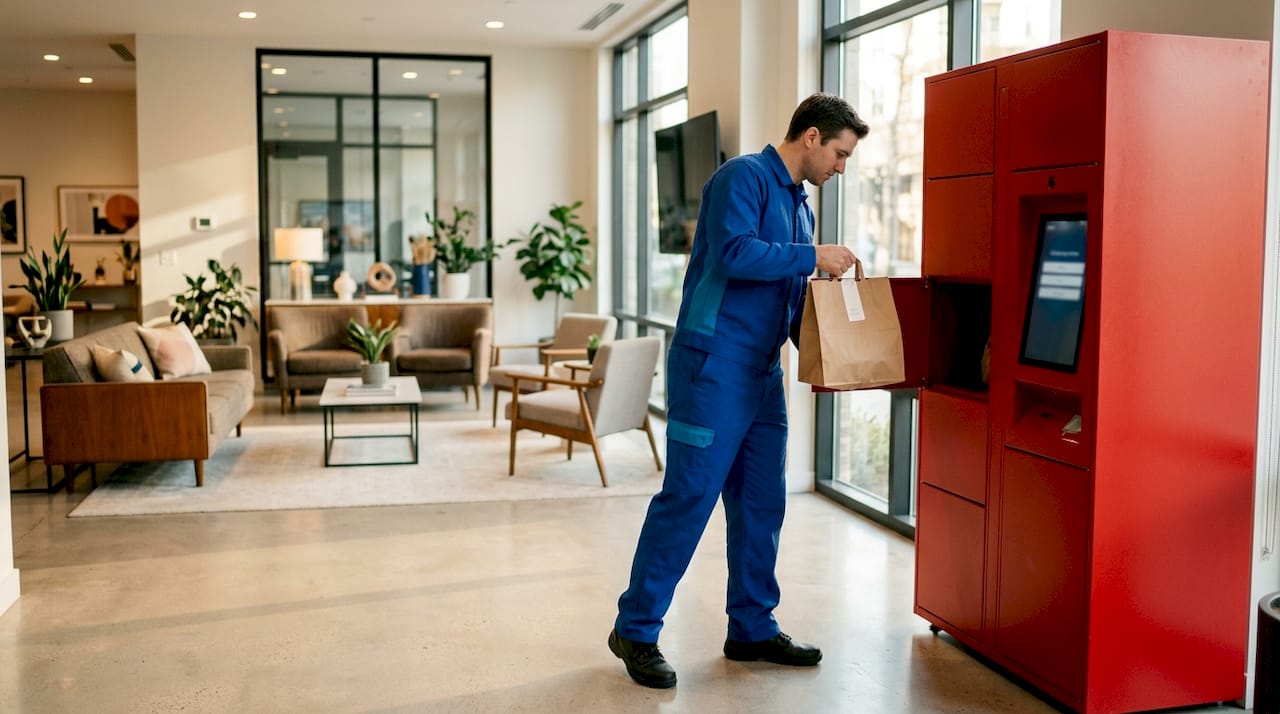
Food lockers are fixed, compartmentalized cabinets that hold ordered food securely until a resident retrieves it. Each compartment locks independently and releases only to the authorized recipient via a PIN, QR code, or mobile app. This is a fundamentally different system from a vending machine. Food lockers secure ordered food for pickup, while vending machines enable autonomous browsing and purchase. Mixing the two concepts creates inefficiency and a poor resident experience.
The workflow is straightforward. A delivery driver loads the order, the system sends an automated notification to the resident, and the resident retrieves the food at their convenience. No staff involvement is needed at the pickup stage. That separation of loading from pickup is what makes these units operationally valuable in busy multifamily communities.
2. What are the main types of food lockers?
Food lockers fall into four thermal categories, and choosing the right one depends entirely on what you plan to store.
Ambient lockers hold non-perishable or shelf-stable items at room temperature. They work for dry groceries, packaged snacks, and meal kit components that do not require refrigeration.
Heated lockers maintain food at safe serving temperatures. Heated cabinets hold food within a 30°C to 85°C range using insulated, stainless steel construction. This range covers hot prepared meals, soups, and catered orders that must stay warm during extended hold times.
Refrigerated lockers use active cooling to keep perishables safe. Fresh produce, dairy, and prepared cold meals all require this category. Passive insulation alone does not meet food safety standards over long hold times. Active refrigeration modules are required to comply with food safety standards for extended holds.
Frozen lockers maintain sub-zero temperatures for frozen meal deliveries and ice cream orders. These are the most energy-intensive units and require dedicated electrical circuits.
| Locker type | Temperature range | Best use case |
|---|---|---|
| Ambient | Room temperature | Dry goods, packaged snacks |
| Heated | 30°C–85°C | Hot prepared meals, catering |
| Refrigerated | 1°C–8°C | Fresh produce, cold meals, dairy |
| Frozen | Below 0°C | Frozen meals, ice cream |
3. How food lockers improve efficiency and security
Automated pickup lockers reduce food theft to near zero and increase pickup speed by up to 40%. That figure matters because theft and delayed pickups are the two most common complaints property managers receive about food delivery programs.
The security gains come from code-verified access. Only the resident who placed the order can open the assigned compartment. No package sits unattended in a lobby or mailroom. Staff no longer need to monitor deliveries or field calls about missing orders.
The efficiency gains are equally concrete:
- 24/7 pickup availability removes the constraint of staffed hours. Self-service pickup extends access without additional staffing costs.
- Faster order retrieval reduces congestion at building entrances during peak delivery windows.
- Automated resident notifications eliminate manual communication between staff and residents.
- Reduced staff burden frees property teams to focus on higher-value tasks.
Smart food locker solutions with 24/7 availability and secure access consistently reduce wait times and improve resident satisfaction scores.
Pro Tip: Set your locker notification system to send a follow-up reminder after 24 hours if a resident has not picked up their order. This prevents food spoilage in refrigerated compartments and keeps units available for new deliveries.
4. Key features to look for in a food locker system
The right feature set depends on your property’s delivery volume, resident mix, and available space. These are the criteria that separate a well-specified system from one that creates new problems.
- Software integration. Integration with delivery and management software is vital to automate notifications and avoid manual resident communication. Without it, lockers become isolated and operationally inefficient.
- Multi-temperature zones. Modular units that combine ambient, refrigerated, and heated compartments in one footprint serve mixed delivery types without requiring separate installations.
- Independent temperature control. Separate temperature control per compartment guards product integrity and prevents quality degradation over extended wait times.
- Access method flexibility. PIN entry, QR code scanning, and app-based access each serve different resident demographics. A system that supports all three covers the full range of your community.
- Compartment size variety. Meal kit boxes and grocery bags require larger compartments than single-item restaurant orders. A mix of small, medium, and large openings prevents size mismatches.
- Double-sided design. Double-sided locker designs separate back-of-house loading from resident pickup, improving workflow and reducing congestion at the locker bank.
- Audit trail and video surveillance. A timestamped log of every access event protects you from liability disputes and supports incident investigations.
Pro Tip: Ask vendors for a software API documentation sheet before signing a contract. If the locker system cannot connect to your existing property management platform, you will spend more time on manual workarounds than the system saves.
5. Installation and space planning considerations
Space planning is where most food locker projects run into trouble. Property managers often underestimate the clearance needed for resident access and driver loading, particularly in buildings with narrow corridors or shared mailroom spaces.
Key planning factors include:
- Placement. Locate units where delivery drivers can load without entering secure residential areas. A lobby alcove or dedicated delivery vestibule works well.
- Ergonomic access. Compartment openings should sit between knee height and shoulder height. Units that require residents to crouch or reach overhead generate complaints and reduce usage.
- Electrical requirements. Refrigerated and frozen units need dedicated circuits. Confirm your building’s electrical capacity before specifying active-temperature units.
- Humidity resistance. Proper materials resistant to humidity are critical to locker longevity, particularly in outdoor or semi-outdoor installations.
- Building code compliance. Food storage equipment in common areas may fall under local health department jurisdiction. Verify requirements with your municipality before installation.
| Planning factor | Recommendation |
|---|---|
| Minimum aisle clearance | 36 inches for ADA compliance |
| Electrical supply | Dedicated 20-amp circuit per refrigerated unit |
| Placement zone | Lobby, vestibule, or covered outdoor area |
| Material standard | Stainless steel or powder-coated steel for humidity resistance |
For a detailed walkthrough of locker placement and access flow, the apartment locker setup guide from Locker Solutions covers retrofit and new-construction scenarios.
6. Selecting the right food locker solution for your property
The market for food storage cabinets and secure food lockers spans a wide range of price points and capability levels. Matching the unit to your property’s actual delivery volume and food types prevents overspending and underperformance.
Entry-level units offer basic ambient or single-temperature refrigerated storage with PIN access. They suit smaller properties with low delivery volume and a single food type, such as a community that primarily receives grocery deliveries.
Mid-tier units add modular compartment configurations, software integration, and multiple access methods. These are the right choice for properties with 100 or more units where delivery volume is high and food types vary.
Premium units provide multi-temperature zones in a single cabinet, advanced user interfaces, video surveillance, and full API integration with property management platforms. They suit large communities or mixed-use developments where meal delivery, grocery service, and frozen food orders all arrive in the same window.
Budgeting tip: calculate your current staff hours spent managing food deliveries and missed pickups. That figure, converted to an annual labor cost, is your baseline for evaluating return on investment. Properties that deploy meal storage solutions with full software integration typically recover the hardware cost within the first year through labor savings alone.
For properties that specifically need cold storage, refrigerated lockers for apartments from Locker Solutions are purpose-built for multifamily use and include active cooling with resident notification built in.
Key Takeaways
Food lockers deliver the greatest operational value when temperature type, software integration, and space planning are matched precisely to the property’s delivery profile.
| Point | Details |
|---|---|
| Match locker type to food category | Using ambient units for perishables causes spoilage and resident complaints. |
| Require software integration | Lockers without system integration create manual work and reduce efficiency gains. |
| Plan space before purchasing | Clearance, electrical capacity, and humidity resistance determine long-term performance. |
| Prioritize independent temperature zones | Per-compartment control prevents cross-contamination of food quality. |
| Calculate labor savings first | Annual staff hours saved on delivery management sets your ROI baseline. |
What we have learned from deploying food lockers in multifamily communities
The most common mistake we see is property managers selecting locker type based on price rather than food category. Choosing the wrong locker type for the food category, such as ambient units for frozen goods, causes inventory damage and resident complaints that are far more expensive to resolve than the price difference between unit tiers.
The second mistake is treating software integration as optional. Food lockers as active workflow tools require full integration with existing software to realize their benefits. A locker bank that sends no automated notifications forces staff back into the manual communication loop the system was supposed to eliminate.
What actually works is decoupling food preparation from pickup. Decoupling order preparation from pickup lets staff focus on food quality and volume during peak periods rather than managing handoffs. In multifamily settings, this means delivery drivers load independently, residents pick up on their own schedule, and your team never touches the transaction.
Resident expectations are also shifting faster than most property managers anticipate. Residents increasingly expect contactless, anytime-access food pickup, making food lockers a strategic asset for community managers who want to differentiate their properties. The communities that install now are setting the standard that prospective residents will expect as a baseline within two to three years.
— Locker Solutions
Food locker solutions from Locker Solutions
Locker Solutions works with multifamily property managers to configure Luxer One® food and package locker systems that fit real building constraints and resident expectations. Whether you need a single refrigerated unit for a boutique community or a multi-temperature bank for a large mixed-use development, the product range covers both.
Every configuration integrates with existing access control and property management platforms, so automated resident notifications and audit trails work from day one. The team handles installation planning, compliance review, and ongoing support. Explore the full range of apartment locker configurations or review secure delivery options to find the right fit for your property.
FAQ
What is the difference between a food locker and a vending machine?
A food locker holds pre-ordered food securely until an authorized resident retrieves it. A vending machine allows anyone to browse and purchase items on demand.
Do food lockers require a dedicated electrical connection?
Ambient lockers run on standard power, but refrigerated and frozen units require dedicated circuits. Confirm your building’s electrical capacity before specifying active-temperature models.
How do residents access their food locker compartment?
Most systems support PIN entry, QR code scanning, and app-based access. Offering all three methods covers the full range of resident preferences and technical comfort levels.
Can food lockers integrate with existing property management software?
Yes, and integration is critical. Systems without API connectivity to your property management platform require manual notifications, which eliminates most of the efficiency benefit.
What food types are best suited for multifamily food lockers?
Grocery deliveries, prepared meal orders, and frozen food services all work well. The key is matching the locker’s thermal category to the food type: refrigerated for fresh items, heated for hot meals, and frozen for sub-zero products.
Recommended
- Smart Lockers for Property Managers: 2026 Guide — Locker Solutions Blog
- Single Door Locker Guide for Multifamily Properties — Locker Solutions Blog
- Package Locker Systems for Multifamily Properties: 2026 Guide — Locker Solutions Blog
- Locker Business Models for Multifamily Properties: 2026 — Locker Solutions Blog
Ready for a Luxer One® package locker quote?
Tell us your unit count and we'll send right-sized pricing with a fast response time.
Get my free quote