July 4, 2026
Altitude-Rated Outdoor Locker Equipment: A Facility Manager's Guide
Discover what is altitude-rated outdoor locker equipment and how it enhances durability, reduces costs, and ensures resident satisfaction in high-altitude...
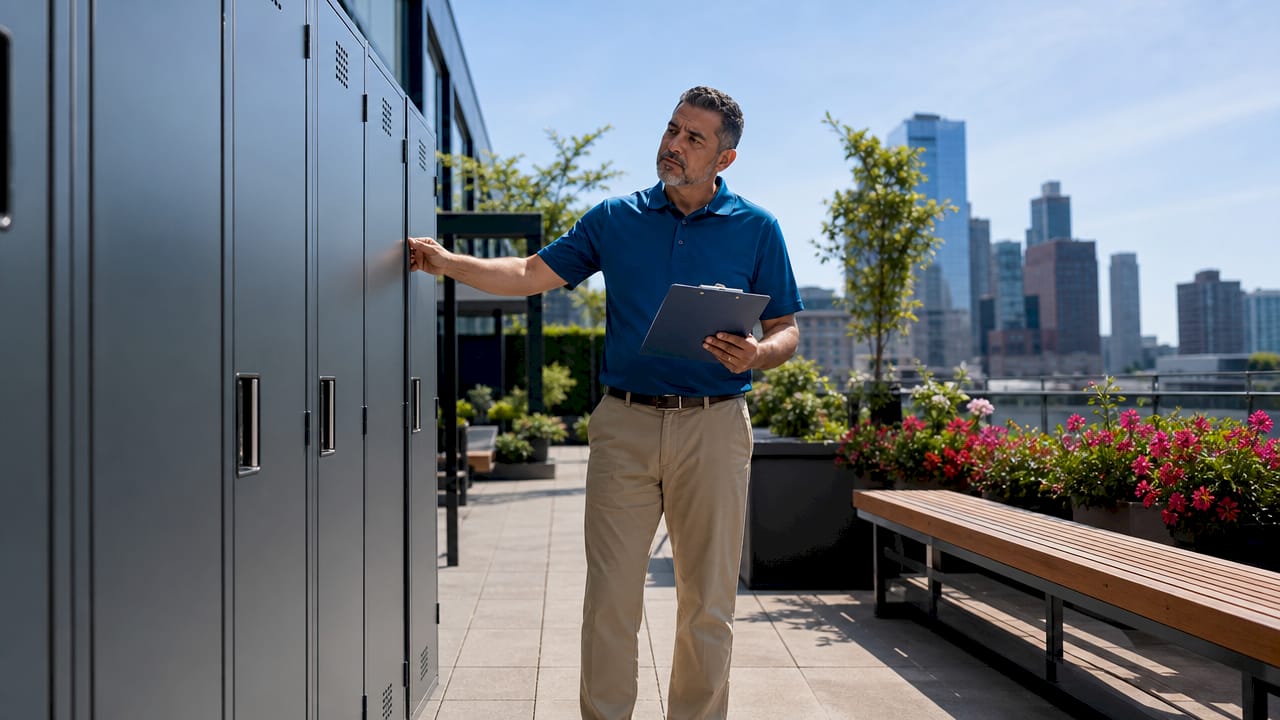
Altitude-rated outdoor locker equipment is defined as storage lockers engineered to withstand the specific environmental stresses found at high elevations, including intensified UV radiation, rapid temperature swings, and prolonged moisture exposure. Standard outdoor lockers rated for sheltered use often fail in these conditions. Facility managers and property developers at high-altitude residential sites need equipment built to a stricter specification. This guide covers the materials, durability features, warranty structures, and installation practices that determine whether an outdoor locker system performs for a decade or fails within a few seasons. Locker Solutions works with multifamily properties across a range of climates, and the distinctions covered here directly affect long-term cost and resident satisfaction.
What is altitude-rated outdoor locker equipment, and why does it matter?
Altitude-rated outdoor locker equipment refers to lockers specified and tested for high-elevation environments where UV intensity, freeze-thaw cycles, and wind-driven precipitation exceed what standard outdoor-rated products can handle. The term “altitude-rated” is a descriptive specification category rather than a single certified standard. Facility managers should treat it as a checklist of performance requirements, not a single label on a product sheet.
At elevations above roughly 5,000 feet, UV radiation increases measurably with each additional 1,000 feet of gain. That means surface coatings, seals, and structural materials degrade faster than manufacturers’ baseline outdoor ratings predict. A locker rated for a covered pool deck in a coastal city may not survive two winters on an exposed Colorado apartment courtyard.
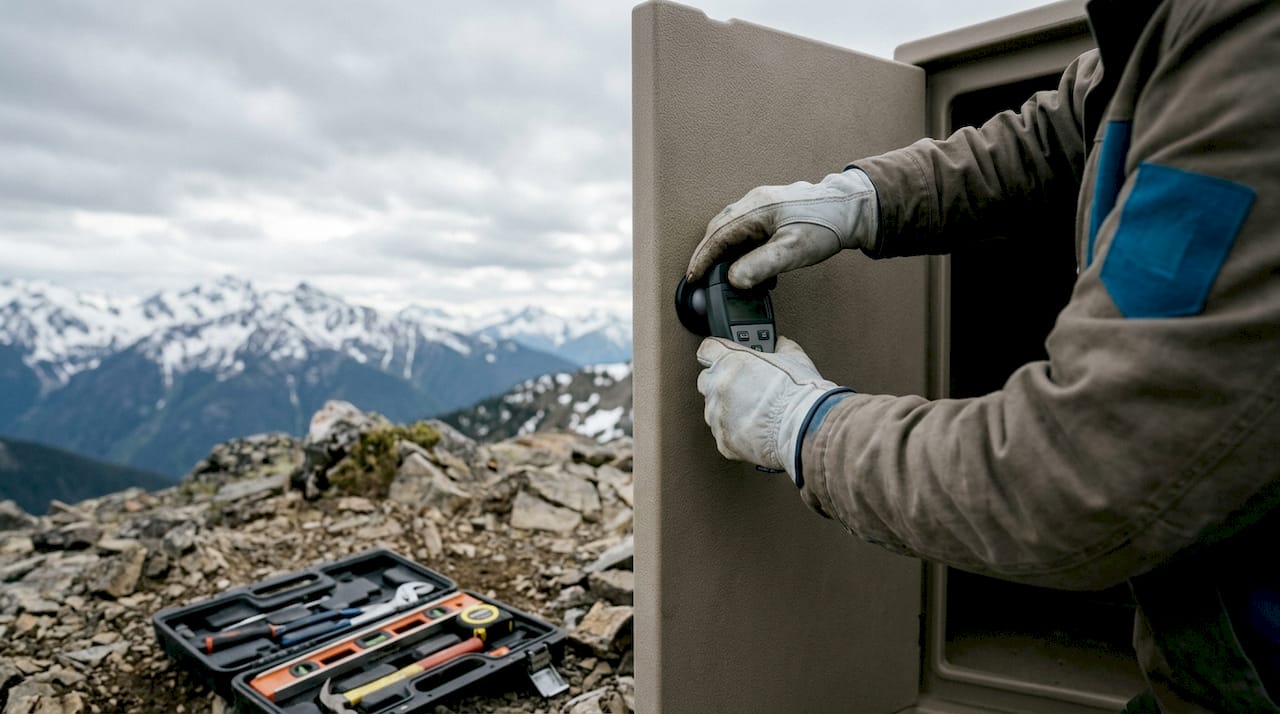
Altitude-rated storage solutions support secure package and equipment storage in multifamily and residential outdoor environments where standard products fall short. The practical implication is straightforward: specifying the wrong product costs more in replacements and repairs than upgrading the specification at the outset.
What materials perform best in high-altitude outdoor lockers?
Material selection is the single most consequential decision when specifying high altitude equipment lockers. Two material families dominate the market: high-density polyethylene (HDPE) polymer and powder-coated or laminate steel. They perform very differently under altitude conditions.
HDPE and polymer lockers
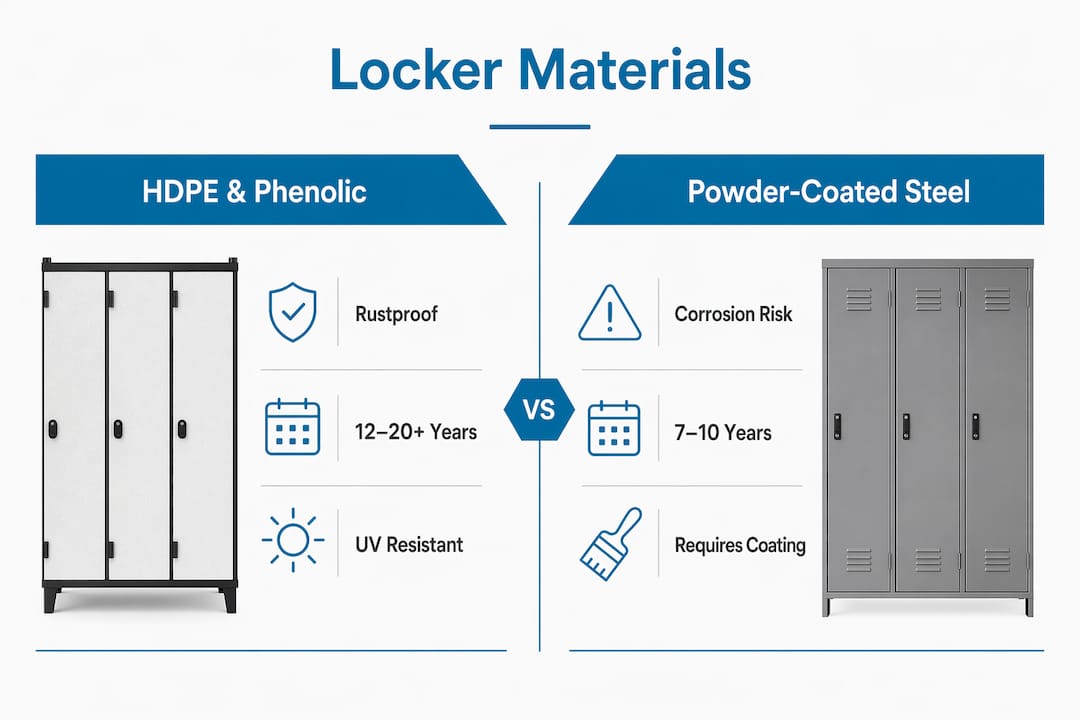
HDPE lockers are 100% rustproof and deliver a lifespan of 12–20+ years, outperforming steel and laminate options that typically last 8–15 years even under shelter. That gap widens significantly in fully exposed, high-altitude sites. HDPE bodies also carry UV-resistant, graffiti-resistant surfaces that clean easily with solvents, which matters for property managers maintaining appearance standards year-round.
Solid-core phenolic lockers share many of HDPE’s advantages. In harsh coastal or chlorinated pool environments at altitude, phenolic or HDPE lockers deliver proven 12–20+ year lifespans versus only 8–15 years for coated steel designs. The cost premium for polymer materials pays back through reduced replacement cycles.
Steel and laminate lockers
Steel lockers with advanced powder coatings perform well in sheltered, low-corrosion environments. The problem is that steel lockers in high-corrosion zones, such as coastal or chlorinated pool areas, underperform even with premium coatings. Facility managers who have installed coated steel at altitude frequently report surface rust within three to five years, particularly at fastener points and door edges where coatings are thinnest.
| Feature | HDPE/Polymer | Powder-Coated Steel |
|---|---|---|
| Rust resistance | 100% rustproof | Coating-dependent |
| Typical lifespan | 12–20+ years | 8–15 years (sheltered) |
| UV resistance | Built into material | Surface coating only |
| Corrosion in coastal/pool zones | Excellent | Poor to moderate |
| Graffiti resistance | High | Moderate |
| Recommended for full exposure | Yes | No |
Pro Tip: Specify HDPE or solid-core phenolic for any locker installation that will face direct sun, snow loading, or proximity to a pool or water feature at altitude. The material cost difference is minor compared to a full replacement in year six.
What durability features define the best outdoor locker systems?
The best outdoor locker systems for high-altitude use share a set of design features that go beyond material choice. Each feature addresses a specific failure mode common in exposed, high-elevation environments.
The most critical features include:
- Weatherproof sealing. Door gaskets and frame seals prevent wind-driven rain and snow from entering the locker body. Seals should be rated for the full temperature range expected at the site, including hard freezes.
- Sloped tops. Sloped tops and nesting configurations reduce snow and debris accumulation and improve space management, which lowers installation costs on constrained sites.
- Secure anchoring. Lockers at altitude face higher wind loads. Anchor points should connect to a concrete base or structural wall using stainless steel fixings rated for outdoor exposure.
- Ventilation and drainage. Ventilation and drainage features specified expressly for altitude climates prevent moisture buildup and the locker damage that follows. Without drainage, pooled water accelerates corrosion at the base and damages electronic components.
- Integral hasps and padlock compatibility. Sloping tops, secure hasps, and padlock compatibility improve both weather resistance and security, two requirements that reinforce each other in outdoor residential settings.
- UV-stable finishes. Finishes that rely on a surface coating alone will chalk and crack at altitude. Finishes built into the material, as with HDPE, hold color and structural integrity far longer.
Pro Tip: When reviewing locker specifications, ask the manufacturer to confirm the operating temperature range. A product rated to 32°F will fail in a mountain climate that regularly drops to 0°F or below.
Architectural integration also matters. Lockers designed to nest or stack reduce the footprint on a residential courtyard and simplify the structural anchoring requirement. Sloped tops and nesting are not just aesthetic choices. They are practical engineering decisions that reduce maintenance calls and extend service life.
How do warranties work for altitude-rated outdoor locker equipment?
Warranty structure tells you a great deal about how a manufacturer views its own product’s durability. Heavy-duty HDPE outdoor locker bodies carry up to a 20-year product warranty, while electronic-integrated locker carcasses typically carry a 7-year warranty, with electronics components covered for a shorter period, often around 5 years.
That split matters for facility managers budgeting long-term maintenance. The structural body of a well-specified locker should outlast two or three cycles of electronic hardware. Plan your maintenance budget accordingly.
Common warranty pitfalls to avoid:
- Mismatched environment. Installing a locker rated for sheltered use in a fully exposed location typically voids the warranty. Confirm the exposure rating before purchase.
- Improper anchoring. Most manufacturers require installation on a flat, stable base with approved fixings. Deviating from this specification is the most common reason warranty claims are denied.
- Unauthorized modifications. Cutting ventilation holes, painting over surfaces, or adding non-approved hardware voids coverage on both the body and electronics.
- Neglected maintenance. Routine cleaning, lubrication of locking mechanisms, and inspection of seals are typically required to maintain warranty validity. Document every maintenance visit.
- Electronic component exposure. Lockers with electronic locks carry separate warranty terms for mechanical carcass and integrated electronics. Moisture ingress into the electronic housing, caused by failed seals, is rarely covered if installation guidelines were not followed.
Outdoor locker warranties for electronic systems typically cover the carcass for 7 years and electronics for 5 years. That means a locker installed in 2026 may need an electronics refresh by 2031, even if the body remains structurally sound. Budget for that cycle from day one.
How do you select and install altitude-rated lockers in residential properties?
Selection starts with a site audit. Before specifying any outdoor gear storage options, document the site’s elevation, sun exposure, prevailing wind direction, proximity to water features, and expected snow load. These factors determine the minimum material and sealing specification required.
Key selection criteria for facility managers and developers:
- Elevation and UV exposure. Sites above 5,000 feet require UV-stable materials throughout, not just UV-resistant surface coatings.
- Freeze-thaw cycles. Specify door seals and locking mechanisms rated for the lowest expected temperature at the site.
- Corrosion environment. Pool proximity, coastal air, or road salt exposure all push the specification toward HDPE or phenolic over coated steel.
- Security requirements. Electronic locking with audit trails suits multifamily package management applications. Mechanical padlock hasps suit lower-security gear storage.
- Aesthetic integration. Color, finish, and locker dimensions should align with the property’s architectural standards. Custom color options are available from most manufacturers.
For installation, proper practice requires a flat, stable base, secure anchoring, spacing of 20–30mm behind lockers for airflow, and stainless rust-proof fixings. That airflow gap is frequently skipped on tight sites, and it is one of the most common causes of premature corrosion at the locker back panel.
| Installation factor | Recommended practice |
|---|---|
| Base preparation | Level concrete pad, minimum 100mm depth |
| Anchoring | Stainless steel bolts into concrete or structural wall |
| Airflow spacing | 20–30mm gap behind locker bank |
| Fixings | Stainless steel, rated for outdoor exposure |
| Electronic conduit | Weatherproof conduit, sealed entry points |
For residential retrofit projects, nesting lockers with sloped tops optimize both longevity and installation cost. They reduce the number of anchor points required and simplify the base preparation work, which is a real advantage when retrofitting an existing courtyard.
Key Takeaways
Altitude-rated outdoor locker equipment requires HDPE or phenolic materials, weatherproof sealing, proper anchoring, and split warranty planning to perform reliably in high-elevation residential environments.
| Point | Details |
|---|---|
| Material choice is decisive | HDPE and phenolic lockers last 12–20+ years at altitude; coated steel typically lasts 8–15 years under shelter. |
| Design features prevent failure | Sloped tops, drainage, ventilation, and stainless fixings each address a specific failure mode in exposed conditions. |
| Warranty splits require budget planning | Body warranties run up to 20 years; electronics warranties typically cover only 5 years. |
| Site audit drives specification | Elevation, UV exposure, freeze-thaw cycles, and corrosion environment all determine the minimum required spec. |
| Installation details matter | A 20–30mm airflow gap and stainless anchoring are the two most commonly skipped steps that cause early failures. |
What facility managers get wrong about outdoor locker ratings
The phrase “outdoor-rated” covers an enormous range of actual performance. A locker rated for a covered pool deck in Phoenix and a locker rated for a fully exposed rooftop in Denver are both “outdoor-rated.” They are not the same product, and treating them as equivalent is the most expensive mistake a facility manager can make.
At Locker Solutions, we see this repeatedly. A property team specifies a locker based on an outdoor rating and a competitive price, installs it on an exposed mountain-climate courtyard, and calls us two years later when the doors are warping and the electronic locks are failing. The fix costs more than the upgrade would have.
The detail most facility managers overlook is the temperature range on the electronic lock specification. The locker body may be HDPE and rated for decades, but if the electronic locking mechanism is only rated to 14°F and the site regularly hits minus 10°F, the electronics will fail on schedule. Match every component to the site, not just the body material.
The other overlooked factor is the airflow gap behind the locker bank. It reads like a minor installation note. Skipping it concentrates moisture at the back panel and at the base, exactly where corrosion starts. A 20–30mm gap costs nothing to implement during installation and adds years to the locker’s service life.
Proactive specification is always cheaper than reactive replacement. Get the site data, match the spec to the environment, and document the installation. That documentation also protects the warranty, which is the financial backstop if something does go wrong.
— Locker Solutions
Outdoor lockers built for the conditions your property actually faces
Locker Solutions supplies Luxer One® weatherproof outdoor lockers designed for the full range of residential and multifamily environments, including high-altitude sites where standard products fall short. Every unit is specified for real-world exposure, with material and sealing options matched to your site’s elevation, climate, and security requirements.
The Locker Solutions team provides configuration support, installation guidance, and warranty documentation from day one. Whether you are specifying a new development or retrofitting an existing courtyard, outdoor parcel lockers from Locker Solutions are built to the conditions your property actually faces. Contact Locker Solutions for detailed specifications, custom configurations, and a quote tailored to your site.
FAQ
What is altitude-rated outdoor locker equipment?
Altitude-rated outdoor locker equipment refers to storage lockers engineered for the elevated UV exposure, temperature variability, and weather conditions found at high elevations. The term describes a performance specification rather than a single certified standard.
What material is best for high-altitude outdoor lockers?
HDPE and solid-core phenolic are the best materials for high-altitude outdoor lockers, delivering 12–20+ year lifespans compared to 8–15 years for coated steel under shelter. Both materials are 100% rustproof and UV-resistant throughout the body.
How long do outdoor locker warranties typically last?
HDPE locker bodies carry warranties of up to 20 years. Electronic components on integrated locker systems typically carry a separate warranty of around 5 years, so budget for an electronics refresh cycle independently of the structural body.
What installation steps are most critical for outdoor lockers at altitude?
A level concrete base, stainless steel anchoring, and a 20–30mm airflow gap behind the locker bank are the three most critical installation steps. Skipping the airflow gap is the most common cause of premature corrosion at the back panel and base.
Can standard outdoor-rated lockers be used at high altitude?
Standard outdoor-rated lockers designed for sheltered use can fail rapidly in fully exposed high-altitude environments. Always confirm the locker’s exposure rating, operating temperature range, and UV specification against your site’s actual conditions before purchasing.
Recommended
- Outdoor Locker Humidity Resistance: A Guide for Facility Managers — Locker Solutions Blog
- Preventive Maintenance for Lockers: A Facility Manager’s Guide — Locker Solutions Blog
- Apartment locker setup guide: maximize efficiency now - Luxer One Locker Solutions
- Weatherproof lockers for smarter multifamily package management - Luxer One Locker Solutions
Ready for a Luxer One® package locker quote?
Tell us your unit count and we'll send right-sized pricing with a fast response time.
Get my free quote