June 13, 2026
Resident Package Pickup System for Multifamily Properties
Streamline delivery with a resident package pickup system that automates intake and notifications, reducing staff workload and enhancing resident...
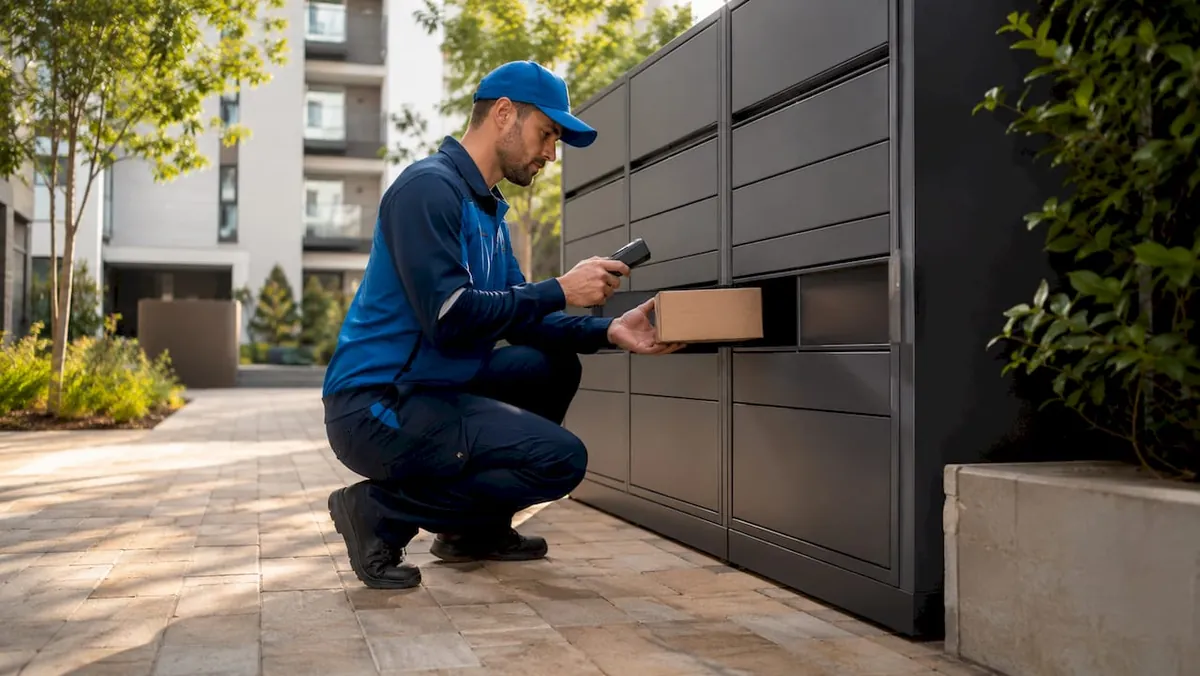
A resident package pickup system is a secure, automated solution that manages delivery intake, resident notification, and parcel retrieval with minimal staff involvement. Package volumes in multifamily buildings have grown to the point where front desks and mailrooms no longer function as viable intake points. Property managers who rely on manual logging face mounting liability, resident complaints, and staff burnout. Modern systems built around smart lockers, automated package rooms, and platforms like Luxer One® and Traizr replace that friction with a technology-driven workflow that works around the clock.
What makes up a resident package pickup system?
A complete package pickup system combines physical infrastructure, software management, and carrier workflow into one integrated process. The four core steps are: courier barcode scan at intake, resident email alert with a unique QR code or PIN, resident self-serve retrieval, and digital handover confirmation with timestamp and signature. Each step depends on the one before it. Skip the scan, and the entire notification and audit chain breaks.
The physical layer consists of smart lockers, package rooms, or a hybrid of both. Smart parcel lockers are modular, scalable units that send unique access codes at delivery and allow residents to retrieve packages without staff assistance. Package rooms are camera-monitored, access-controlled spaces where couriers deposit parcels on shelving, and residents enter using a PIN or mobile credential. Both options eliminate the lobby bottleneck that plagues properties relying on front desk intake.
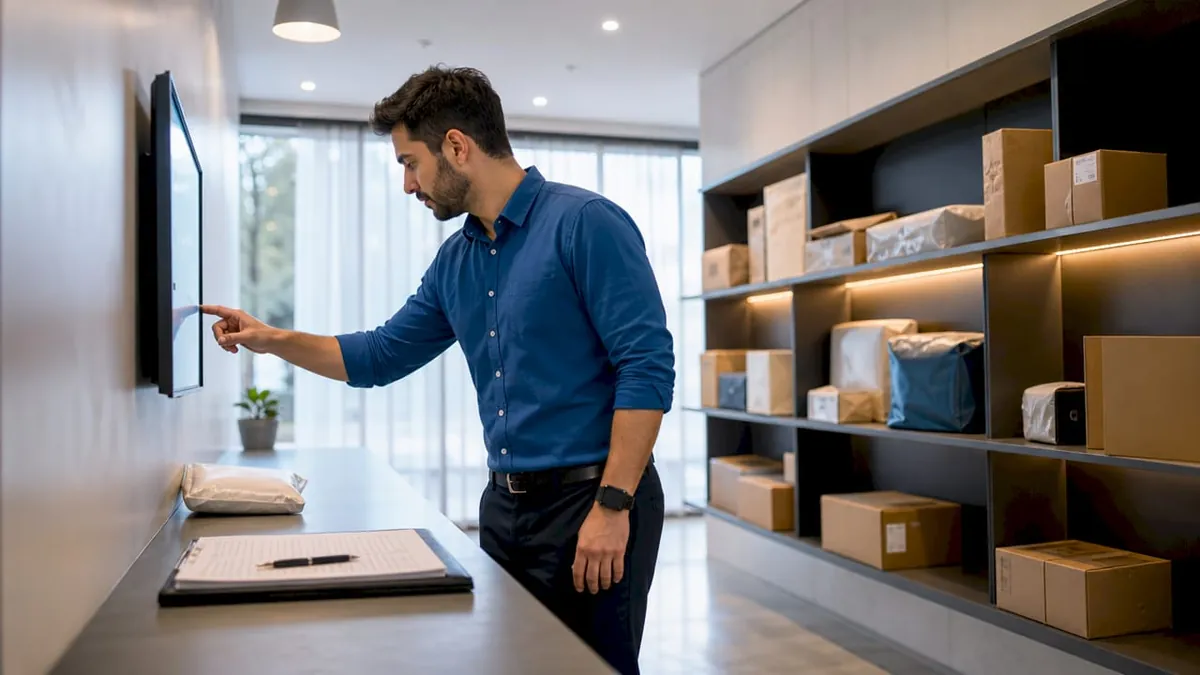
The software layer is what separates a modern package delivery system from a simple lockbox. Platforms like Traizr provide real-time occupancy dashboards, automated resident messaging via SMS and email, and digital audit trails including photos, timestamps, and recipient signatures. These records are searchable and protect property managers from liability when a resident claims a package was never delivered.
Smart lockers vs. package rooms: a quick comparison
| Feature | Smart lockers | Package rooms |
|---|---|---|
| Capacity | Fixed compartment count | Flexible shelving, scales with volume |
| Oversized packages | Limited by compartment size | Handles large and irregular parcels |
| Carrier workflow | Scan and deposit per compartment | Single-entry deposit to shared space |
| Resident access | QR code or PIN per locker | PIN or mobile credential at room door |
| Cost to expand | Add locker units | Reconfigure shelving or expand room |
Pro Tip: Install clear, professional signage at every locker and package room entrance. Couriers who understand exactly where to deposit parcels are far more likely to follow your scanning protocol. A property manager’s signage guide can help you design placement that reduces driver confusion and intake errors.
How to implement a package pickup system in multifamily buildings
Effective implementation starts with an honest assessment of your property’s current package volume, physical footprint, and carrier mix. A 50-unit building with moderate delivery volume has different needs than a 400-unit community receiving hundreds of parcels daily from UPS, FedEx, USPS, and Amazon Logistics simultaneously. Getting that baseline right determines whether you need a locker bank, a dedicated package room, or both.
Follow these steps to build a system that works from day one:
- Audit your current volume and pain points. Count average daily deliveries, identify peak periods, and document where the current process breaks down. Overflow, theft, and resident complaints are your primary signals.
- Choose your infrastructure type. Select between smart lockers, an automated package room, or a hybrid setup based on your volume, available space, and budget.
- Plan carrier intake workflows. Map out exactly how UPS, FedEx, USPS, and Amazon drivers will enter, scan, and deposit packages. This step is where most implementations succeed or fail.
- Determine placement. Indoor lockers work well in lobbies and mail rooms. Outdoor weatherproof units serve properties where carriers need after-hours access without entering the building.
- Integrate your software platform. Connect your locker or package room hardware to a management platform that handles resident notifications, occupancy tracking, and audit logging.
- Train staff on exception handling. Staff should know how to manage oversized deliveries, expired locker holds, and resident disputes without reverting to manual logging.
- Communicate the new process to residents. Send a clear written explanation of how the system works, how they will receive notifications, and what to do if a package is not found.
Pro Tip: Before launch, run a carrier compliance test with your most frequent delivery drivers. Have them walk through the full intake process while you observe. Driver compliance is the single most common failure point in otherwise well-designed systems. Catching protocol gaps before go-live saves weeks of troubleshooting.
Common challenges in package pickup systems and how to solve them
Every property manager running a package delivery system will encounter operational friction. Knowing the most common failure modes in advance lets you build solutions into your setup rather than react to them after the fact.
The most frequent issues include:
- Locker capacity overflow. When lockers are full, USPS reroutes packages to local post offices or schedules redelivery. Residents receive no notification from your system because no scan occurred. The fix is either adding locker capacity or routing overflow to a package room.
- Oversized package rejection. Fixed locker compartments have dimensional limits. Furniture, appliances, and bulk orders from retailers like Costco or Chewy will not fit. Scalable package rooms with adjustable shelving handle these cases without requiring staff intervention.
- Driver non-compliance. When couriers bypass scanning or deposit packages outside the designated area, the tracking and notification chain breaks entirely. Residents receive no alert, packages sit unattended, and your audit trail has a gap.
- Resident disputes over missing packages. Without a digital record, these disputes are nearly impossible to resolve fairly. With a system that logs photos, timestamps, and signatures, you have evidence at every handover point.
- Expired holds. Packages left unclaimed for extended periods tie up locker compartments. Set automated escalation alerts at 24, 48, and 72 hours to prompt retrieval before capacity becomes a problem.
Full digital audit trails, including signatures, timestamps, and photos, protect property managers from liability and support package dispute resolution. Logging recipient confirmation with a photo and timestamp creates a searchable record for every parcel.
The secure package pickup workflow you establish at intake determines how well you can defend against every one of these scenarios. Treat your audit log as a legal document, not an afterthought.
Benefits of upgrading to automated package pickup for multifamily properties
Automated package pickup systems deliver measurable returns across three categories: operational efficiency, resident satisfaction, and financial performance. Smart systems speed package intake via smartphone scanning and provide instant resident alerts, which directly reduces lobby backlogs and the staff time spent managing them. That time savings compounds across a full leasing year.
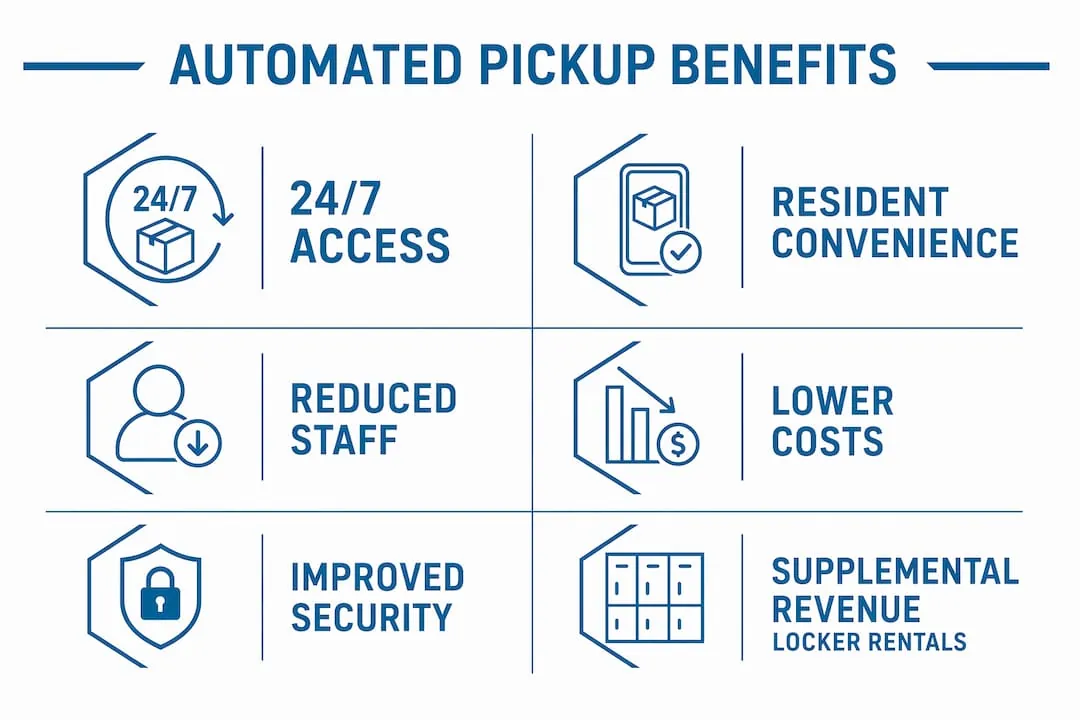
Residents who receive instant notifications and 24/7 access to their packages report higher satisfaction scores and are more likely to renew their leases. In a competitive multifamily market, a well-run package delivery system functions as a retention amenity, not just an operational tool. Properties that advertise secure, automated package pickup attract residents who order frequently online and treat delivery reliability as a non-negotiable.
The financial case is also direct. Some providers offer rentable locker configurations that generate supplemental revenue by offering secure pickup as a paid service to residents or nearby businesses. That turns infrastructure cost into a profit center.
| Benefit | Impact |
|---|---|
| 24/7 resident access | Eliminates after-hours staff calls and missed delivery complaints |
| Reduced staff workload | Frees leasing and maintenance staff from manual package logging |
| Theft and damage prevention | Parcel lockers prevent theft, weather damage, and missed deliveries |
| Resident retention | Automated pickup is a competitive amenity that supports lease renewal |
| Revenue potential | Rentable locker units convert infrastructure into supplemental income |
Technology also reduces your exposure to multifamily package security liability. When every delivery is logged with a photo and timestamp, you have a defensible record for every package that enters your property.
Key takeaways
A resident package pickup system succeeds when physical infrastructure, software automation, and carrier compliance work together as one integrated process.
| Point | Details |
|---|---|
| System components matter | Combine smart lockers or package rooms with software that handles notifications, occupancy, and audit logging. |
| Driver compliance is critical | Non-compliant couriers break the tracking chain; test carrier workflows before launch, not after. |
| Audit trails protect you | Digital records with photos, timestamps, and signatures resolve disputes and reduce liability. |
| Capacity planning prevents failure | Size your system for peak volume and add overflow options for oversized parcels from day one. |
| Automation pays for itself | Reduced staff workload, higher resident retention, and potential locker rental revenue justify the investment. |
What we’ve learned from watching systems succeed and fail
After working with property managers across hundreds of multifamily installations, the pattern is consistent. The properties that get the most out of their package pickup systems are not necessarily the ones with the most expensive hardware. They are the ones that treat driver compliance as a first-class operational priority.
Most property managers focus their energy on the resident experience side of the equation, which makes sense. But the resident experience is entirely downstream of what happens at intake. If a courier drops a package in the lobby instead of scanning it into the locker system, the resident gets no notification, the package sits exposed, and the property manager gets a complaint call. The hardware did not fail. The process did.
The other pattern we see consistently is under-sizing at launch. Properties that install a locker bank sized for current volume are often overwhelmed within 18 months as e-commerce delivery rates continue to climb. Building in overflow capacity, whether through a hybrid locker and package room setup or a scalable room configuration, is the decision that separates properties that manage packages well from those that are perpetually catching up.
Looking ahead, AI-powered package rooms that use computer vision to log deliveries without courier scanning are moving from pilot programs to commercial availability. Integration between package systems and broader multifamily access control platforms, like Luxer Access, is also accelerating. The properties investing in modular, software-connected infrastructure today will be positioned to adopt those capabilities without a full system replacement.
See how we handle package management for multifamily
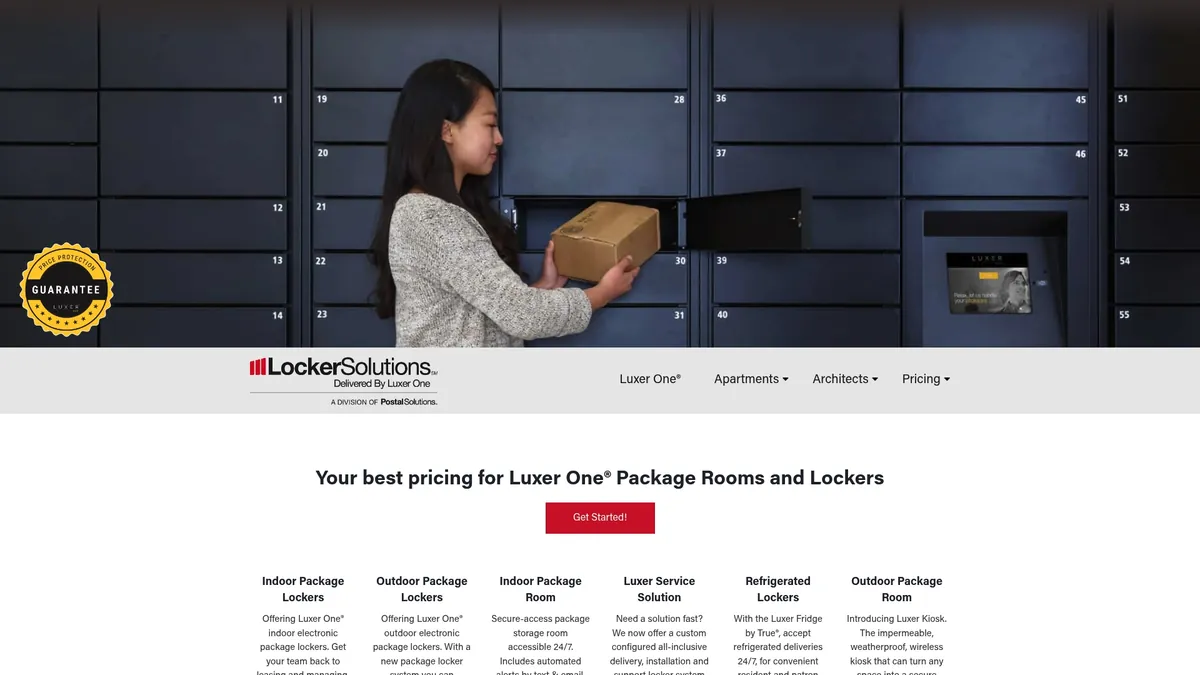
We specialize in Luxer One® smart lockers and monitored package rooms built specifically for multifamily properties. Whether your building needs indoor locker installations, weatherproof outdoor units, or a fully managed package room, we offer configurations sized for any community. Every system includes automated resident notifications, video surveillance, and a software dashboard that gives your team real-time visibility into package status. Explore the full range of apartment package solutions and request a custom configuration for your property today.
FAQ
What is a resident package pickup system?
A resident package pickup system is a secure, automated infrastructure that handles courier intake, resident notification, and self-serve parcel retrieval in multifamily buildings. It typically combines smart lockers or package rooms with software that sends alerts and logs every delivery digitally.
How does package pickup work in apartment buildings?
Couriers scan packages at intake, the system sends residents a unique QR code or PIN via email or SMS, and residents retrieve their parcels without staff assistance. A digital record including timestamp and signature is created at each step.
What happens when lockers are full?
When locker compartments reach capacity, carriers like USPS reroute packages to local post offices or schedule redelivery. Properties that add a package room as overflow capacity avoid this problem entirely during high-volume periods.
Why is driver compliance so important?
If couriers bypass the scanning step or deposit packages outside the designated system, the automated notification chain breaks and residents receive no alert. Driver compliance is the most common operational failure point in otherwise well-designed package pickup systems.
Can a package pickup system generate revenue?
Yes. Some smart locker configurations are available as rentable units, allowing property managers to offer secure pickup as a paid amenity to residents or nearby businesses, turning infrastructure cost into supplemental income.
Recommended
Ready for a Luxer One® package locker quote?
Tell us your unit count and we'll send right-sized pricing with a fast response time.
Get my free quote