May 1, 2026
Master apartment package logistics terms for better delivery
Unlock better delivery in multifamily properties by mastering industry terms in apartment logistics. Improve communication and efficiency today!

Package delivery volume in multifamily properties has surged dramatically, with many large apartment communities now receiving hundreds of parcels per week. When your team misunderstands core logistics terminology, the consequences are real: packages pile up, residents file complaints, and staff spend hours resolving preventable problems. This guide cuts through the confusion by defining the most critical package management terms in plain language. You’ll walk away with the vocabulary and context needed to make smarter decisions, communicate clearly with delivery carriers, and build a delivery operation that actually works.
Table of Contents
- Why language matters in apartment logistics
- Essential package logistics terms you must know
- Putting terms into action: Optimizing your package process
- Common misunderstandings and mistakes to avoid
- Why mastering logistics vocabulary sets your property apart
- Discover smarter package solutions for your property
- Frequently asked questions
Key Takeaways
| Point | Details |
|---|---|
| Master logistics vocabulary | Using the correct terms ensures smoother operations and fewer miscommunications for your property team. |
| Track key metrics | Monitoring dwell time, overflow, and complaints enables data-driven decisions and tangible efficiency gains. |
| Common terms explained | Essential phrases—like dwell time and chain of custody—can prevent costly mistakes when fully understood. |
| Prevent frequent pitfalls | Clear terminology helps avoid overcrowded package rooms, lost packages, and resident frustration. |
| Apply terminology to solutions | Leverage your vocabulary to evaluate, implement, and optimize locker and package room systems. |
Why language matters in apartment logistics
The apartment industry has changed fast. E-commerce growth has pushed parcel volumes to levels that no one anticipated even five years ago. Your leasing office was never designed to be a shipping hub, yet that’s exactly what it has become for many properties. The result? Confusion at every level, from the front desk to the loading dock.
When property staff, delivery drivers, and residents all use different terms for the same concepts, things break down quickly. A driver who hears “leave it at the front” may interpret that differently than your policy intends. A new leasing agent who doesn’t understand ROI of package lockers may not see the urgency in tracking storage capacity. These small miscommunications accumulate into real operational costs.
Here are some of the most common terminology-driven mistakes that apartment teams make:
- Labeling a storage area as “full” without understanding what overflow means or how to trigger an alternate handling plan
- Misunderstanding dwell time and treating it as a delivery window rather than a storage duration metric
- Using “package log” and “audit log” interchangeably, which creates gaps in accountability
- Failing to communicate chain of custody requirements to delivery carriers, leading to unverified drop-offs
“The duration a package remains in storage before resident pickup; target benchmarks include under 48 hours during peaks to prevent overflow and optimize space.”
That single definition, dwell time, is one of the most misunderstood concepts in apartment logistics. Teams that don’t track it lose control of their storage systems before they even realize there’s a problem. Getting your vocabulary right is the foundation of getting your process right.
Essential package logistics terms you must know
With the basics established, let’s break down what each key term means and why it matters. These aren’t just definitions for a glossary. They’re the building blocks of a functional, scalable package management system.
The core vocabulary
-
Dwell time is the length of time a package sits in storage after delivery but before the resident picks it up. This is arguably the most important metric in apartment package management. A package that sits for five days takes up space that could hold five new arrivals. Key metrics for optimization include tracking dwell time with a target of under 48 hours, alongside complaints per 100 packages and staff hours logged.
-
Overflow refers to packages that exceed the designated storage capacity of your locker bank or package room. When overflow happens without a plan, packages end up on floors, in hallways, or behind the leasing desk where they’re vulnerable to loss or damage.
-
Chain of custody is the documented record of every hand a package passes through, from the carrier drop-off to the resident’s hands. This documentation protects your property legally and operationally.
-
Locker capacity describes the total number and size of compartments available in your locker system. Understanding capacity helps you plan for peak seasons and justify infrastructure upgrades.
-
Audit log is an automated or manual record of every package event: deliveries, pickups, access attempts, and exceptions. Think of it as the transaction history for your package room.
-
Package notification is the automated alert sent to residents when a package arrives. Most modern systems send these via email or text immediately upon delivery.
-
Noncompliance in a package context means a carrier or resident action that violates your building’s delivery policy, such as leaving a package outside a designated zone or failing to use the locker system.
| Term | What it measures | Why it matters |
|---|---|---|
| Dwell time | Hours/days a package sits uncollected | Prevents overflow and space shortages |
| Overflow | Packages beyond storage capacity | Triggers backup handling plans |
| Chain of custody | Documented handoffs from carrier to resident | Reduces loss claims and liability |
| Audit log | Record of all package events | Resolves disputes quickly |
| Locker capacity | Available compartment count and size | Guides system sizing decisions |
Pro Tip: Set a dwell time alert in your package management software so staff receive a notification when any package has been sitting for more than 36 hours. That 12-hour buffer gives you time to follow up with residents before overflow becomes a problem.
Real-world usage matters here. During the holiday season, dwell time benchmarks become critical. If your residents are traveling and not picking up packages, your monitored package rooms can fill up within 48 hours. Properties that track this metric proactively can send reminder notifications, extend temporary storage solutions, or activate overflow protocols before the situation becomes unmanageable.
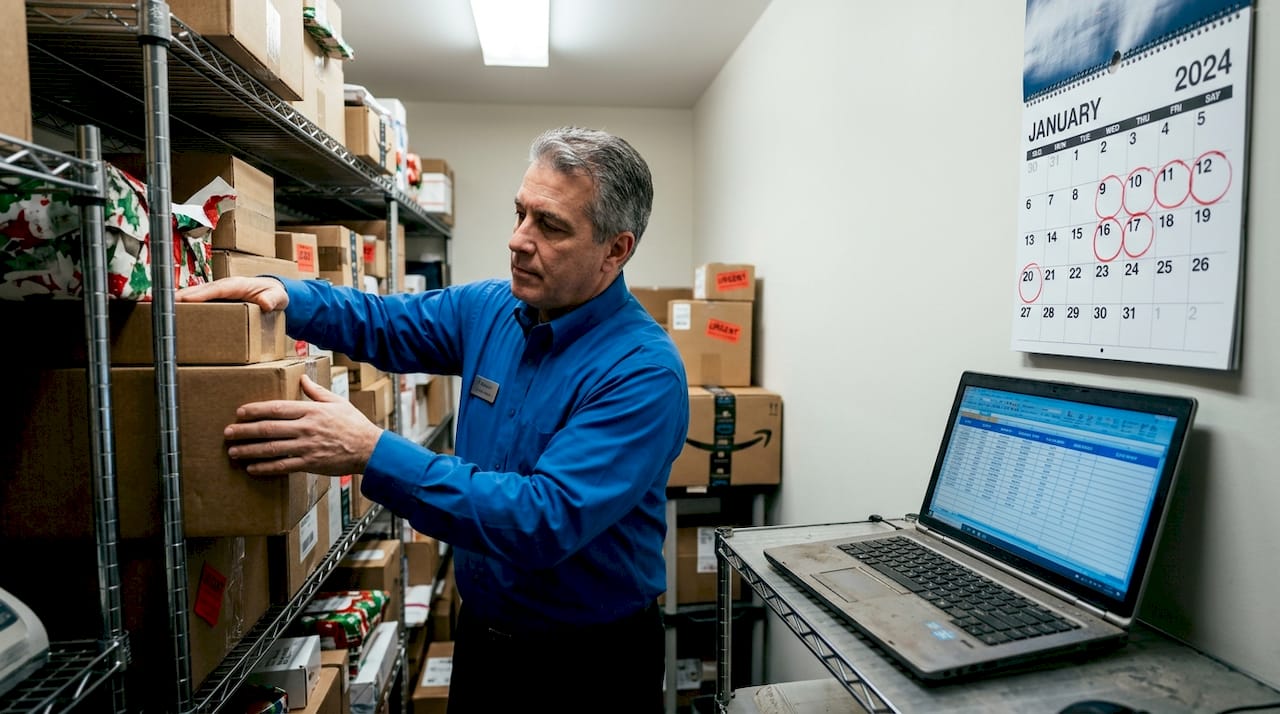
Understanding overflow also changes how you think about your physical space. A property that experiences overflow three or four times per year during peak periods may not need a massive infrastructure overhaul. But a property hitting overflow every week in November and December has a capacity problem that needs a structural solution, like an indoor package locker installation or an expanded package room layout.
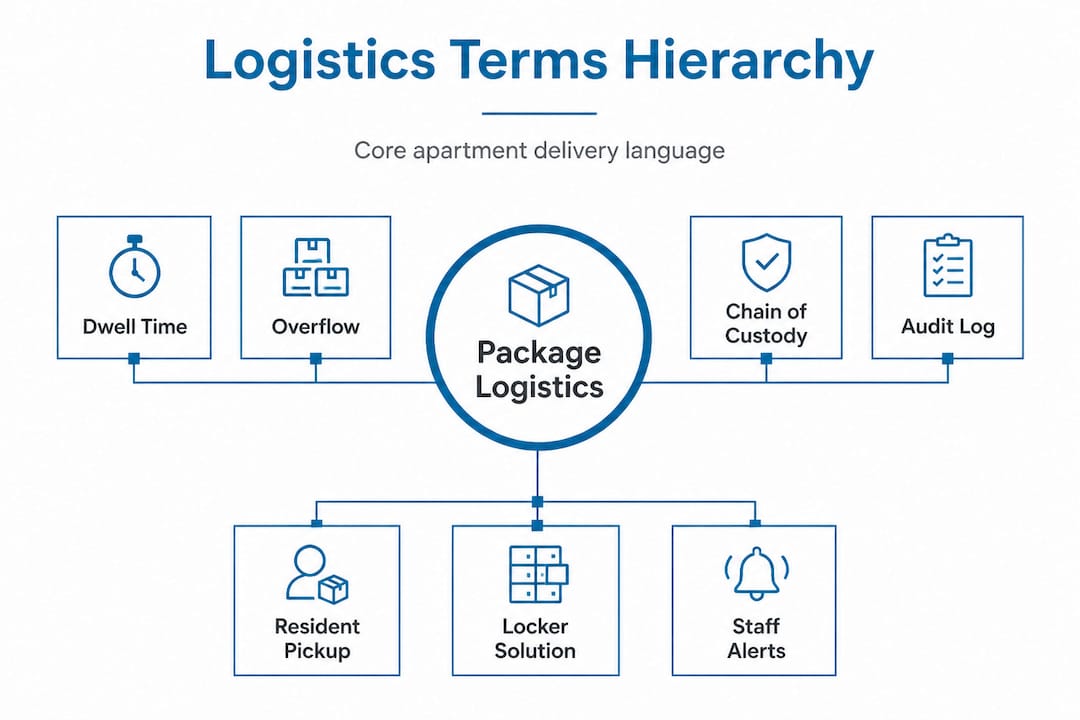
The locker solution benefits extend beyond just storage. They create a documented chain of custody automatically, generate audit logs in real time, and send package notifications without any staff involvement. Every term in this glossary maps directly to a feature of a well-designed locker system.
Putting terms into action: Optimizing your package process
Now that you know the terms, learn how to harness them to elevate your building’s delivery experience. Vocabulary is only useful when it drives decisions and shapes your workflow.
Start by building a simple tracking dashboard. You don’t need expensive software to begin. A shared spreadsheet that logs parcel volume, dwell time per package, complaints per 100 packages, and staff hours spent on package handling will reveal patterns quickly. Key metrics for optimization like these give you the data to justify capital investments and identify process failures before they escalate.
| Metric | Target benchmark | Action if exceeded |
|---|---|---|
| Dwell time | Under 48 hours | Send resident reminder; escalate at 72 hours |
| Complaints per 100 packages | Under 2 | Review chain of custody documentation |
| Staff hours per week | Under 5 hours | Evaluate automation options |
| Overflow incidents per month | Zero during off-peak | Plan capacity expansion |
Here’s how each term translates into a specific operational decision:
- Dwell time goals directly influence your storage system choice. If your average dwell time is 72 hours or more, a locker system with automated escalation reminders will outperform a manual package room every time.
- Overflow tracking gives you the data to plan future expansion. Three overflow events in one quarter is a strong argument for adding locker capacity or upgrading to a larger package room.
- Chain of custody documentation reduces loss claims dramatically. When every handoff is logged, residents can’t claim a package was never delivered if the audit log shows it was scanned into the system.
- Audit log review helps you identify noncompliance patterns. If one carrier consistently bypasses your designated drop zone, the audit log gives you the evidence to address it directly.
Pro Tip: Run a monthly review of your audit log specifically looking for packages with dwell times over 72 hours. These are your highest-risk items for complaints and loss claims. A quick resident outreach at that threshold prevents the majority of escalations.
Streamlined outdoor kiosks are particularly effective for properties where residents work irregular hours and can’t always pick up during staffed hours. Combining outdoor kiosk access with contactless delivery logistics eliminates the need for staff involvement entirely in many scenarios. Your team logs fewer hours, your residents get faster access, and your national package room systems data stays clean and accurate.
The data-driven approach also changes how you communicate with ownership and investors. When you can show that dwell time dropped from 68 hours to 31 hours after installing a locker system, or that staff hours spent on packages fell by 60%, you’re speaking the language of ROI. That’s a conversation that gets capital approved.
Common misunderstandings and mistakes to avoid
Even the best-run operations can slip up on terminology. Here’s how to stay sharp and avoid the mistakes that cost time, money, and resident trust.
Confusing dwell time with delivery window is one of the most frequent errors. Delivery window refers to the time frame a carrier commits to for drop-off. Dwell time starts after delivery. Mixing these up leads teams to think they’re managing storage when they’re actually just tracking carrier schedules. The dwell time benchmark of under 48 hours applies to post-delivery storage, not carrier arrival times.
Here are the most damaging mistakes property teams make around logistics terminology:
- Ignoring overflow until it happens. Overflow is a predictable event if you track parcel volume trends. Properties that wait for overflow to occur before creating a plan scramble every holiday season.
- Skipping chain of custody documentation. When a resident claims their package is missing and you have no audit log, you have no defense. Every unlogged handoff is a liability.
- Using “audit log” loosely. An audit log is a specific, timestamped record of package events. Calling a handwritten sign-in sheet an audit log creates a false sense of security and won’t hold up in a dispute.
- Failing to define noncompliance for carriers. If your delivery policy doesn’t explicitly define what constitutes noncompliance, carriers won’t follow it consistently. Written policies with clear terminology prevent this.
Pro Tip: Post a one-page glossary of your property’s package terms in the leasing office and package room. New staff onboard faster, and carriers who read it understand your expectations without a lengthy orientation.
Interestingly, these same terminology challenges appear in other high-volume delivery environments. Locker solutions for universities face identical issues with dwell time and overflow during move-in weeks and finals periods. The vocabulary is the same; only the scale differs. Learning from how university housing programs manage these terms can give apartment operators a useful framework.
Why mastering logistics vocabulary sets your property apart
Here’s an angle that most industry content misses entirely: vocabulary mastery isn’t just an operational tool. It’s a competitive differentiator.
Properties that operate with a shared, precise logistics language develop something rare in property management: a proactive team culture. When your leasing agent, maintenance supervisor, and package room attendant all use the same terms and understand the same benchmarks, problems get flagged earlier, solutions get implemented faster, and residents notice the difference even if they can’t articulate why.
Think about what it means for onboarding. A new hire who walks into a property with a clear package management glossary, defined dwell time targets, and a documented chain of custody process can be productive within days rather than weeks. Compare that to a property where package handling is informal and undocumented. The second property is always one staff turnover away from chaos.
There’s also a resident satisfaction angle that gets overlooked. Residents don’t evaluate your package process by your terminology. They evaluate it by whether their packages arrive safely and whether pickup is convenient. But your terminology directly shapes the processes that produce those outcomes. Properties that track case studies in package management consistently find that operational clarity correlates with higher satisfaction scores.
The uncomfortable truth is that most apartment communities treat package management as a nuisance rather than a service. The ones that treat it as a core resident amenity, with defined metrics, documented processes, and the right infrastructure, consistently outperform on lease renewals and resident referrals. Mastering the vocabulary is step one of treating it seriously.
Discover smarter package solutions for your property
By mastering logistics terms, you’re already ahead. Now put that knowledge to work with the right infrastructure to back it up.
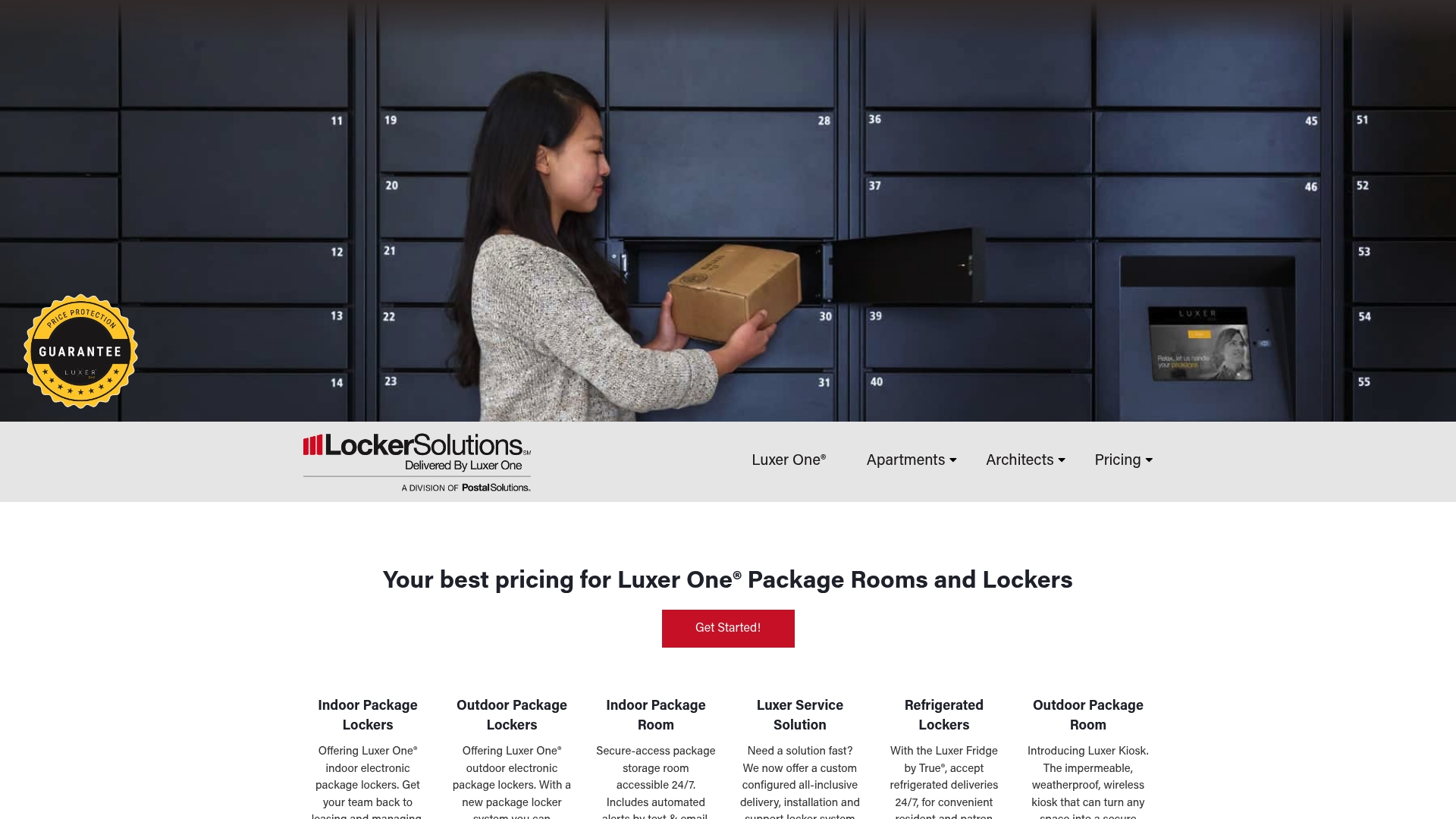
Understanding dwell time targets, overflow thresholds, and chain of custody requirements is only valuable when your physical systems can actually support those standards. Locker Solutions specializes in Luxer One® secure lockers and monitored package rooms designed specifically for multifamily properties. Whether you’re managing a 50-unit community or a 500-unit high-rise, the right system translates your vocabulary into measurable outcomes: lower dwell times, zero overflow incidents, and complete audit trail documentation. Explore modern locker solutions tailored to your property’s size, climate, and resident needs, or connect with Luxer One National Sales for a custom walkthrough and proposal.
Frequently asked questions
What is dwell time in package logistics?
Dwell time is the amount of time a package stays in storage before the resident picks it up. Keeping dwell time under 48 hours is the recommended benchmark to prevent overflow and maintain storage capacity.
How does tracking dwell time and complaints help my property?
Monitoring metrics like dwell time and complaints per 100 packages helps you pinpoint exactly where your package process breaks down and gives you data to justify infrastructure investments.
What does “overflow” mean in apartment package management?
Overflow refers to packages that exceed your regular storage capacity, often forcing staff to use temporary bins, hallways, or alternate spaces until residents pick up their items.
Why is understanding “chain of custody” important?
Chain of custody documentation tracks every handoff from carrier delivery to resident pickup, protecting your property from liability and giving you evidence to resolve lost-package disputes quickly.
Can clearer terminology improve resident satisfaction?
Yes. Precise terminology leads to consistent processes, fewer handling errors, and faster pickup experiences, all of which directly raise resident trust and satisfaction scores.
Recommended
Ready for a Luxer One® package locker quote?
Tell us your unit count and we'll send right-sized pricing with a fast response time.
Get my free quote