June 16, 2026
University Package Management: 2026 Guide for Admins
Explore our 2026 guide on university package management. Learn to streamline processes, boost student satisfaction, and manage rising delivery volumes.
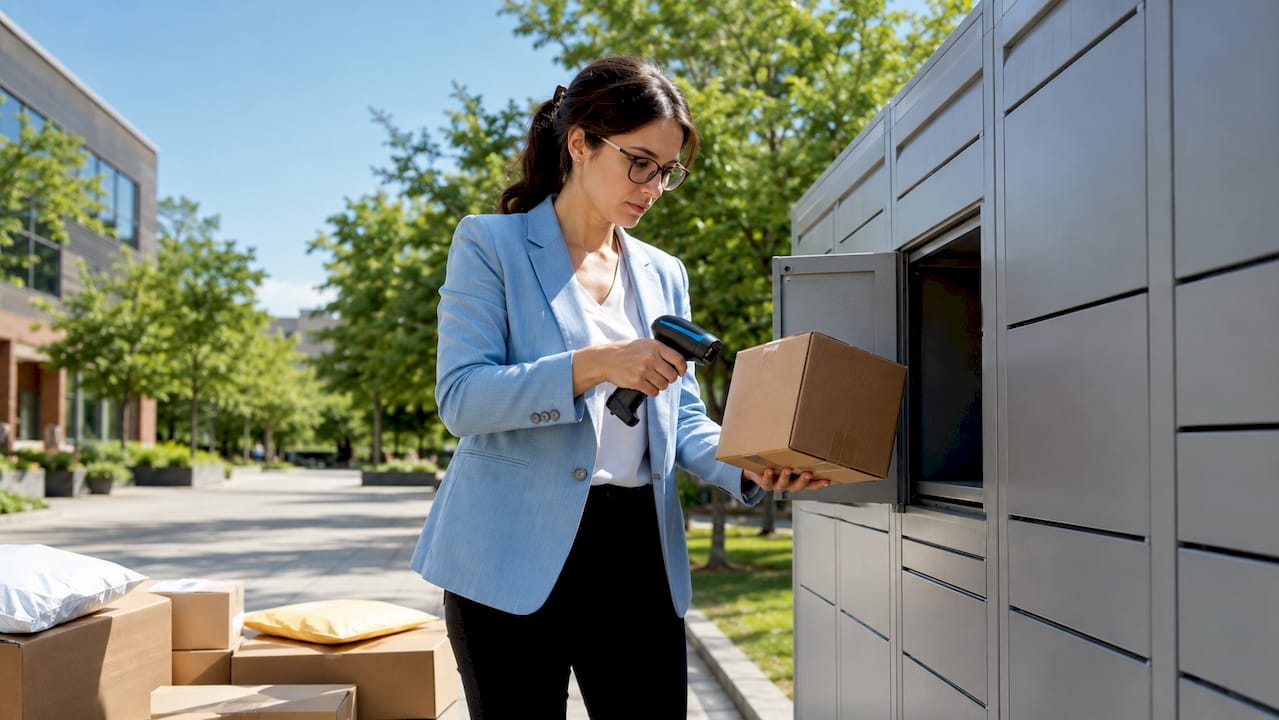
University package management is the integrated process of receiving, storing, tracking, and distributing student packages through smart lockers, tracking software, and structured workflows. Campus delivery volumes have surged dramatically, and the old model of a single central mailroom staffed during business hours no longer meets student expectations. This guide gives university facilities managers and administrators a direct, practical framework for deploying technology and policies that keep packages moving, reduce staff burden, and raise student satisfaction.
What are the main challenges in university package management today?
Pitney Bowes reports that more than 70% of universities experienced increased package deliveries, with 77% citing storage and logistics as their top operational challenges. That figure reflects a structural shift, not a temporary spike. Students now order everything from textbooks to groceries online, and campuses are absorbing the volume without proportional increases in space or staff.
The specific pain points break down clearly:
- Storage and space constraints: Mailrooms designed for letter mail are overwhelmed by parcel volume. Packages stack in hallways and create fire hazards and liability exposure.
- Limited access hours: Most campus mailrooms operate 9 a.m. to 5 p.m. Students with afternoon classes or evening schedules miss pickup windows repeatedly.
- Incomplete cost visibility: 63% of universities report they cannot accurately track the full cost of package handling across departments. Budget decisions get made without reliable data.
- Delayed pickups: 47% of institutions report chronic delays in student package collection, which compounds storage problems.
- Waste management: 35% of campuses identify cardboard and packaging waste as a growing operational burden with disposal costs attached.
Lindenwood University’s approach illustrates a common baseline: FedEx, UPS, and USPS all deliver to a central mailroom, students show ID for pickup, and packages held beyond two weeks are returned to sender. That model works at low volume. At scale, it breaks down fast.
Pro Tip: Track the ratio of packages received to packages picked up within 48 hours. If that ratio falls below 60%, your current system is creating a backlog that compounds daily.
How do smart lockers and tracking software improve campus delivery?
Smart locker systems solve the two biggest friction points in college package tracking: access hours and staff dependency. Lockers operate 24 hours a day, 7 days a week, and students retrieve packages without involving staff at all.
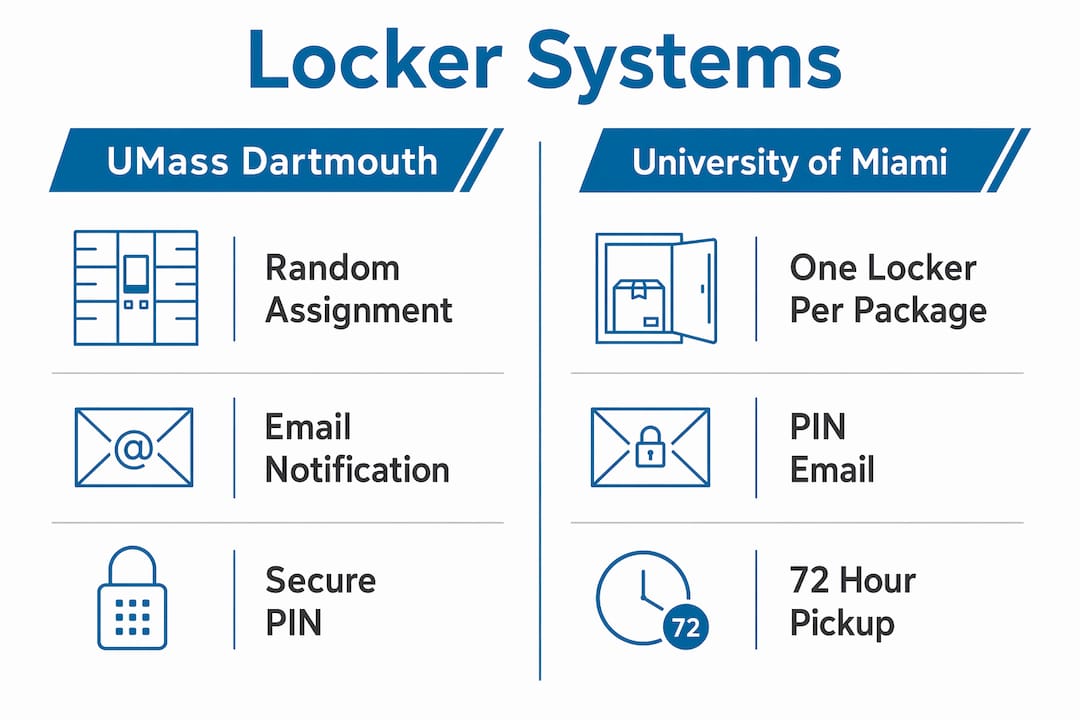
UMass Dartmouth uses security-code-protected lockers with random assignment. When a package arrives, the PACK CITY system emails the student a PIN and pickup location. The student retrieves the package independently, at any hour. Locker assignment is random throughout the day, which means the system requires email-based PINs rather than fixed locker numbers. That design detail matters for security because no student can predict which locker holds their package.
The University of Miami’s locker system assigns one locker per package, emails a PIN, and gives students 72 hours to collect before the package moves to the mailroom. The mailroom then holds it up to 14 days before initiating a return. That two-stage overflow policy keeps lockers cycling and prevents permanent locker occupation by uncollected packages.
Here is how the two approaches compare:
| Feature | UMass Dartmouth Model | University of Miami Model |
|---|---|---|
| Locker assignment | Random, email PIN | Per package, email PIN |
| Pickup window | Not specified | 72 hours before overflow |
| Overflow handling | Mailroom transfer | Mailroom, 14-day hold |
| Staff involvement | Minimal | Minimal |
| Access hours | 24/7 | 24/7 |
Package management software adds a layer that lockers alone cannot provide: real-time visibility across the entire delivery chain. Integrated tracking systems give administrators dashboards showing package volume by building, average pickup times, and cost per delivery. That data directly addresses the 63% of universities that currently lack cost visibility.
Pro Tip: When evaluating package management software, require a live demo that shows how the system handles an overflow event. Vendors that cannot demonstrate overflow workflows clearly have not solved the hardest part of campus logistics.
What are best practices for implementing package management on campus?
Effective campus logistics solutions require more than hardware. The workflow around the hardware determines whether the system actually reduces staff workload and keeps students satisfied.
- Standardize intake and logging at the point of receipt. Every package that enters the building gets scanned, time-stamped, and assigned to a student record immediately. No exceptions. This creates the audit trail that supports dispute investigations.
- Set and enforce pickup timelines. Stanford’s Mail and Package Services holds packages in lockers for 7 days before moving them to shelves for 3 additional days, then initiates return attempts. Clear timelines prevent locker saturation and set student expectations upfront.
- Define a 24-hour dispute window. Stanford’s policy requires that package pickup concerns be reported within 24 hours. After that, liability is waived. This policy only works if your system captures time stamps, identity verification, and confirmation records at every step.
- Train staff on overflow protocols. When lockers fill, packages must move to a secondary holding area on a defined schedule. Staff who improvise overflow handling create inconsistency and lost packages.
- Communicate policies to students before move-in. Post pickup timelines, overflow procedures, and return policies in the student portal, the housing welcome packet, and the campus app. Students who understand the system comply with it.
- Review operational metrics quarterly. Track average pickup time, locker utilization rate, overflow frequency, and return-to-sender volume. These four numbers tell you whether your system is working or accumulating hidden costs.
The dorm package management context adds another layer: residential buildings have different peak delivery patterns than academic buildings. Align locker capacity and staffing schedules to residential delivery windows, which typically run 10 a.m. to 6 p.m. on weekdays.
How do parcel centers and distributed lockers improve large campus delivery?
Large campuses cannot rely on a single central mailroom. The distance from delivery point to student residence creates friction that reduces pickup rates and increases storage pressure.
UC San Diego operates 17 housing community parcel centers distributed near residential halls. Each center handles deliveries from major carriers for the students living nearby. That model cuts the distance a student walks to retrieve a package and distributes the storage load across the campus rather than concentrating it in one building.
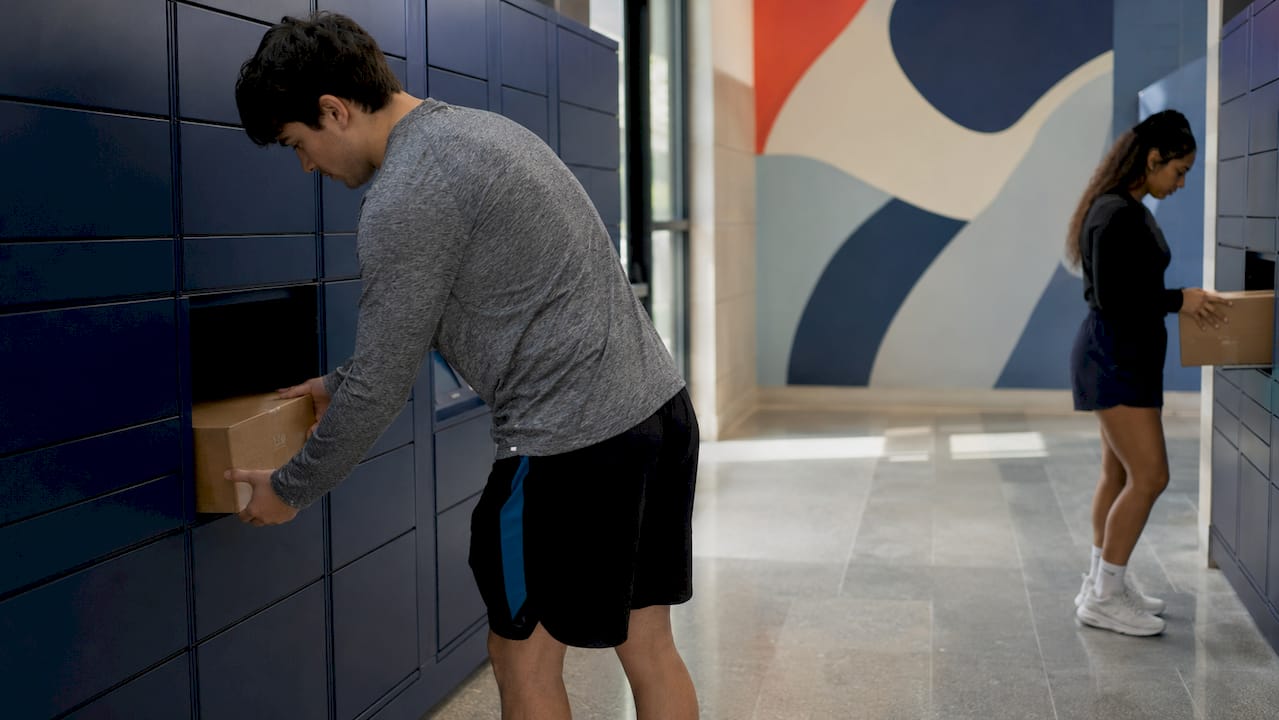
The University of Connecticut took a complementary approach by installing Amazon lockers across the Storrs campus with the long-term goal of replacing mailrooms entirely in residential areas. Distributed lockers provide package access beyond mailroom hours, which directly reduces congestion during peak periods.
Key benefits of decentralized parcel infrastructure:
- Faster student access: Students retrieve packages from a location within their residential zone rather than traveling to a central facility.
- Reduced peak congestion: Volume spreads across multiple sites, so no single location becomes a bottleneck during high-delivery periods like back-to-school or the holiday season.
- Lower staffing requirements: Automated lockers at distributed sites require no dedicated staff for pickup transactions.
- Carrier flexibility: Parcel centers accept deliveries from FedEx, UPS, USPS, and Amazon without requiring carrier-specific infrastructure at each location.
Location selection drives the success of a distributed model. Place lockers and parcel centers at the intersection of student foot traffic and residential density. A locker bank that students pass on the way to the dining hall gets used. One tucked behind a service entrance does not.
What should universities consider when choosing package management software and locker vendors?
The vendor selection decision determines your operational ceiling for the next 5–10 years. Choose based on integration capability and support depth, not just upfront hardware cost.
Critical evaluation criteria:
- Real-time tracking and notifications: The system must send automated alerts at intake, locker assignment, and pickup confirmation. Manual notification workflows do not scale.
- Access control integration: Lockers should connect to your existing campus ID or access control infrastructure. Locker Solutions’ unified access control platform integrates electronic locker access with broader building security systems.
- Overflow and capacity management: Confirm the vendor has a defined overflow protocol and that the software surfaces capacity alerts before lockers fill completely.
- Reporting and cost visibility: The platform must produce reports on package volume, pickup rates, and holding times by location. This data feeds budget decisions and staffing models.
- Scalability: Your delivery volume will grow. The system you deploy today must handle 30–40% more volume without a full hardware replacement.
- Vendor support and maintenance: On-campus locker hardware requires maintenance response times measured in hours, not days. Confirm service level agreements before signing.
For outdoor installations, weatherproof hardware is non-negotiable. Locker Solutions’ outdoor parcel lockers are built for year-round exterior deployment, which matters for campuses in climates with harsh winters or high humidity. Indoor installations benefit from Luxer One systems designed for high-traffic residential environments, with video surveillance and automated audit trails built in.
Key takeaways
Effective university package management requires combining smart locker hardware, automated notification workflows, and clearly enforced holding policies to keep delivery operations running at scale.
| Point | Details |
|---|---|
| Volume is the core driver | Over 70% of universities report increased deliveries, making manual mailroom systems unsustainable. |
| Smart lockers reduce staff dependency | Systems like Luxer One and PACK CITY automate notification and retrieval, freeing staff for higher-value tasks. |
| Overflow policies protect capacity | Define pickup windows and transfer timelines before deployment, not after lockers fill. |
| Distributed locations improve access | UC San Diego’s 17 parcel centers show that decentralization cuts pickup friction on large campuses. |
| Audit trails are operationally critical | A 24-hour dispute window only works if the system captures time stamps and identity verification at every step. |
What we’ve learned from watching campus package systems evolve
The campuses that struggle most with package management share one pattern: they bought lockers without redesigning the workflow around them. Hardware alone does not fix a broken process. A locker bank with no overflow policy fills up in two weeks and becomes a source of student complaints rather than a solution to them.
What actually works is treating the locker system as one component of a complete intake-to-retrieval chain. That means standardized scanning at receipt, automated student notifications, defined holding periods, and a clear overflow path before the first package ever arrives. The universities that get this right, like UC San Diego with its distributed parcel center model, built the workflow first and selected hardware to fit it.
The next wave of campus delivery infrastructure will include refrigerated lockers for grocery and meal kit deliveries, integration with carrier apps for real-time delivery windows, and access control systems that tie locker authentication to campus ID credentials. Facilities managers who evaluate vendors on integration capability today will be positioned to add these functions without replacing their entire infrastructure in three years.
The most underrated success factor is student communication. A well-designed system with poor communication produces the same pickup delays as a poorly designed one. Students need to understand pickup timelines, overflow consequences, and dispute procedures before they receive their first package on campus.
— Locker Solutions
How locker solutions can support your campus package operations
Locker Solutions provides Luxer One package lockers, automated package rooms, and outdoor parcel systems configured for university housing and campus mailroom environments. Whether you are replacing an overwhelmed central mailroom or building out a distributed locker network across residential halls, Locker Solutions offers hardware, installation, and ongoing maintenance support sized to your campus.
The package room management service covers everything from initial layout design to staff training and system monitoring. For campuses moving toward fully contactless delivery, the contactless delivery platform eliminates staff touchpoints from intake through student retrieval. Contact Locker Solutions to discuss your campus delivery volume, space constraints, and timeline for a configuration built around your specific operational needs.
FAQ
What is university package management?
University package management is the structured process of receiving, storing, tracking, and distributing student packages on campus using smart lockers, tracking software, and defined handling policies. It replaces ad hoc mailroom operations with a system designed for high-volume, 24/7 delivery environments.
How long do universities typically hold packages before returning them?
Holding periods vary by institution. Stanford holds packages in lockers for 7 days, then on shelves for 3 more days before return. Lindenwood University holds packages for a maximum of two weeks. The University of Miami’s locker system transfers uncollected packages to the mailroom after 72 hours, with a 14-day mailroom hold before return.
What is the best way to handle package overflow when lockers are full?
The most effective approach is a two-stage overflow policy: define a pickup window for locker-held packages, then transfer uncollected items to a secondary mailroom holding area on a fixed schedule. The University of Miami uses a 72-hour locker window followed by a 14-day mailroom hold as a proven model.
How do distributed parcel centers improve student package delivery?
Distributed parcel centers place package pickup points near residential buildings rather than at a single central location. UC San Diego’s 17 housing community parcel centers demonstrate that proximity reduces pickup friction, spreads delivery volume across the campus, and lowers staffing requirements at any single site.
What features should universities prioritize in package management software?
Prioritize real-time tracking, automated student notifications, overflow capacity alerts, and reporting on pickup rates and holding times by location. Integration with existing campus access control systems and scalability for growing delivery volumes are the two features most likely to determine long-term operational success.
Recommended
Ready for a Luxer One® package locker quote?
Tell us your unit count and we'll send right-sized pricing with a fast response time.
Get my free quote